Site Owners
Pilots
Download our app below to start discovering new landing sites




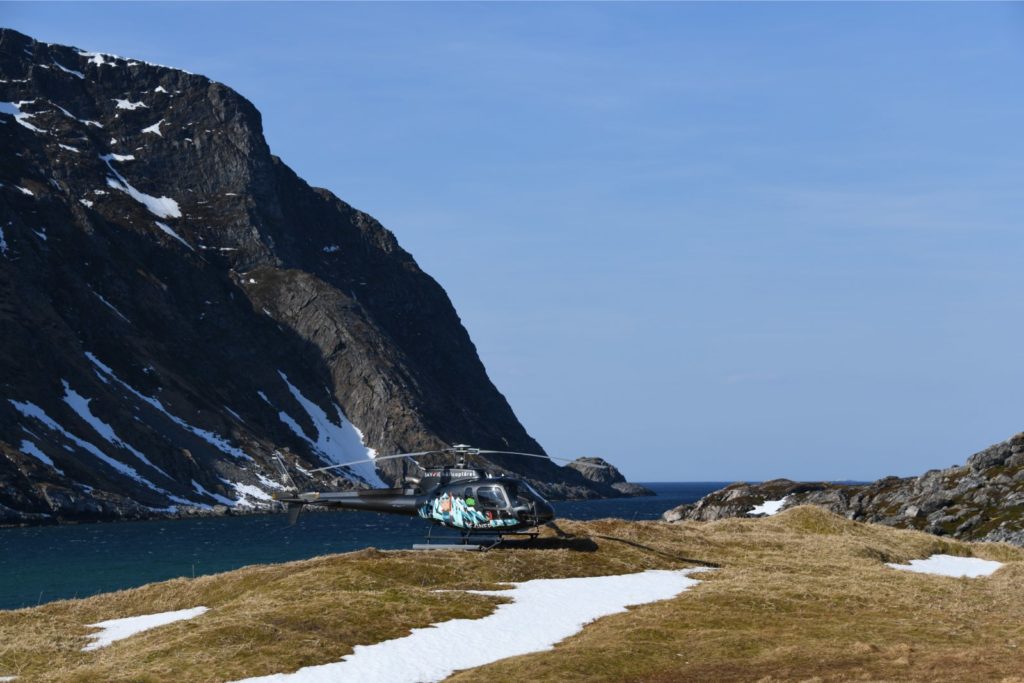
Norway supports extensive helicopter touring operations, but dispatch quality depends on current airspace data, terrain-aware route design, and strict site-level permission handling. This guide focuses on Norway-specific operational workflow, with the 2026 Civil Aviation Authority Norway pilot briefing now folded into the planning notes below.
Norway applies EASA-based rules through national implementation under the Civil Aviation Authority Norway. Operational publications should be pulled from current Avinor products, including Avinor AIS, the active Norway AIP cycle, the Norwegian VFR Guide, and the IPPC planning portal. CAA Norway’s Destination Norway 2026 webinar is also a useful current briefing for visiting VFR pilots.
Controlled-airspace complexity is highest around major cities, while remote sectors still require procedure-aware planning and current restrictions review. Standard ICAO entry procedures apply, and the 2026 CAA Norway briefing states that a flight plan must be filed at least 60 minutes before entry into Norway. Cross-border sectors should be planned as coordinated multi-jurisdiction workflows, with customs, opening hours, NOTAMs, danger areas, and arrival flight-plan closure all treated as live pre-flight checks.
Norway has a mix of controlled and uncontrolled airspace. In class G, CAA Norway encourages pilots to use 123.065 MHz UNICOM, electronic conspicuity, and traffic information from overlying ATS where available; in northern sectors, Polaris Control may be relevant for en-route information. AFIS aerodromes provide information service only, so pilots remain responsible for separation and must confirm opening hours and any PPR/out-of-hours arrangements before relying on a stop.
Private and off-aerodrome operations require prior permission from site owners and compliance with local constraints that can include municipality-level limitations and protected-area rules. For helicopter landings outside airports, do not treat landowner consent as the complete answer: local restrictions, environmental rules, noise sensitivity, terrain, and normal airspace and safety requirements still need to be checked before dispatch.
Jet A1 is generally more available than AVGAS, but coverage still varies significantly in remote regions. AVGAS may be available at many established airports, but not everywhere, not necessarily during your arrival window, and generally not at small or farm strips. Confirm uplift timing, fuel grade, payment model, opening hours, and local shortages for each stop, and build a practical fallback fuel chain for northern and coastal sectors where same-day assumptions can break quickly.
The official 2026 briefing emphasises larger margins than many visiting pilots may be used to. Rapid weather changes, high terrain, confined areas, limited infrastructure, power-line and obstacle exposure, and GNSS interference – especially in the north – should all be planned for explicitly. Carry appropriate survival equipment, retain a non-GNSS navigation fallback, close the flight plan after landing, and brief an escape option for each demanding sector.


