Site Owners
Pilots
Download our app below to start discovering new landing sites




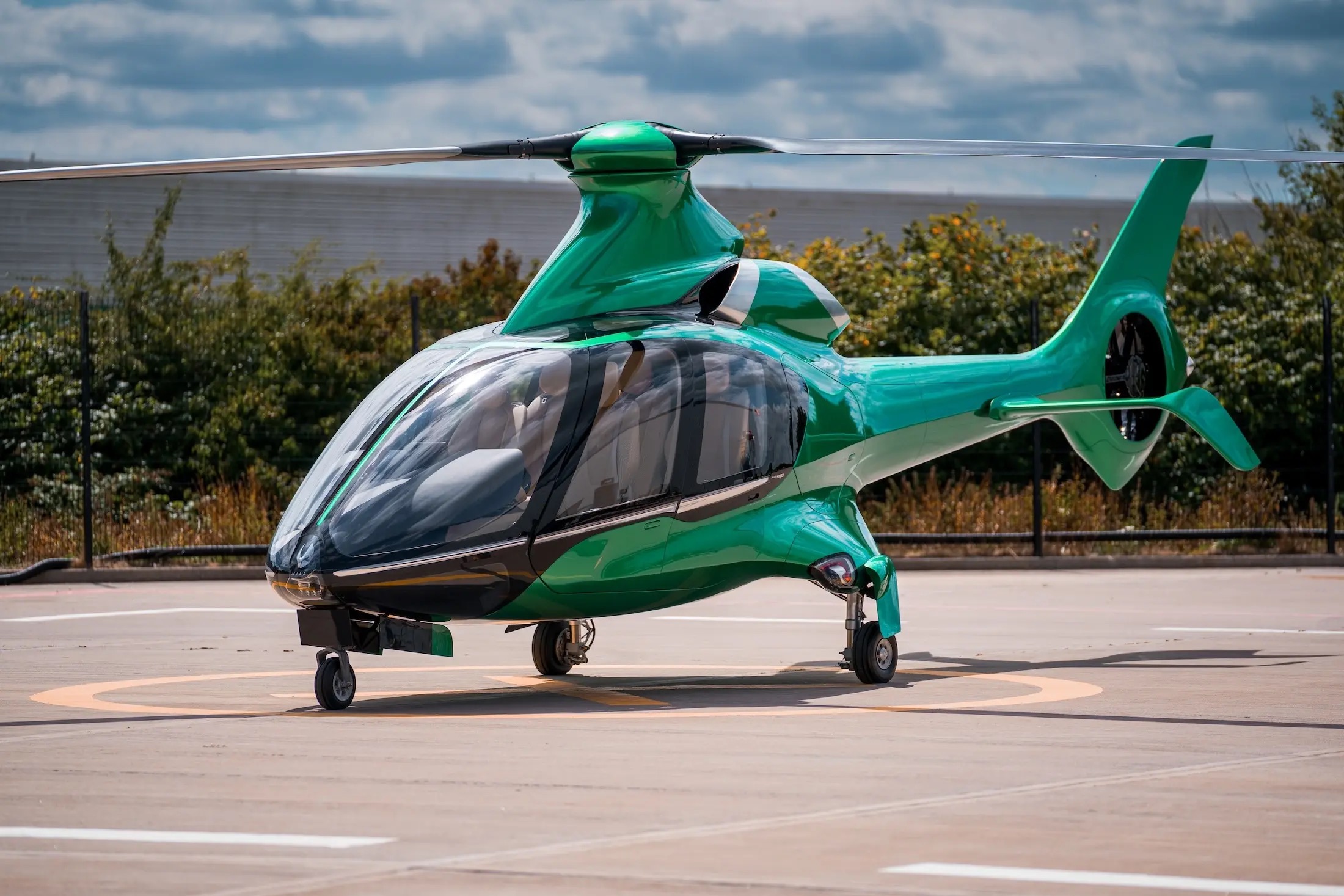
The Hill HX50 and HC50 are intended to be physically very similar helicopters. On paper, however, they follow very different approval routes—and for a UK pilot who wants to cross borders, that difference may matter as much as payload, range or price.
Hill describes the HX50 as its private-owner model, supplied through an amateur-built approval route and expected to fly in the UK on a Permit to Fly. The HC50 is the later, traditionally type-certified version intended to support commercial as well as private operation.
That distinction is easy to dismiss as paperwork. It is not. It affects two separate questions:
The experience of UK Gazelle pilots since Brexit shows why both questions need an answer before an owner commits to a Permit aircraft.
The short version: A UK Permit to Fly does not create an automatic right of flight abroad, and a UK national helicopter rating does not necessarily have the same international portability as a UK Part-FCL rating. That does not make Permit touring rare or require a fresh application for every trip: standing permissions, ECAC arrangements and aircraft-specific training schemes can make repeated European flying quite practical.
A Permit to Fly is not a casual or unregulated approval. The CAA can issue one where an aircraft is capable of safe flight under defined conditions but does not hold the standard Certificate of Airworthiness used by a conventionally type-certified aircraft.
The permit contains its own conditions and limitations. The important cross-border point is that it is issued under national rules. The CAA’s published guidance says a UK Permit to Fly does not allow flight outside UK airspace unless the state being visited grants permission.
That does not mean every foreign trip is impossible. Permit aircraft cross borders today. Some states publish standing acceptances for defined categories; others require a notification or application. The operational result is nevertheless different from setting off in a conventionally certified G-registered helicopter with internationally familiar airworthiness documents.
For a pilot, the practical rule is simple: do not confuse a permit that is valid in the UK with automatic permission to operate abroad.
“Prior permission” does not necessarily mean applying before every flight. The Light Aircraft Association’s guidance distinguishes between specific permission and published standing permission. It also notes that ECAC arrangements for amateur-built—and later some vintage and classic—aircraft pre-date EASA and, where they remain valid, continued despite the UK’s withdrawal from EASA.
That matches everyday experience. Groups of UK-registered Van’s RVs regularly tour into Europe using the applicable standing arrangements and documents. Once the route and aircraft category are understood, the process can be repeatable rather than exceptional.
The Duxford-based Catalina G-PBYA is an even more instructive example. It operates across the European airshow circuit and most years visits Biscarrosse in France for water operations. In 2025, its operator reported that the CAA inspected and approved its aircraft-specific training scheme for the initial issue and renewal of Catalina water type ratings.
A pilot following that route says a lapsed generic multi-engine rating is not, by itself, the barrier: qualification is handled specifically for the Catalina under the agreed scheme. That is an operator account rather than a general licensing rule, so candidates must confirm their own entry requirements with the operator and CAA.
The Catalina does not prove that an HX50 will receive the same treatment. It proves something narrower and useful: a national or aircraft-specific qualification can support serious, repeated international flying when the operator, CAA and destination authorities have built a mature framework around it. Hill could make the HX50 much easier to tour in if it delivers that same level of training support, country acceptance and reusable documentation.
Aircraft approval is only half of the problem.
The CAA divides aircraft and licensing into Part 21 and non-Part 21 systems. Most modern, conventionally type-certified helicopters sit in Part 21. Ex-military, amateur-built and many Permit to Fly aircraft sit outside it.
UK Part-FCL helicopter privileges and UK Air Navigation Order (ANO) privileges are therefore not interchangeable in every situation. The CAA’s current pilot guidance says that a non-Part 21 aircraft requiring a type rating needs a UK licence issued under the ANO. Helicopters do not benefit from a broad class rating in the way many light aeroplanes do: each helicopter type needs its own rating.
This is where a Permit-only type can create a second international hurdle. Even if a destination accepts the aircraft, the pilot may need that state to accept or validate the national licence or qualification as well. An aircraft-specific scheme can make that hurdle manageable, but the scheme and its foreign acceptance must actually exist.
This is not a theoretical concern. We have seen it first-hand with UK military Gazelles.
In correspondence with a Gazelle pilot in 2025, the CAA explained that holders of an SA341/342 endorsement were also being issued with an ANO licence showing the Gazelle rating. The reason was that there were no UK-registered Gazelles with a valid Certificate of Airworthiness on which the Part-FCL rating could be renewed or revalidated.
The key sentence was:
“Ratings can only be renewed or revalidated in the ANO licence, as there are no aircraft with a valid Certificate of Airworthiness.”
In a follow-up, the CAA confirmed that a renewal completed on a Permit to Fly Gazelle would renew the rating on the pilot’s ANO UK CPL(H), not on the Part-FCL licence.
A previously printed SA341/342 rating might therefore remain visible on a Part-FCL document, but it could not be kept current there using the available Permit aircraft. The pilot needed the parallel national document.
That is the lesson for the HX50. If its final UK classification and licensing treatment follow the same non-Part 21 logic, an HX50 type rating or its continuing validity may sit on an ANO licence rather than a UK Part-FCL licence. The CAA and Hill have not yet published the final operational licensing package for customer aircraft, so buyers should get the answer in writing rather than assume it.
Brexit did not invent the Permit to Fly system, nor did it end Permit touring. The ECAC airworthiness arrangements used by many amateur-built and historic aircraft pre-date EASA and can continue independently of it.
What changed is the licensing backdrop. The UK’s departure from EASA left general aviation operating on a mixed legal basis: retained UK Part-FCL rules for Part 21 aircraft alongside national ANO rules for non-Part 21 aircraft. A standing foreign acceptance for the aircraft does not necessarily settle how a UK national type rating will be treated.
This is why the Gazelle and Catalina experiences are not contradictory. A Permit aircraft can have a well-established route around Europe while its pilots qualify and remain current through an operator-specific or national system. The uncertainty for the HX50 is not that this cannot be done; it is that the finished training, licensing and foreign-acceptance framework does not yet exist for customers to inspect.
That matters even more for a helicopter that has not yet completed its approval programme. As of 21 July 2026, Hill’s own programme estimates show a first HX50 test flight in December 2026 and production starting in December 2027. Hill’s FAQ says the HC50 is expected later, in 2029. These remain development estimates, not certification dates.
The careful answer is: potentially yes, but not automatically—and the final HX50 approval will determine which Irish route applies.
Ireland is more accommodating than a simple “Permit aircraft not allowed” summary would suggest:
The United Kingdom remains an ECAC member. Even so, it would be premature to promise that an HX50 will slot automatically into the Irish amateur-built acceptance. Its final UK Permit wording, classification, operating limitations and the exact status of the HX50 rating will all matter.
So a future HX50 trip from the UK to southern Ireland may be entirely achievable, but an owner should expect to confirm both the aircraft acceptance and the pilot-licence acceptance with the IAA before departure. Our practical guide to flying a helicopter in Ireland and UK customs and GAR guide cover the separate operational and border steps.
The HC50 is intended to follow the traditional type-certification route. Once certified, a conforming individual aircraft should be eligible for a standard Certificate of Airworthiness, and the associated type rating should have a route into the UK Part-FCL system.
That is a much cleaner starting point for an owner who expects to tour internationally. It should also provide a conventional aircraft on which the Part-FCL rating can be tested, renewed and revalidated.
But one point should not be assumed: obtaining an HC50 Part-FCL rating later does not necessarily make every foreign operation of an HX50 automatic. The destination state still has to accept the Permit aircraft, and it may have its own view of whether that rating can be exercised on the Permit variant. This is exactly the sort of question that needs written confirmation once both approval bases and the final type-rating designations exist.
If international touring is part of the ownership plan, ask Hill and the CAA for written answers to these questions before committing or changing an order:
The final documents matter more than broad assurances that approval will be available internationally.
For an owner who expects to fly privately within the UK, the HX50’s Permit route may prove entirely workable. Hill says it is designing the aircraft to the CS-27 standard used for normal-category rotorcraft; the issue here is regulatory portability, not a claim about build quality or safety.
For an owner who wants routine access to Ireland and continental Europe, the HC50’s conventional certification route remains the lower-uncertainty choice. It may cost more and arrive later, but it should remove much of the aircraft-and-licence ambiguity that Permit Gazelle pilots now know well.
It is not necessarily the only viable choice. The Catalina and RV communities show that Permit aircraft can tour Europe regularly without a new approval for every trip. If Hill secures standing acceptances, an aircraft-specific rating scheme and a clear owner support process, the HX50 could be practical for international private flying too. Buyers need to judge the delivered framework, not the word “Permit” in isolation.
The polished aircraft brochure will not answer this question for you. Before choosing between HX50 and HC50, decide where you actually want to fly—and ask which documents will get you there.
Plan the landing side of your next cross-border trip with Helipaddy, but confirm regulatory permissions directly with the relevant aviation authorities before departure.
This article is general operational information, not legal advice. Regulations, exemptions and aircraft approval details change. Confirm the current position with the CAA, the state being visited and the aircraft manufacturer before relying on it for a flight or purchase decision.


