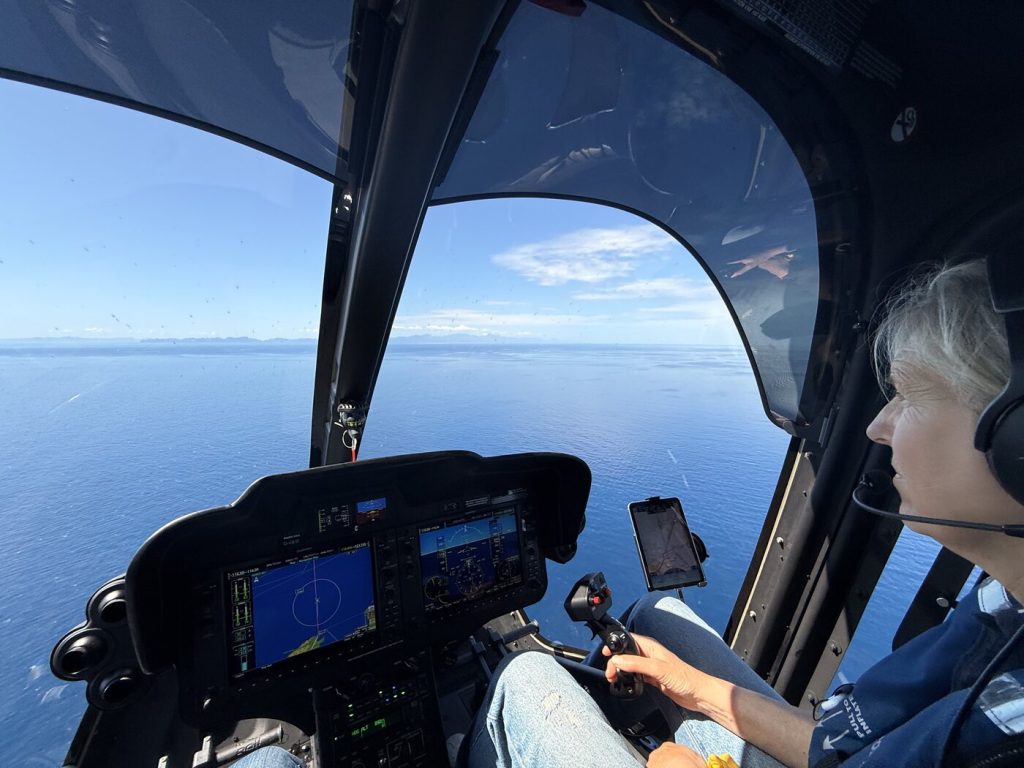
We have flown from the UK to Mallorca several times in the R66, so this trip in G-LILO, the first lengthy run in our new Bell 505, was always going to be an interesting comparison.
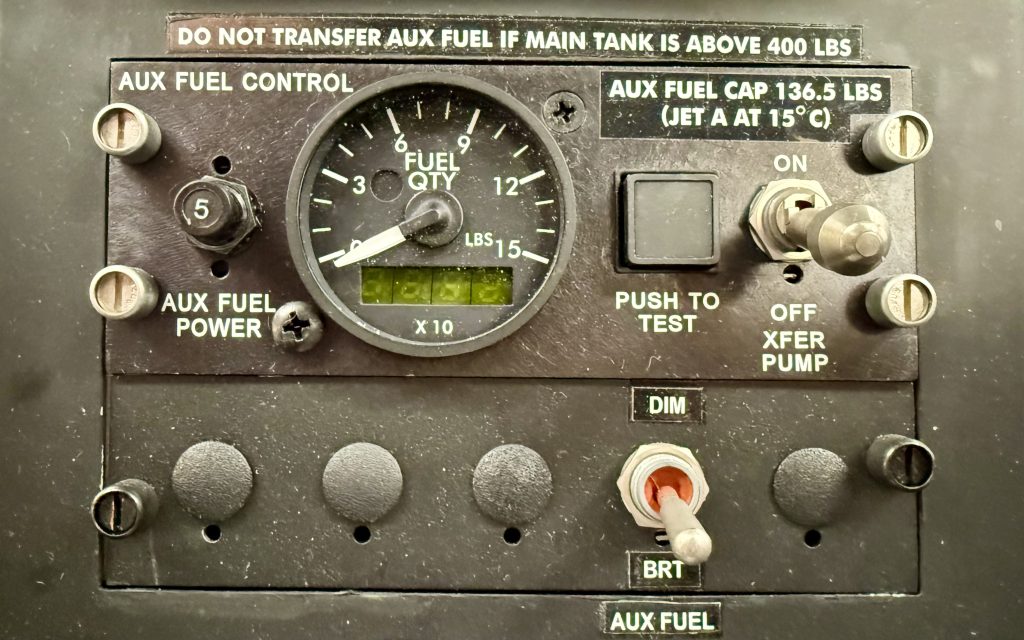
The headline is simple enough: the 505 is faster, roomier and much more comfortable in turbulence, but it is also shorter-legged. That slightly changes the way you plan a trip like this. Fuel stops matter more because they have to be planned nearer the limit. We have the range extender, which we filled to 145 lb. At 205 lb/hr that adds another 0.7 hr and we treated this rather conservatively as emergency fuel. In fact, we brought the same fuel all the way back.
We happened to travel at the weekend, which means almost all the RAs disappear in France. However, airport opening hours matter more and weekend fuel availability matters more. When the destination is an island, we like to have generous reserves before the longer sea legs, due to potential sea fog.
The trip ended up being a useful reminder that long-distance VFR flying is not one big decision. It is a chain of small ones: fuel, weather, airspace, paperwork, daylight, and the practical question of where you would rather spend the night if the day starts slipping away.
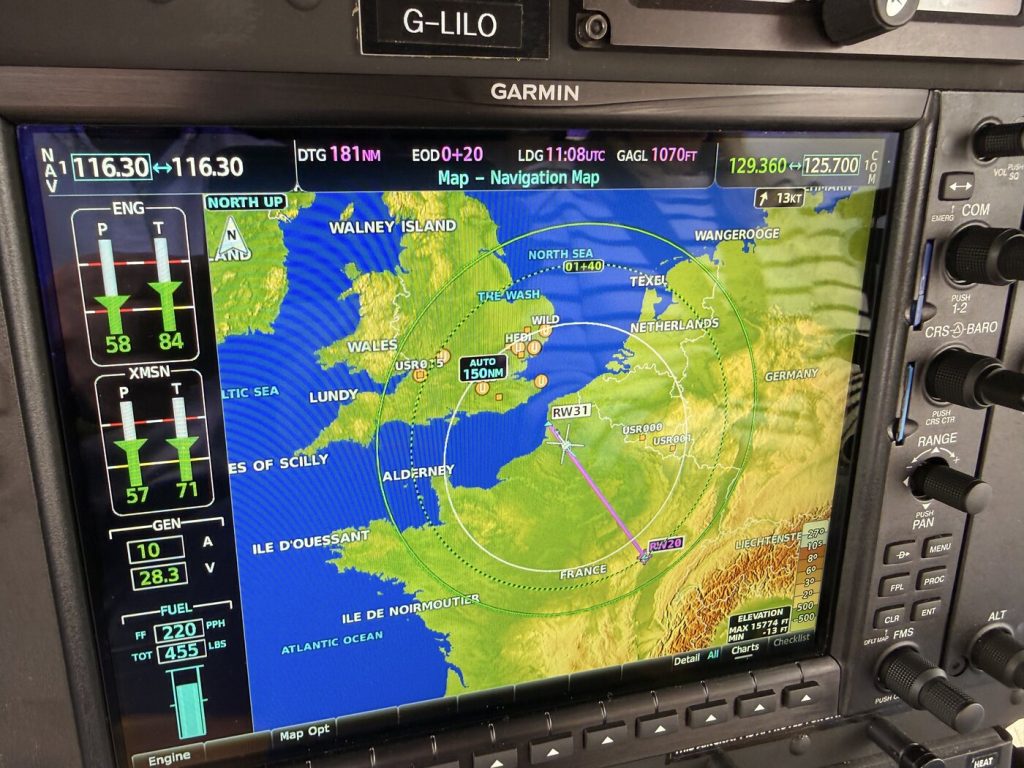
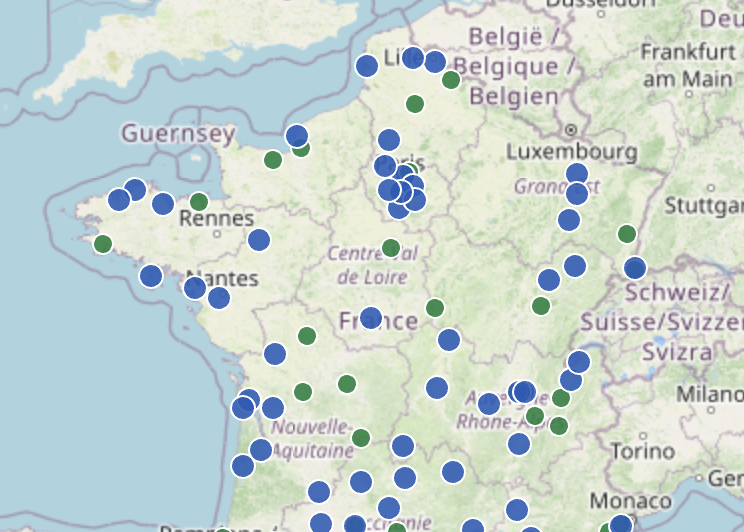
The 505 fuel range ring is accurate and USEFULHelipaddy fuel card maps of France
The 505 Compared With The R66
The R66 can give you a lot of freedom on this route if you are happy sitting in it for more than three hours. Our G-PDDY R66 log books show the longest ever flight to be 3.1 hr in reality. The R66 planning numbers are roughly 88 litres an hour and 440 litres usable, so about five hours with the larger range extender. We really got used to this high range, but not to do long legs; rather, it meant we were refuelling half as often with local flights at home. We never needed a home bowser until now. We also preferred to fly a bit heavy which I know will upset Robinson owners.
To compensate somewhat for less range, the G1000 fuel range calculations are turning out to be much more accurate than the Shadin which we had installed on the R66. We made a number of long tests and found errors of up to 8% but also errors both ways ie too low and too high.
For R66 readers wondering, Shadin told us this: “When we flow our transducers on the test bench we measure how many pulses are generated at specific flows. You may find that you idle more often than you are flying and that may produce a small error.”
For the 505, our conservative working number is about 220 lb an hour from 690 lb, so about 3.2 hours. Using 25 hours of full-to-full analysis our real fuel burn is 205 lb/hr . When we look for fuel stops, we tend to ignore the aux, so our ideal strips are at around 2.5 hr. We choose to cruise the 505 around 5 to 10 percent faster than the R66 in smooth air, but that only claws back a little of the range difference. At the same 100 kt cruise, 3.37 hours is 337 nm with no headwind. At 105 or 110 kt, the speed advantage only recovers about 25 nm. In turbulence, we have found that we fly around 15 percent faster.
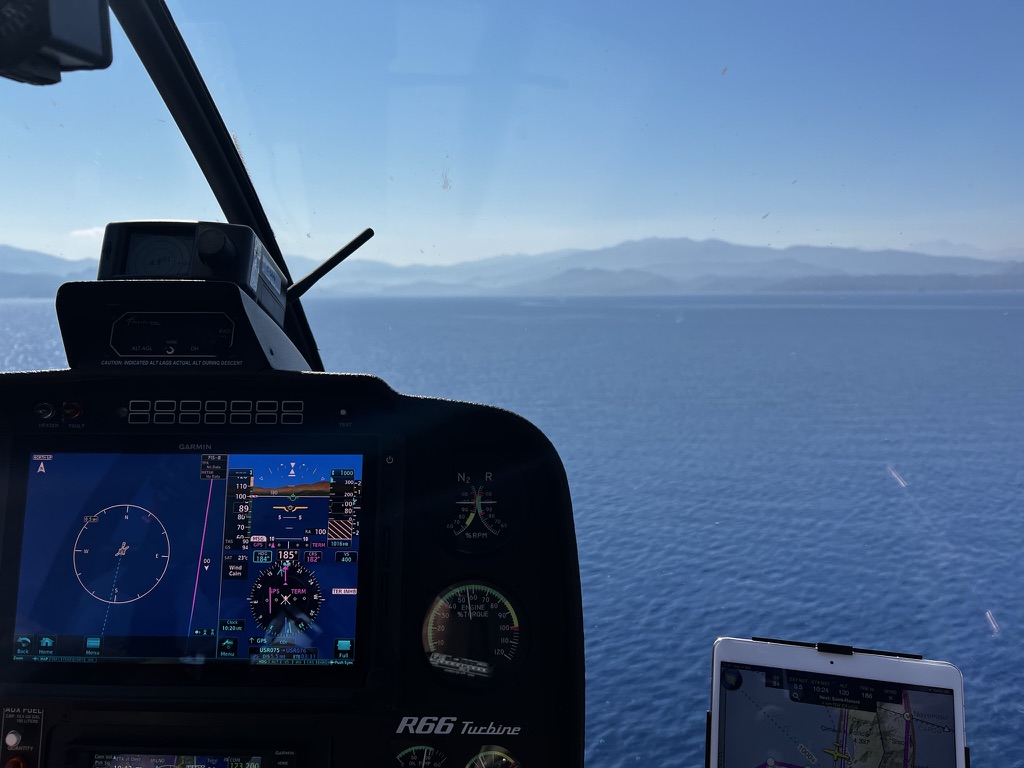
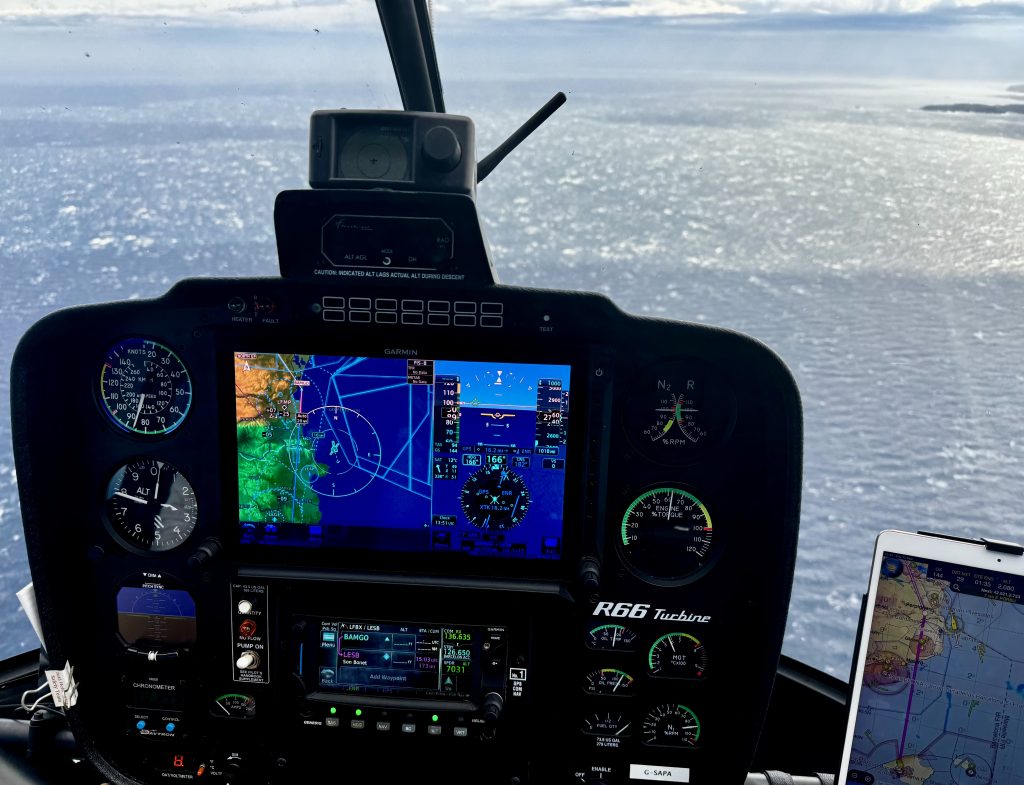
R66 pilot viewB505 pilot view
Put another way, the 505 has about 75 percent of the R66’s range. It is about 27 percent shorter-legged, despite being quicker. When pottering about at home that means 25 percent more refuellings, whilst on a long trip it makes little difference as we never want legs to exceed 2.5 hr anyway.
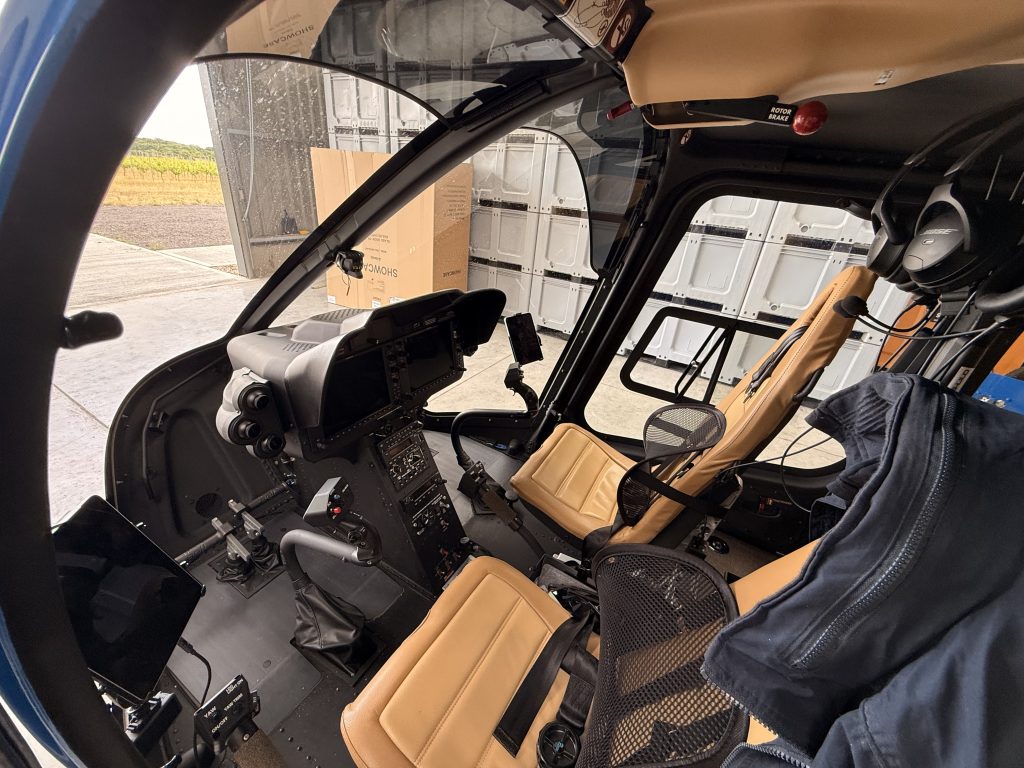
The G600H 3-axis autopilot also controls the pedals, which means some lazy flying with no need to hold any controls. When holding or taxiing, it has a GPS auto-hover and auto-taxi, too.
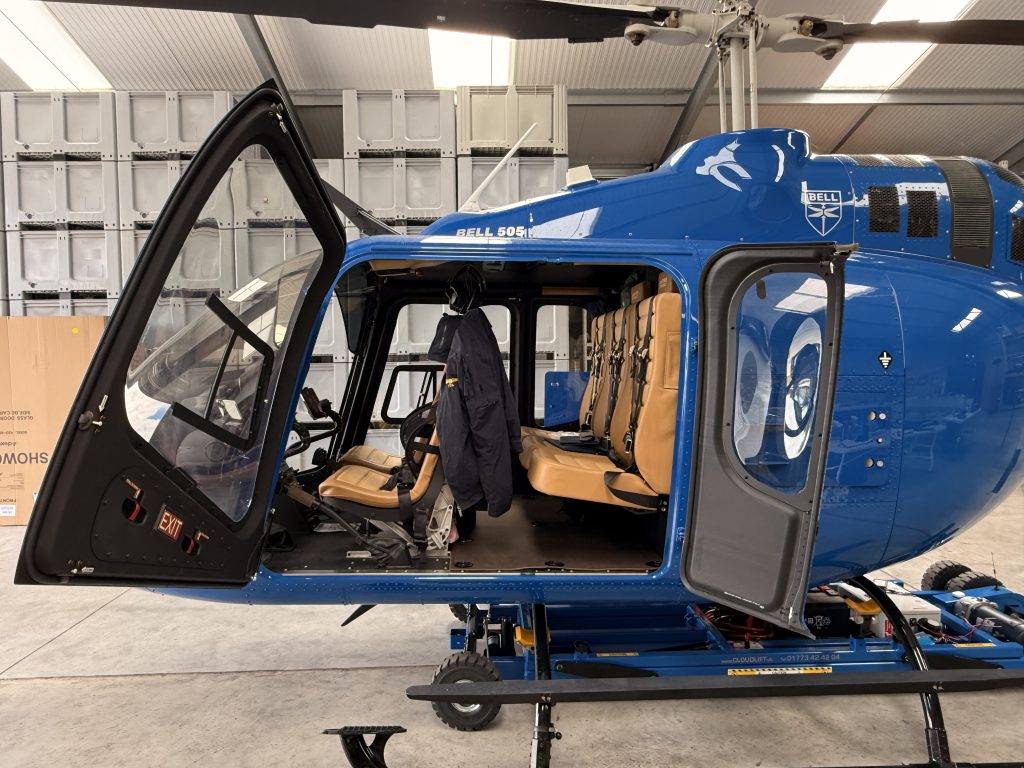
We are often asked what the biggest reasons are for switching from the 66 to the 505, and one of those would certainly be the cabin space. I don’t know the official figures but there is a whole load of extra room. We can pop the 3 back seats out and fit bicycles with wheels attached. Whilst the 505 hp engine is clearly thirstier than the 330 hp engine, load capacity is noticeably better and the middle rear seat is real and usable. I used to find the under-seat bays unsatisfactory in the 66. We still have a decent boot even with the aux tank there; however, it leaves luggage with a subtle Jet A-1 odour for some reason.
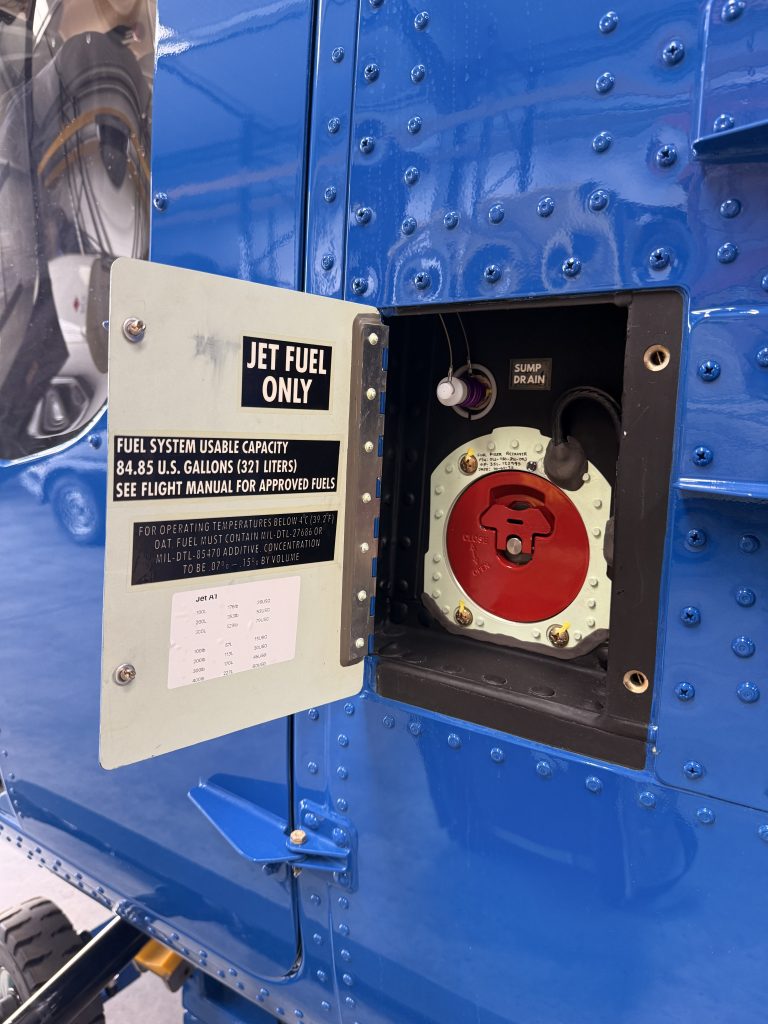
True main capacity 311 litres (not 321 as marked)True aux capacity 140lb (not 135lb as marked)
Our 505 was a cancelled order, so the floats decision was made for us: don’t have them. We had them before on the 66 and felt happier about it initially, I feel better with a life raft anyway so, given 80 percent of our flying is over land, it was a good decision not to have them. We are in the habit of doing very long sea crossings, such as the UK to northern Holland, and this won’t change much.
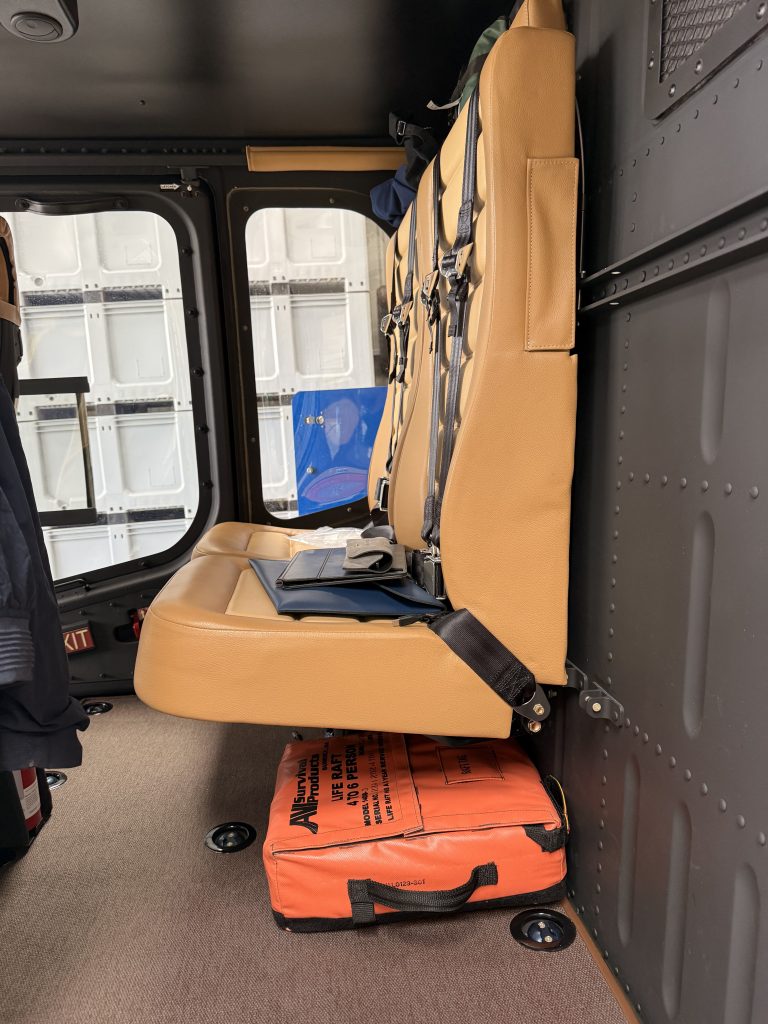
If you are interested, we researched a wide range of options specific to the UK (shipping the gas bottles makes them difficult to import). Sebastien Pooley supplied us with AVI’s Survival Life Raft 4-6 Person with Canopy, Pooleys stock code: SLR040CAN/Share. Manufacturer stock code: 1400B-3. Price £2,195. This raft fits under the seat and has a 3-year service interval. Pack Size: 6″ x 13″ x 14″. Weight: 14 lbs (6.4 kilos).
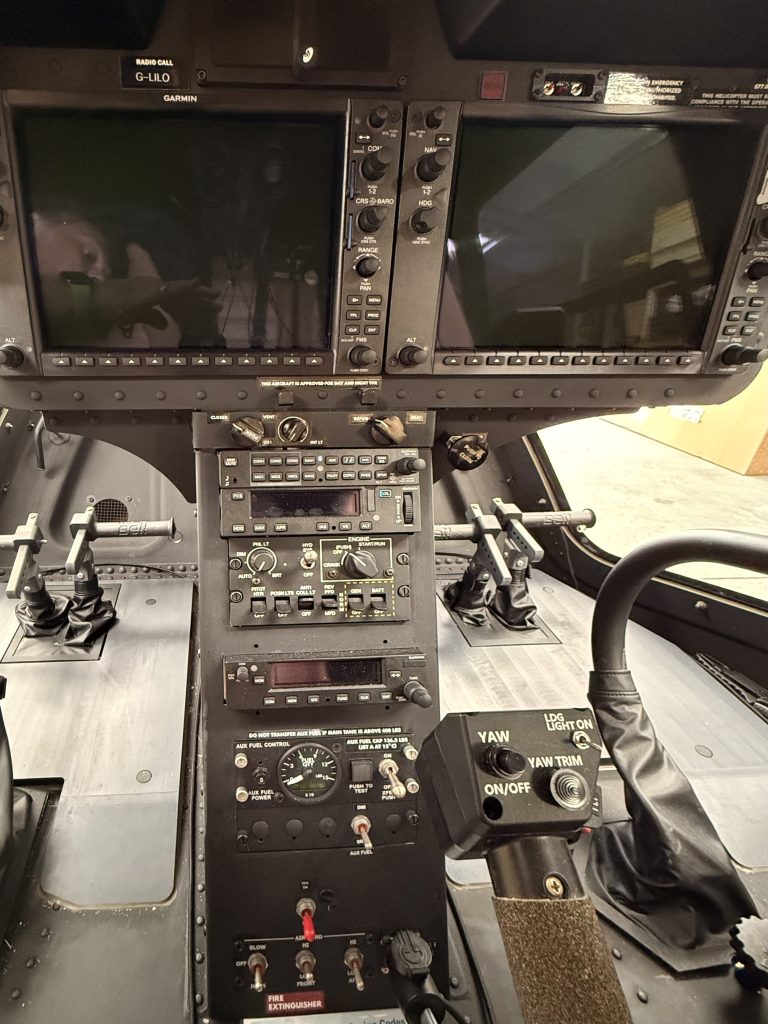
B505 meaty consoleVery good rear space and access with clamshell doorsGood visibility and spaciousLiferaft easily slips under unused seat. Here the first rear seat has been lifted out.
The Route
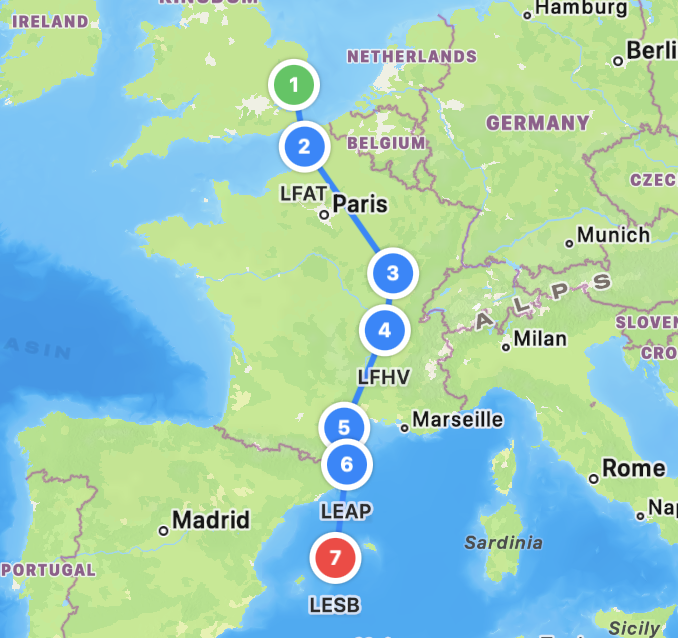
Outbound, we flew:
Block
Track
Leg
1.1 hr
92 nm
Suffolk to Le Touquet (LFAT)
2.5 hr
237 nm
Le Touquet to Darois (LFGI)
1.1 hr
89 nm
Darois to Villefranche-Tarare (LFHV)
1.9 hr
176 nm
Villefranche-Tarare to Raissac
0.9 hr
67 nm
Raissac to Empuriabrava (LEAP)
1.8 hr
168 nm
Empuriabrava to Son Bonet (LESB)
Outbound total: 829 nm over 9.2 hr block, averaging 90 SOG due to the poor weather in the first half and the greater number of stops.
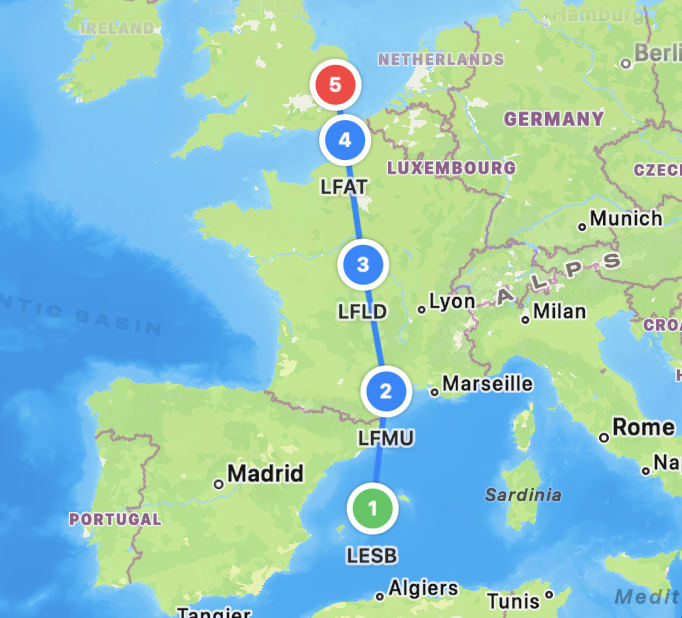
UK to MallorcaMallorca to UK
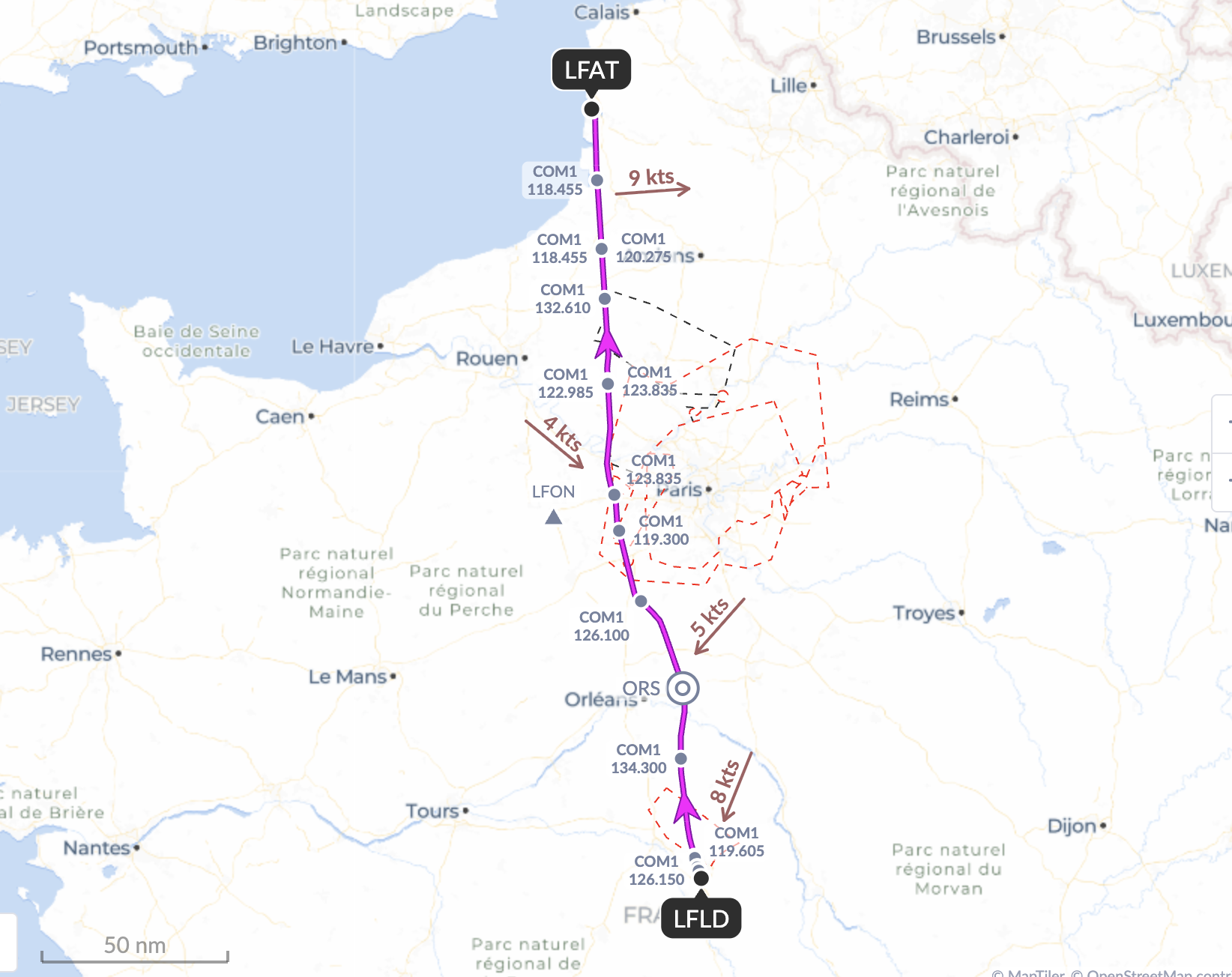
Return, we decided to route directly over the Massif Central in an almost straight line route, picking the easy refuel airports that happened to locate at about the right distance.
The return leg, where we effectively went home as fast as comfortably possible, was shorter and quicker than the outbound route averaging over 100 kt.
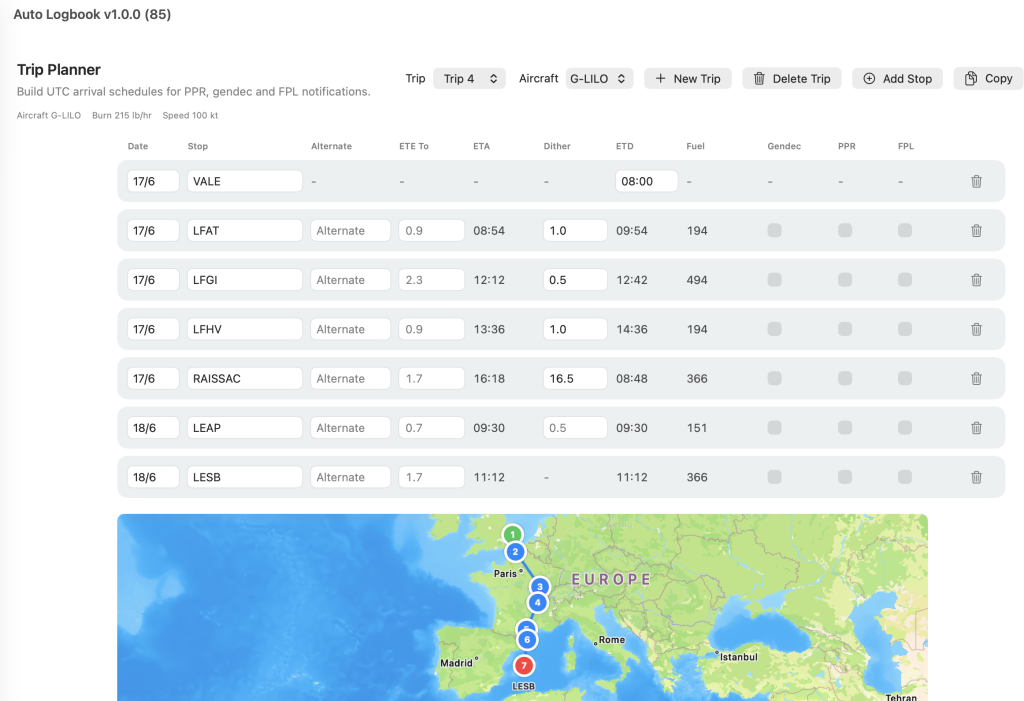
We used the Helipaddy Auto Logbook app which also has a cool trip planner
Fuel, Weekends And Automats
One of the advantages of flying through France at the weekend is that the restricted areas are almost all inactive. That can open up routings which are less attractive during the week.
The trade-off is fuel. Weekend fuel availability needs careful checking unless you are happy winging it from the air. Valence, for example, turned out not to be available for fuel on the way down so we used Villefranche-Tarare automation instead. This is a great option, by the way, with lots of GA activity, a buzzing café and hassle-free fuelling.
AvgasJet A1Military corridors!
We tend to prefer automats where possible, especially at weekends, and try to avoid the large yellow-jacket airports. Darois and Villefranche both worked in that sense, but they are very different stops. Villefranche has a nice cafe. Darois has nothing, not even toilets. Come to think of it, we weren’t asked for any landing fees either.
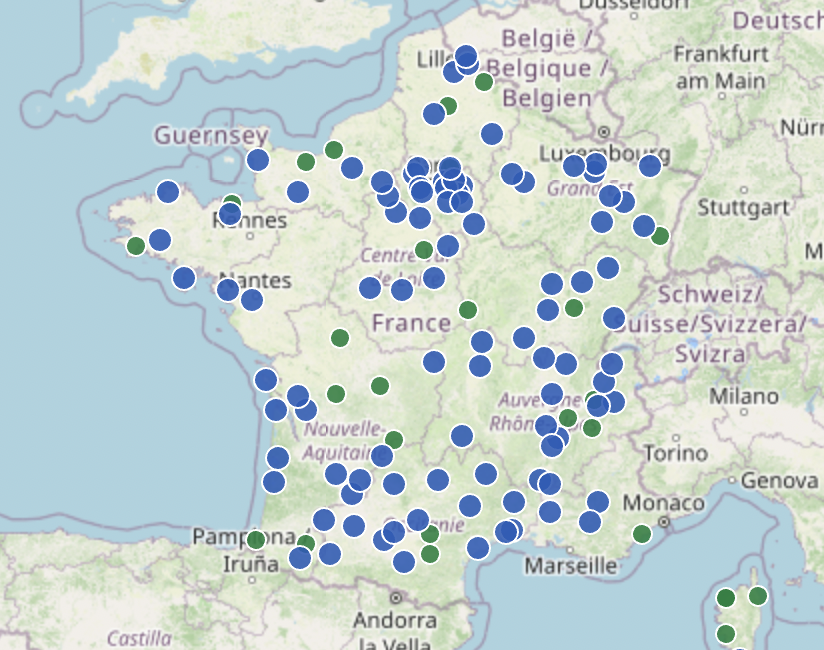
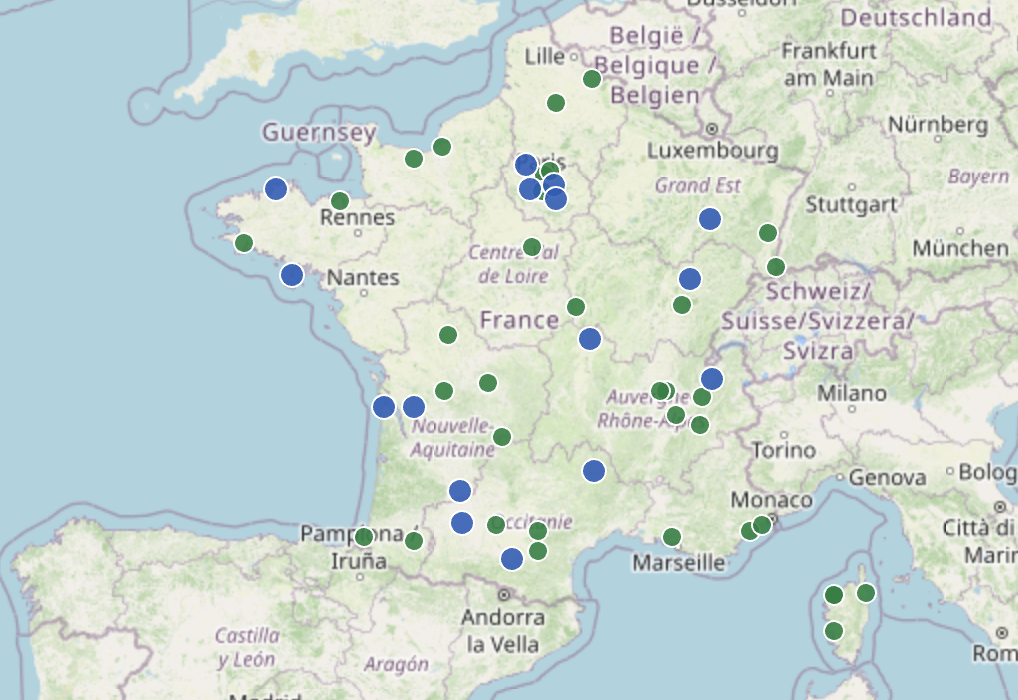
If you have a fuel card, Helipaddy’s Air BP and Total Energies fuel card map is a useful planning tool.
The Channel, EG098, And A Missing SUACS
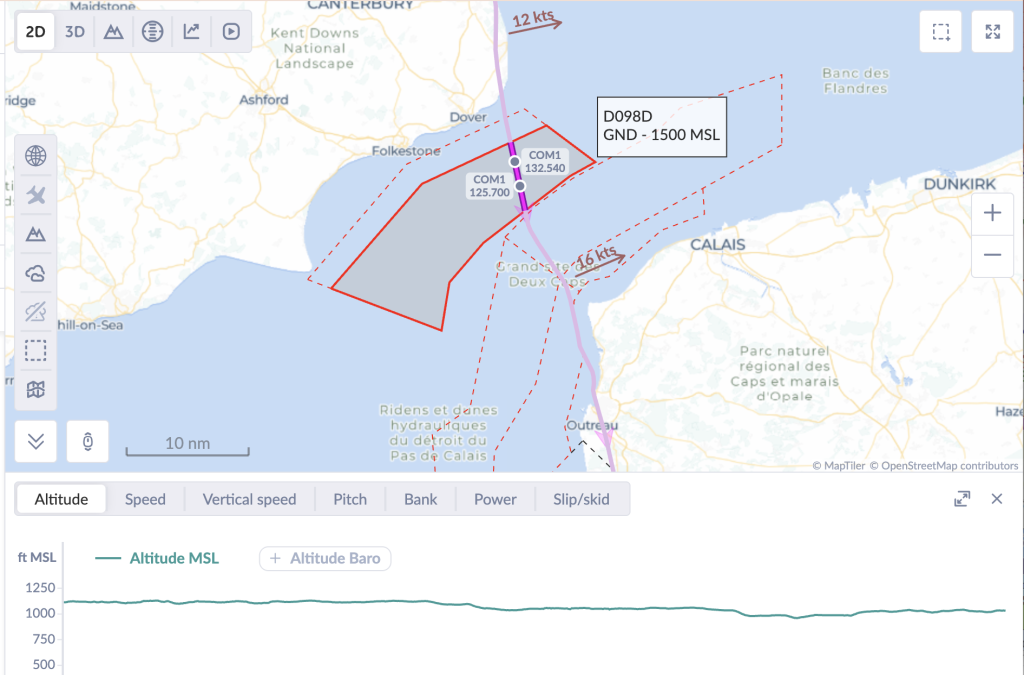
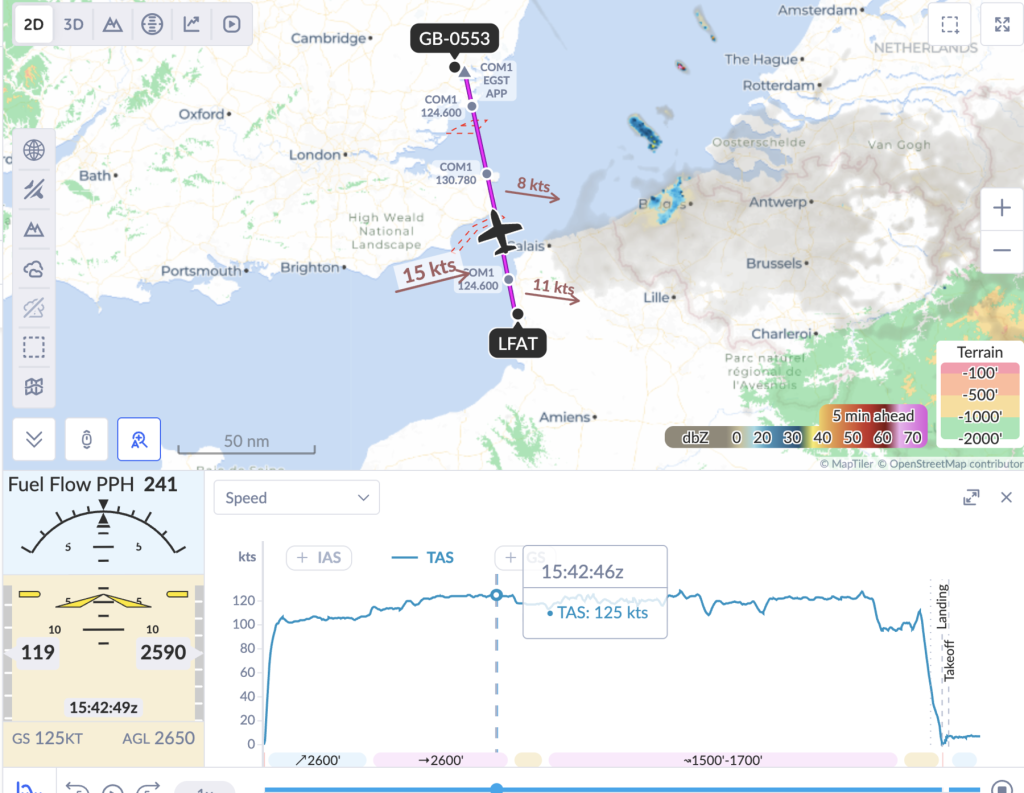
Unexpectedly, London on 124.6 gave us a low-level crossing of the Channel EG098 danger areas on the way out. That mattered because going above them would not have been safely practical in the conditions.
Transiting D098 low level with permission of 124.6
Helipaddy has argued that the Channel should have a SUACS, (previously called a Danger Area Crossing Service or DACS), rather than leaving these crossings to be solved ad hoc. Similar services exist for other areas, for example Plymouth.
On this day 124.6 gave us ad hoc permission to cross because it was deemed inactive, and we were grateful for it. As of June 2026, for the active/current D098 complex NOTAMs, the service stated is a SUAAIS not a SUACS — Special Use Airspace Activity Information Service. So you can get activity information, but the published wording does not give you a notified crossing service/clearance mechanism. Treat active D098 segments as active TDAs to avoid unless the relevant NOTAM/AIC or ATS provider gives a specific crossing arrangement.
This is exactly the kind of route where a predictable, published service would make sense.
Why We Did Not Go Direct Outbound
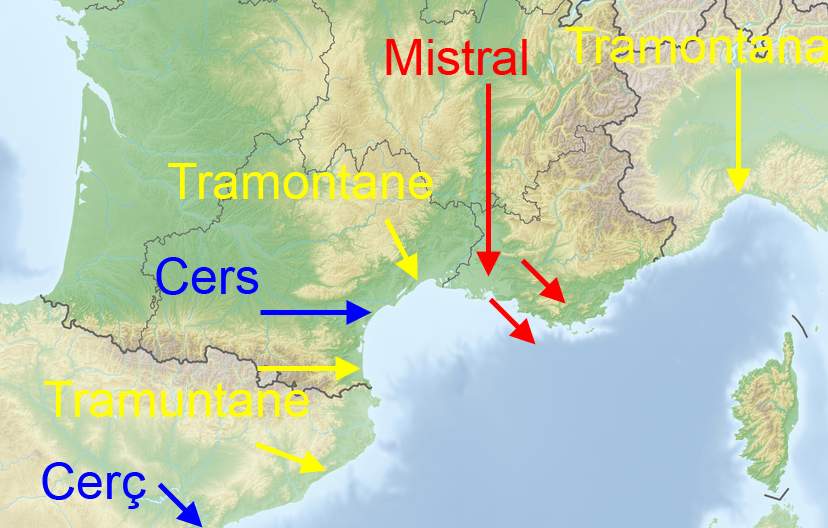
Winds all work in your favour outbound. The Mistral can be very strong.Last flight was 51 kts in the Gulf of Lion
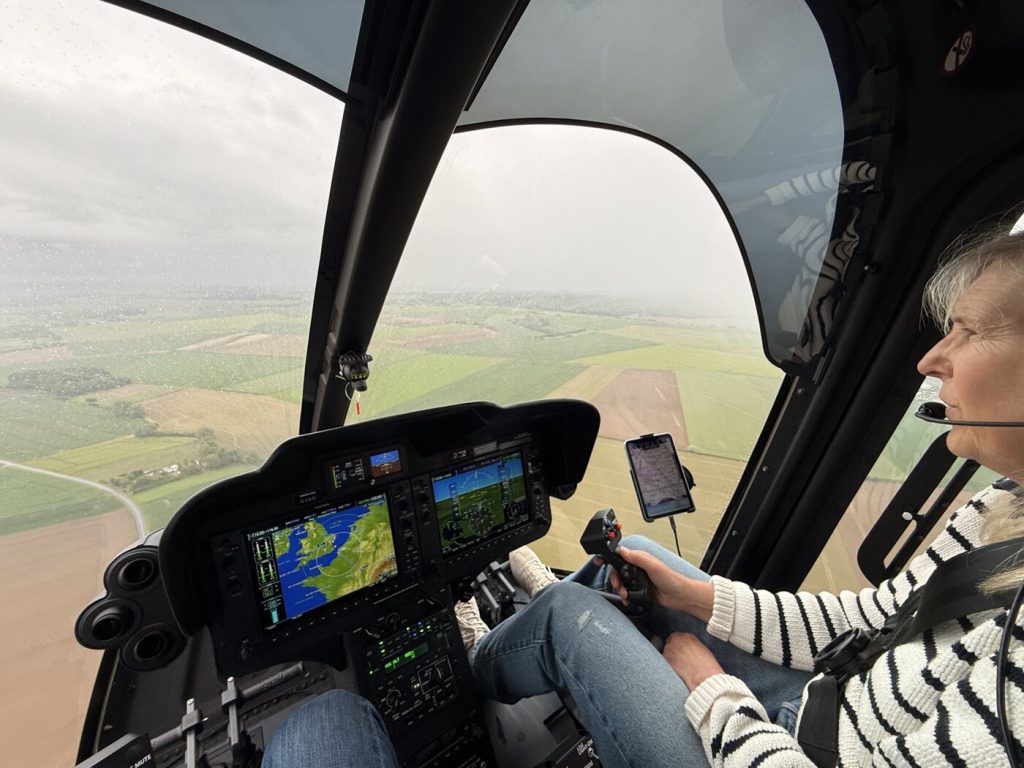
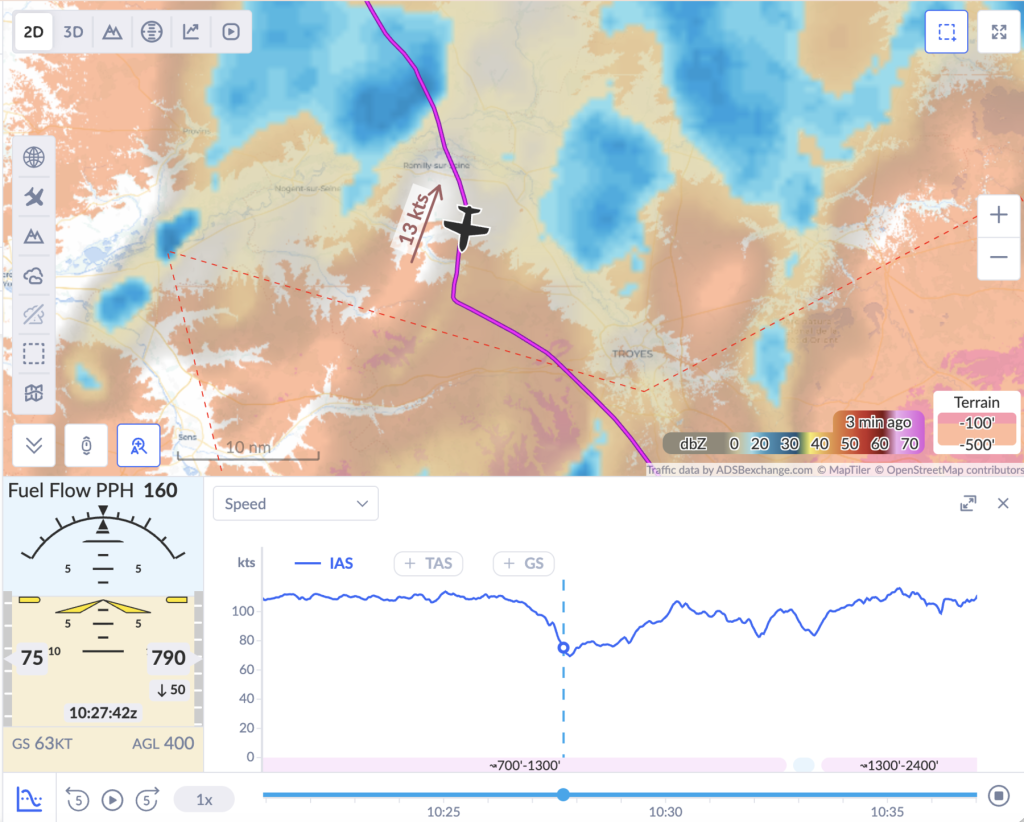
Travelling south through France, we do not normally take the easterly or direct routes, i.e. east of or over the Massif Central, when there is risk of high Mistral winds. However, with the 505, we feel more comfortable taking the easterly Lyon route than the lower terrain westerly Limoges route, the added bonus being a 25 knot tailwind southbound. As it turned out, the bigger problem was weather in northern France, so we had to work along the valleys around Troyes before continuing south. French ATC are onto this and require you to call in every 5 minutes in such conditions.
Northern France was the awkward part of the outbound route.Northern France made the outbound route the awkward one, with the track working along valleys around Troyes.
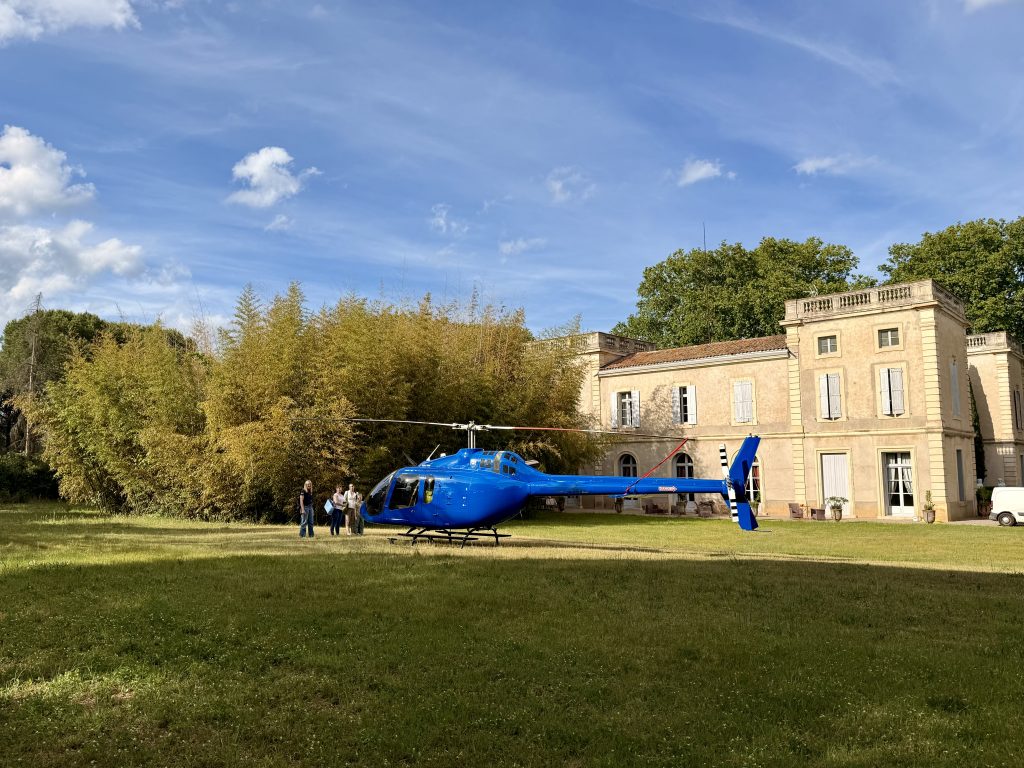
The other outbound constraint was journey time. On the way down we were more time constrained because of Son Bonet’s closure time, so rather than trying to force the whole trip into one day we broke it at Chateau de Raissac, a wonderful Helipaddy site, and made the final run to LESB an easy morning leg.
That was the right decision. It took pressure out of the day, gave us a proper overnight stop, and left the final sea crossing and Mallorca arrival for the morning.
Landing site is fairly confined at RaissacArt by Jean Viennet and his wife Christine Viennet
Chateau de Raissac is small family-run chateau, home to an artist Christine Viennet who was well known for Majolica style of sculpture. Her husband, Jean Viennet now deceased, has covered the interior walls in murals of dizzying four-eyed beings with double eye pairs. Two hours of staring at the MFD and PFD had left us with bifurcated eyesight and viewing the double eyes on arrival was quite discombobulating.
Final push to Mallorca
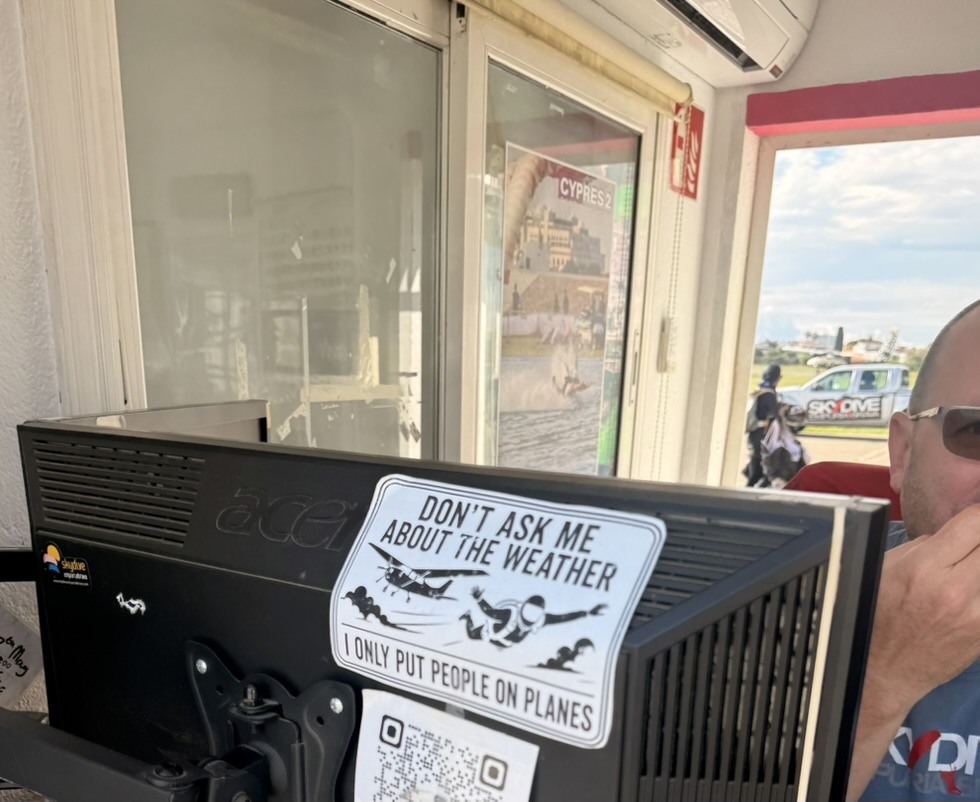
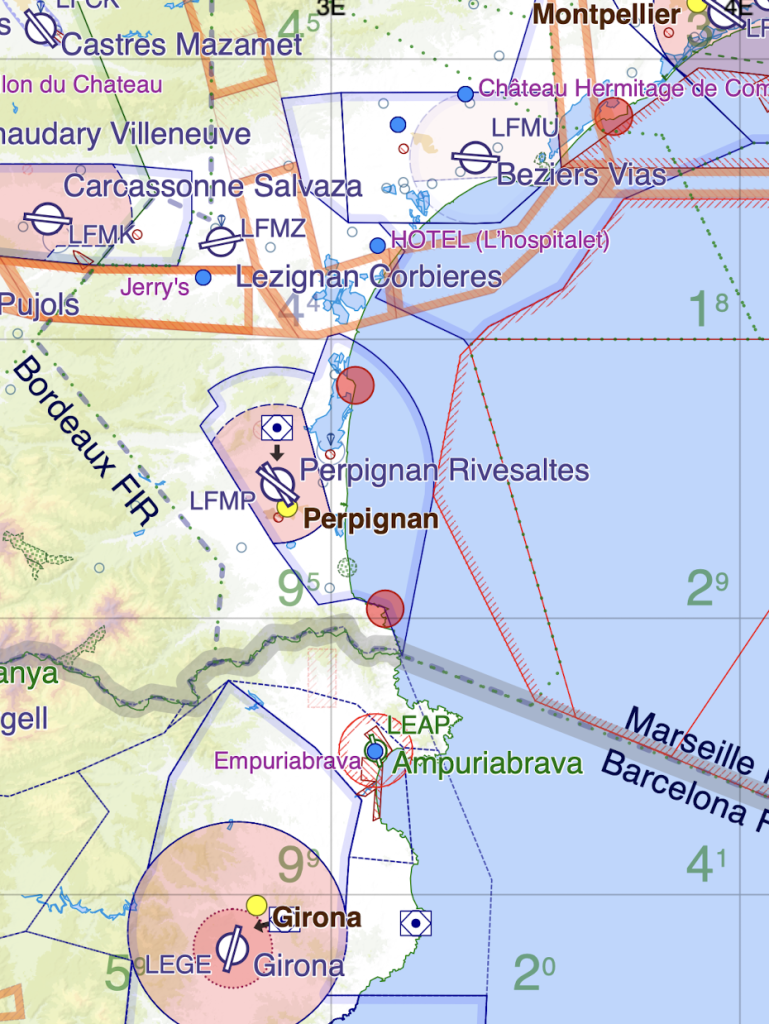
From Raissac, the run to Empuriabrava (LEAP) was a great option for a fill-up unless the sea fog has pushed inland. Obviously, we asked the parachute plane pilot for the weather (see below). From LEAP we had the final leg across to Mallorca and Son Bonet.
Our preferred pre-crossing refuel is LEAP because they are super-friendly, refuelling is efficient and there is a cafe and its fun watching the parachutists. It is already in Spain so a flight plan is needed to it from France. It makes little difference to the LESB paperwork as a flight plan is required anyway for the sea crossing.
LEAP is slightly inland and sometimes covered in sea fog (as it was for our return) so the other options are Beziers or Perpignan.
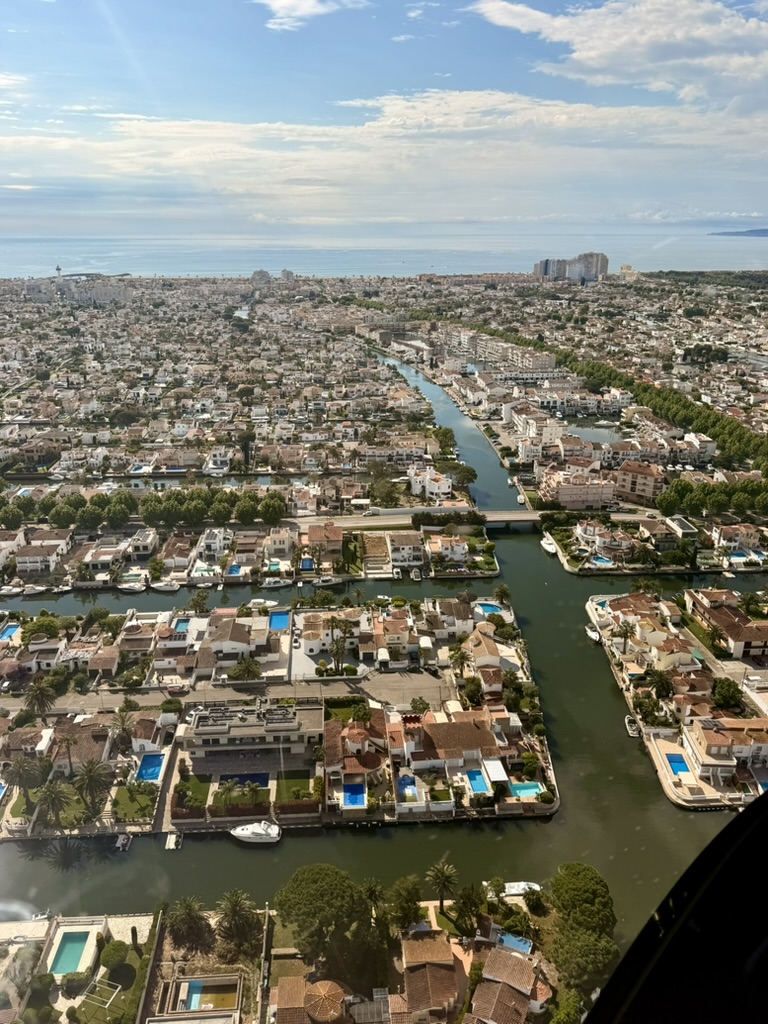
don’t ask for the weather!The canals of EmpuriabravaPre-coasting out uplift options
Into and out of LESB, we like to be full. If anything changes over the sea, fuel gives you time and choices. That is especially important in the 505, where the endurance difference compared with the R66 is the main planning constraint.
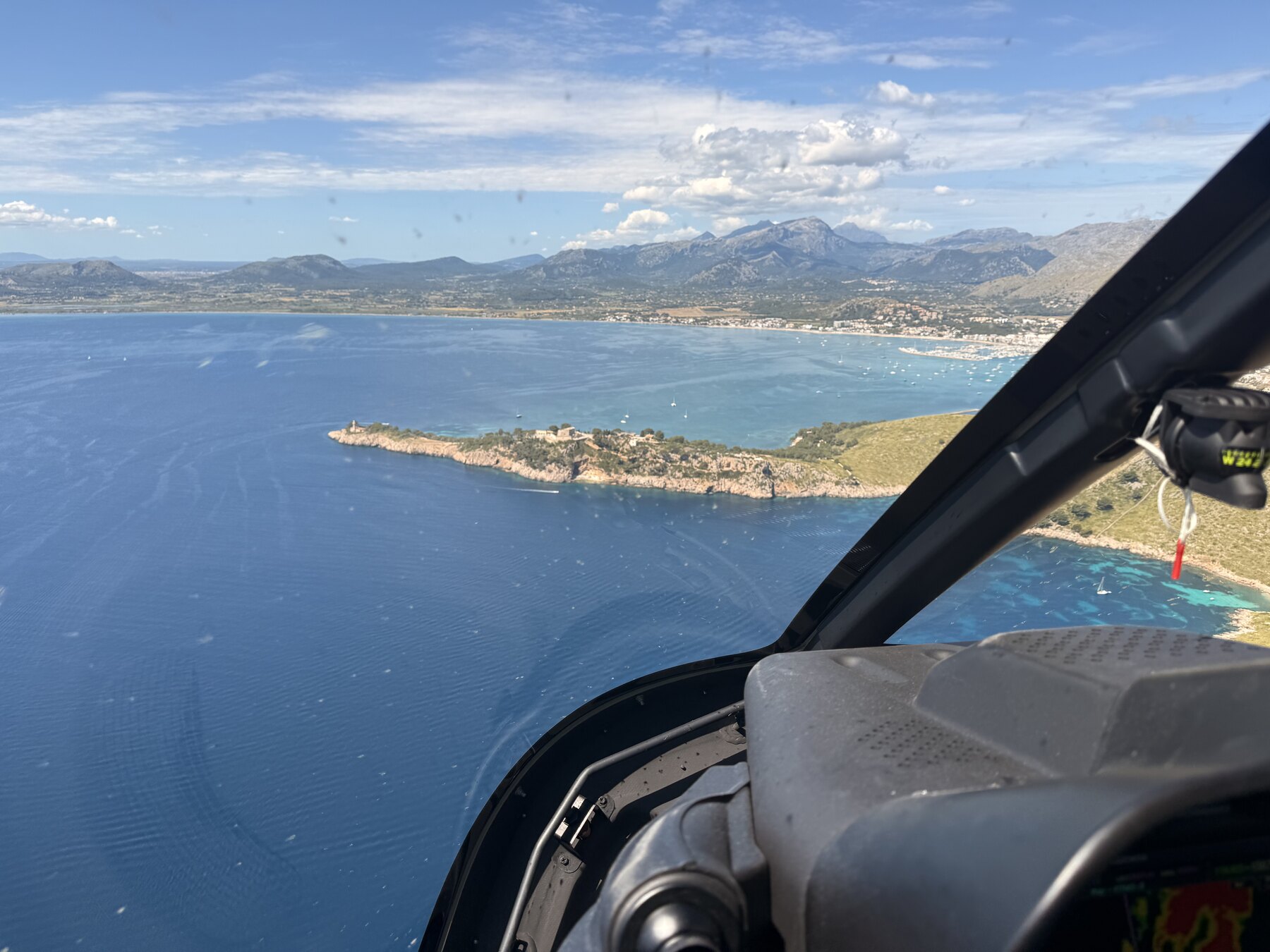
Coastal flying on the final approach to Mallorca.
Son Bonet: Read The Briefing, Then Keep Digging
All pilots note: Aena has introduced a local familiarisation requirement for pilots operating at Son Bonet. The April 2026 Son Bonet pilot familiarisation dossier says that, before operating at the airport, pilots must confirm to the airport that the document has been reviewed. Unfortunately, Aena has also made this an annual requirement.
The briefing is useful, but it should not be treated as a complete operating guide. It focuses heavily on local airspace, circuit discipline, arrivals, frequencies and key points around the RMZ visual corridors. It also reinforces a few important basics: Son Bonet is VFR-only, has no ATS, AFIS or ATC, and coordination with other traffic on the correct frequency is essential.
On our arrival, one aircraft entered the LESB circuit while still on the LEIS frequency used for the VFR corridor east of LESB.
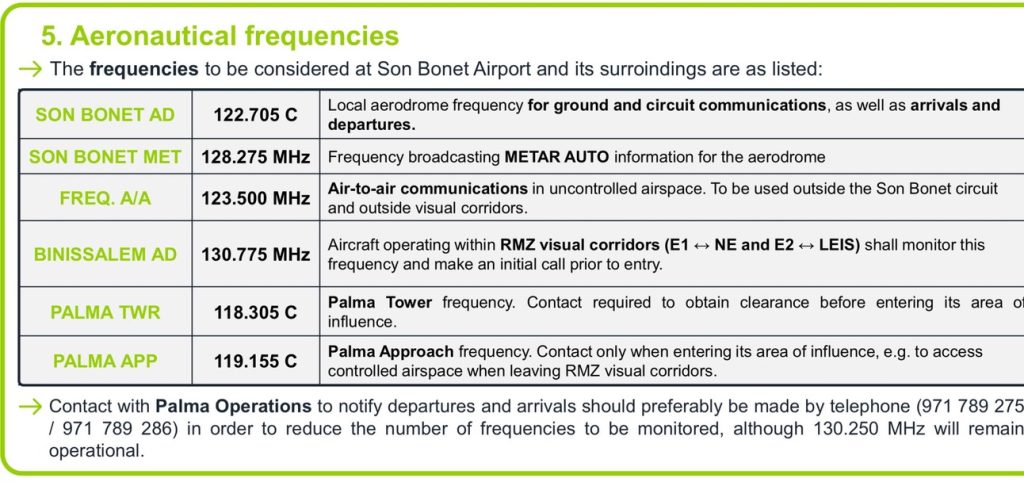
If you follow the intended process when arriving from the north-east, you can be expected to use at least four frequencies in around 20 nm: LEPA APP approaching the north coast, 123.5 for Mallorca Traffic once feet-dry, LEIS Radio entering the E1-NE VFR corridor, and then LESB Radio after leaving the corridor for Son Bonet. That is a lot of frequency changing at exactly the point where clear traffic awareness matters most.
There are also important omissions. The familiarisation dossier has a dedicated arrivals section, but no equivalent departures section. Practical flight-plan handling needs particular care. The local rules state that all flights with origin, destination or alternate LESB require a flight plan and radio equipment; all departures must have the flight plan opened by Palma Operations on 130.250 before departure; and local flights must have the flight plan closed by Palma Operations after landing.
Visiting pilots should verify the current practical procedure with Balearic Helicopters before flying.
The departure routings need careful briefing too. For Runway 23, departures to the north or training areas route from the end of crosswind towards NN at 1,200 ft, climbing to 2,500 ft by N; departures to the east route from the end of downwind to abeam E at 1,200 ft. For Runway 05, departures to the north or training areas again route from the end of crosswind towards NN at 1,200 ft, climbing to 2,500 ft by N; departures to the east turn right from the end of crosswind and proceed to abeam E at 1,200 ft.
In short: complete the Aena familiarisation, keep evidence of completion, read the current LESB AIP and VAC, and do not rely on the familiarisation PDF alone for flight-plan handling or departure procedures. The familiarisation document itself says it does not replace the AIP, and as of writing it is not mentioned in the LESB AIP.
Balearic Helicopters
As always, Jonny at Balearic Helicopters was there to meet us on arrival and whisk G-LILO into a nice dark hangar. We had bought some easy wheels and pushing the 505 is a doddle.
The guys at BH have become part of the Mallorca routine for us: immigration tips, mainland refuelling suggestions, and good ideas for interesting stops. When we returned to Son Bonet for the flight home, the windscreen had been washed, G-LILO was refuelled, the life vests were on the seats, and the helicopter was on the pad facing the shade.
Those details matter. A long trip is much easier when the destination handling is calm, practical and already thinking about your departure.
The Route Home
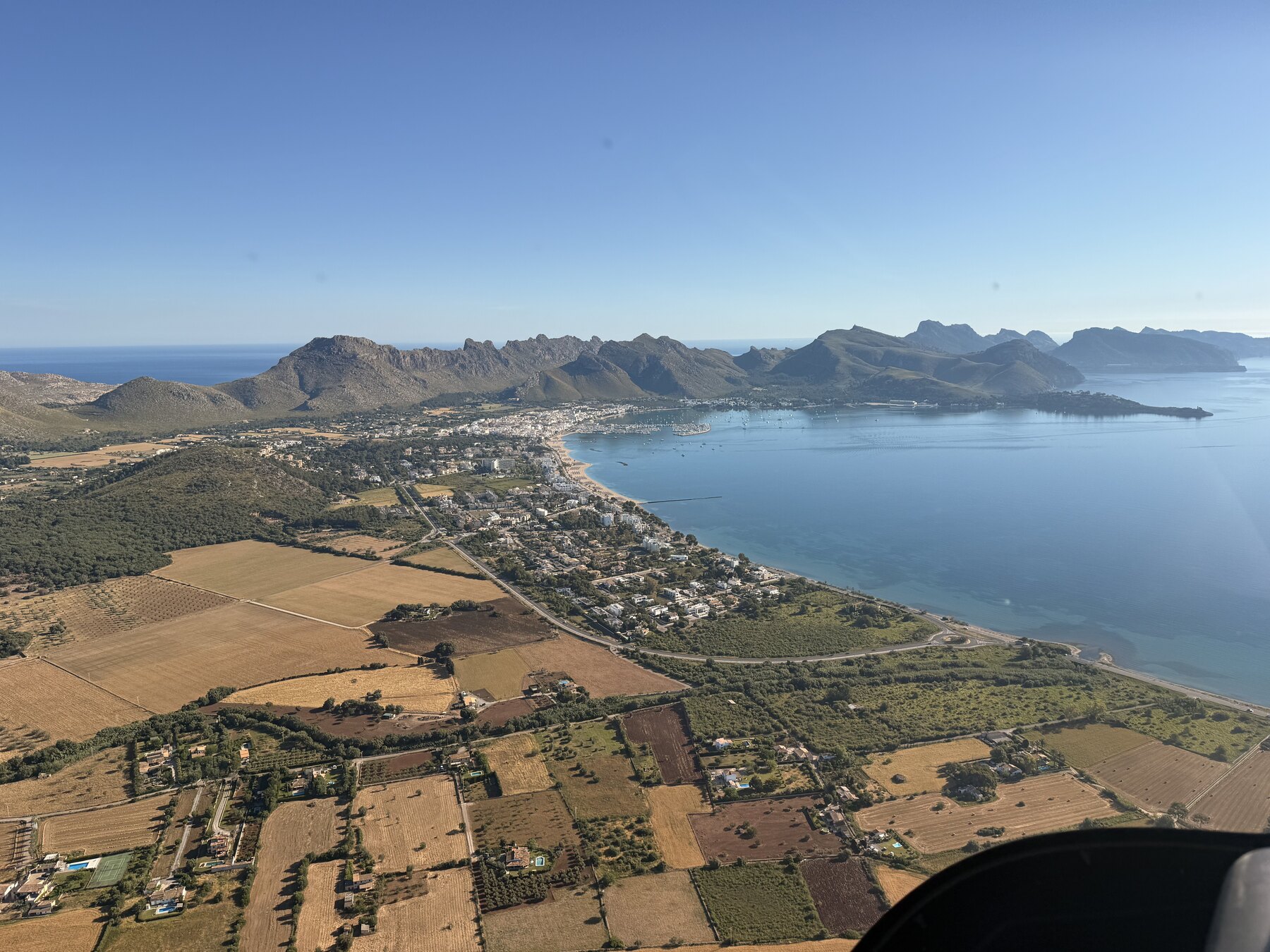
Balearic Helicopters had G-LILO washed, fuelled and ready for the return leg, here pictured over Pollensa.
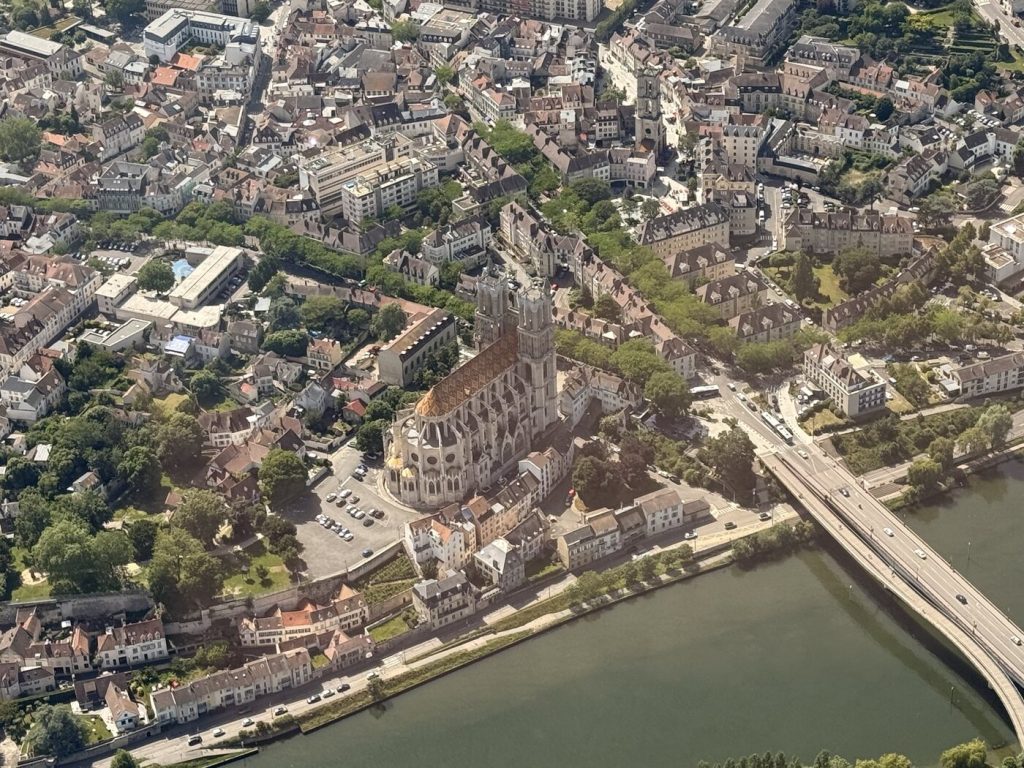
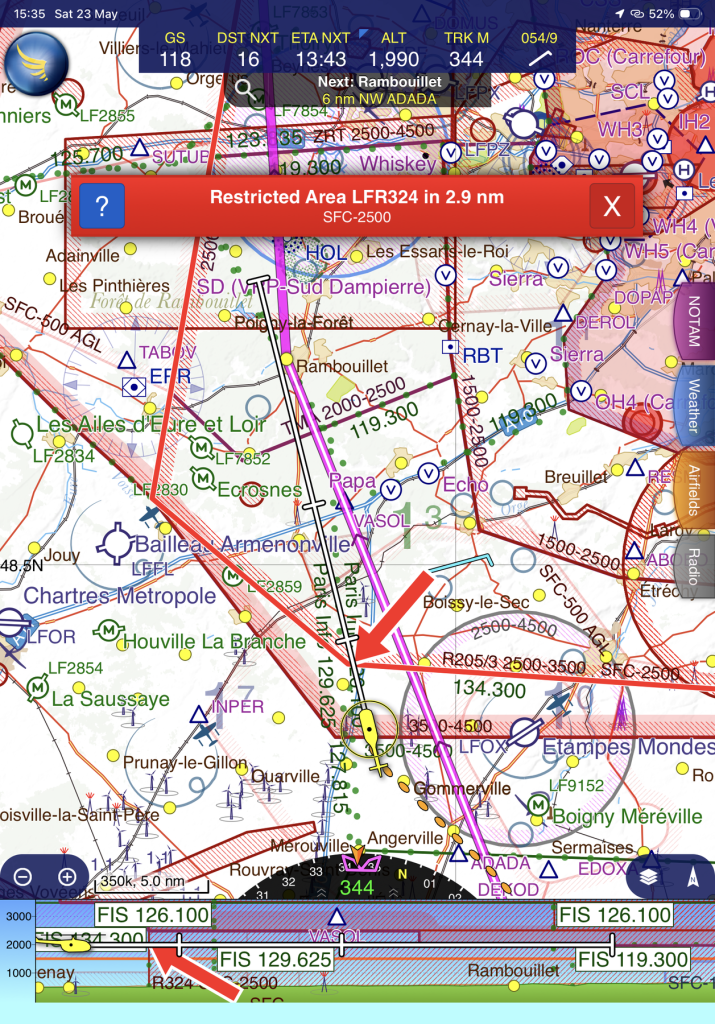
The return journey was simply one of getting back efficiently. The weather showed very little wind, so we took a more direct route over the Massif Central. Weekend flying through France also helped. We requested a routing close to Paris and were allowed through LFR324 without an issue.
The timing picture was easier too. Le Touquet had immigration available until 1700Z at the weekend, and our UK arrival was at home, a COA-designated site for immigration, so the hard limit was sunset rather than an airport closure.
The northerly return sea crossing did require VFR on top near Girona as the cloud layer was visibly running down to the sea, as the photos show. After refuelling at Béziers, conditions quickly improved and we climbed to 6,000ft over central France enroute to Bourges, near Avord.
Near Girona, the cloud layer was visibly running down to the sea.The return weather made the direct route over the Massif Central attractive.The return route was direct, smooth and efficient compared with the outbound.Paris RA’s could be crossed OK, in the past we avoided themPlenty of traffic avoidance on this leg
The video below gives you an idea of the sort of terrain in the hills of central France, which does not offer attractive autorotation options.
Massif centralWe sped along at 125 knots on the final leg home.
These long trips are where the Bell 505 comparison really stands out. It is significantly more comfortable in turbulence than the R66 and the solid build is noticeably quieter. That does not remove the planning problem created by the shorter endurance, but, along with the 3-axis autopilot, it does make the flying less tiring.
What We Would Do Again
I think we would take the same route both ways in future, taking the Massif Central head on, unless winds are above 20 kt. The 505 has a great fuel range ring display on one of the two large G1000 screens. We found we were quite over-conservative and didn’t actually land with less than an hour of reserve on any leg.
We would again split the outbound if the destination closure time made the day too tight. LESB closes at 18.45 local, which can make it a bit of a rush by the time you include stops. A known Helipaddy site like Chateau de Raissac is a much better overnight break than pressing on because the line on the map looks possible. The hotel stay only cost about an hour of fuel.
We used our trip-planning tooling to simplify the paperwork: SGAR, GENDECs where needed, and flight-plan profiles. The app fills in the SGAR for me automatically, creates GENDECs if needed and profiles flight plans.
Final Thought
The logbook says around 16 hours block time. A trip like this is a set of small, conservative decisions made in the right order: fuel, paperwork, weather, alternates, local procedures, and only then the romance of drawing a line to an island.
The 505 made the trip quicker and more comfortable. The R66 might have been a bit cheaper if we took the same routing. If we had been 4 people on board, I don’t think I would even try it in a 66.