Site Owners
Pilots
Download our app below to start discovering new landing sites




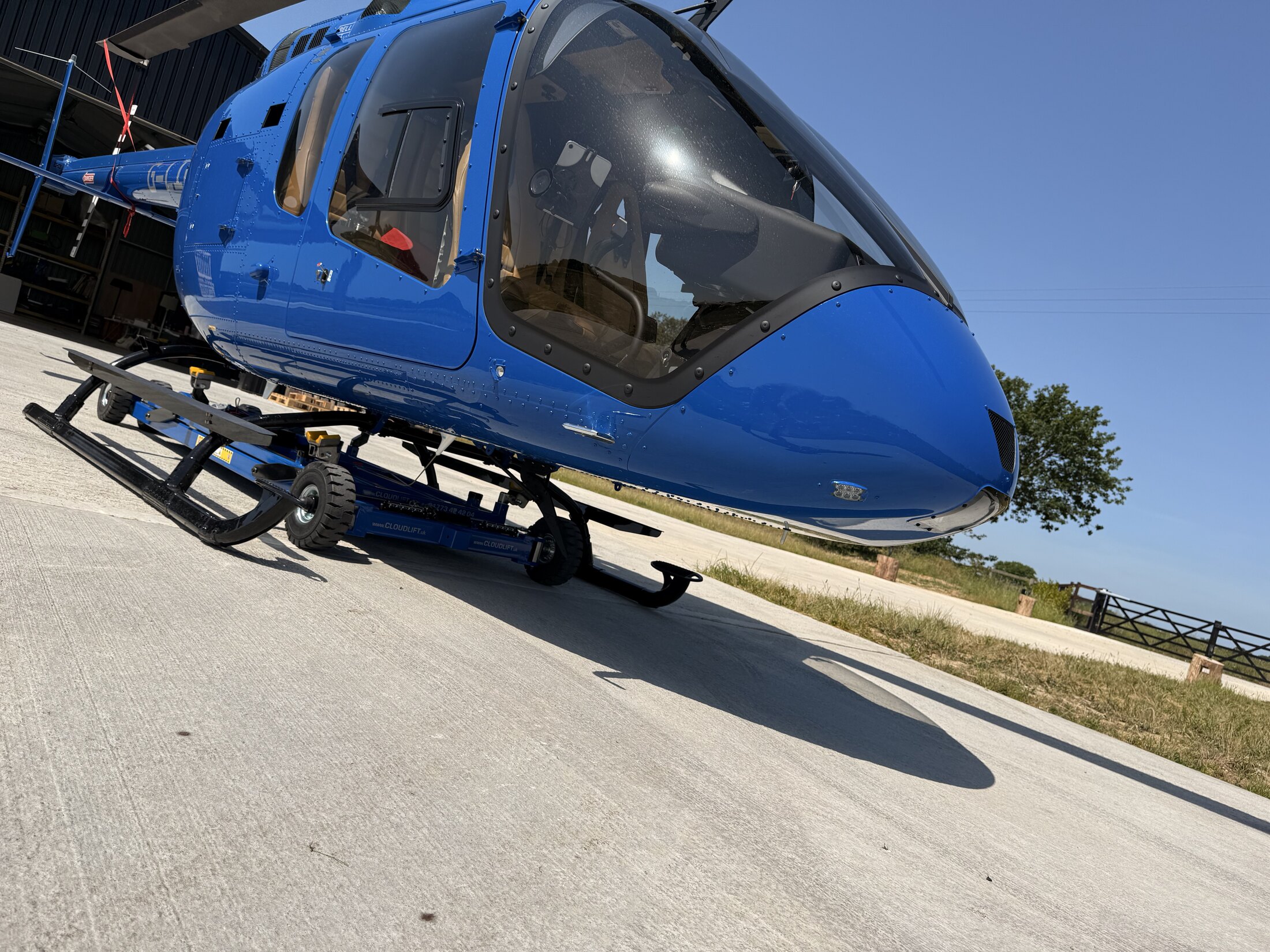
Moving a helicopter on the ground is one of those jobs that looks simple until you have to do it repeatedly, alone, with expensive blades, hangar doors, other aircraft and awkward surfaces all nearby.
We have been looking for a better answer for our Bell 505, G-LILO. It is the blue 505 in the photos here, and it has the low-skid variant. That detail matters. A helimover that looks broadly suitable for a 505 can still become uncomfortable if the lifting cups sit too close to underside aerials, fairings or other fittings.
The option we ended up with was the Cloud Lift helimover from Cloud Manufacturing. It was not a completely frictionless first fit, but the way the issue was handled is the reason I would happily write about it.
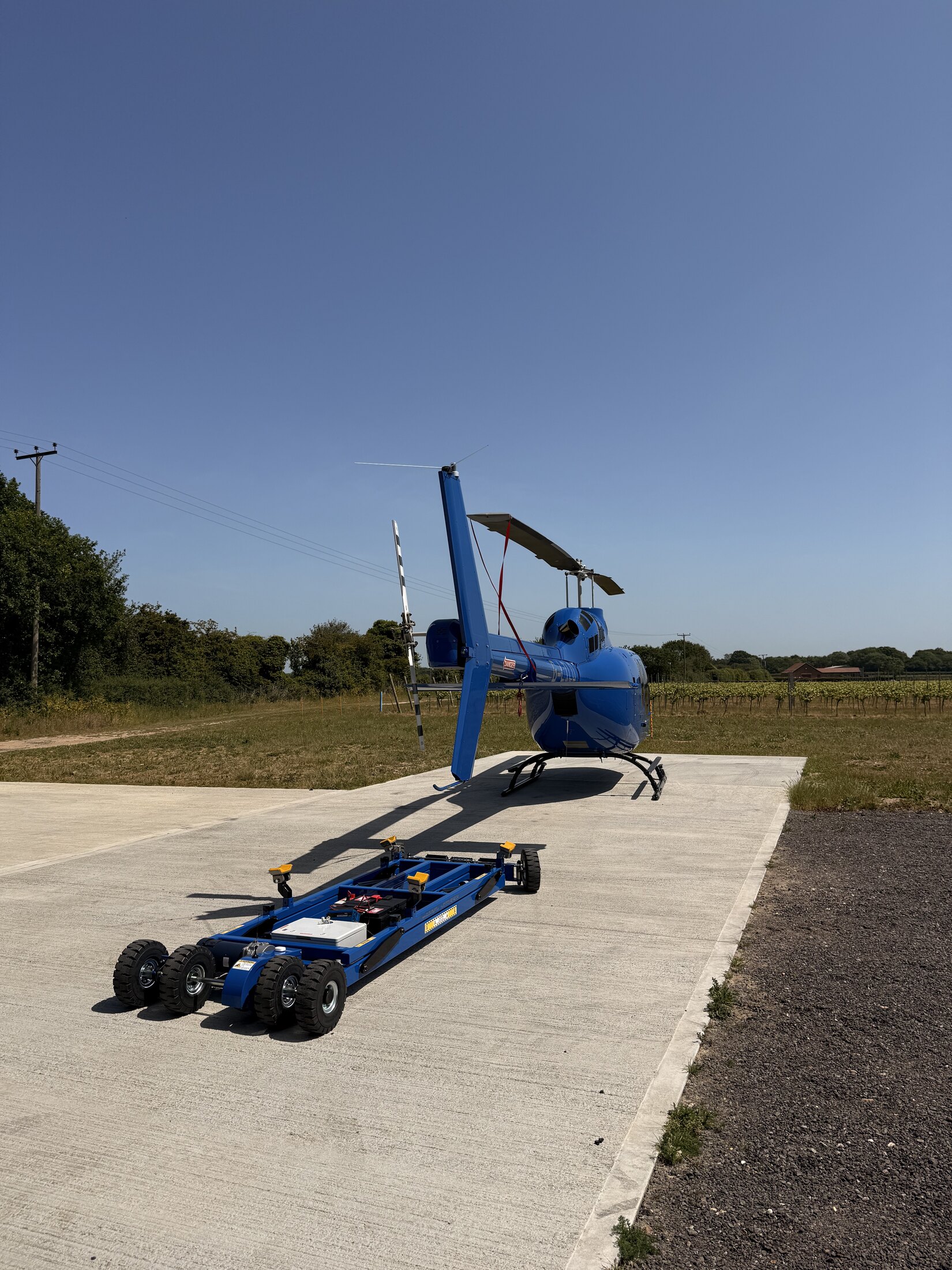
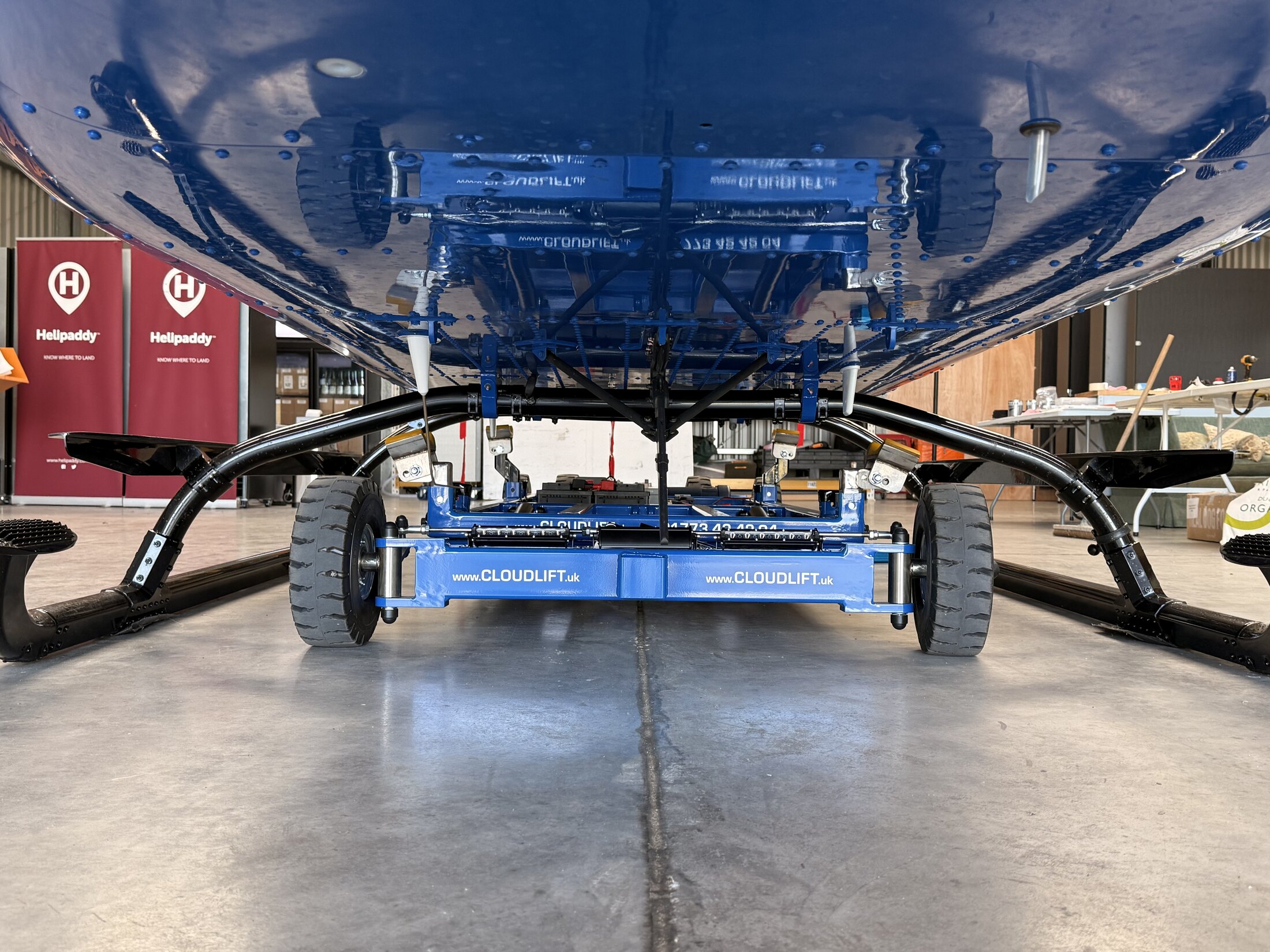
The first setup lifted and moved the aircraft, but the cup position on our low-skid 505 left the lifting points uncomfortably close to the underside aerials. It was not a dramatic failure. It was more useful than that: a reminder that compatibility charts are only the start of the conversation.
Skid height, aircraft fit, the exact underside aerial layout and the way the mover approaches the aircraft all matter. On a high-skid aircraft you may have more room to play with. On our 505, the margins were tighter.
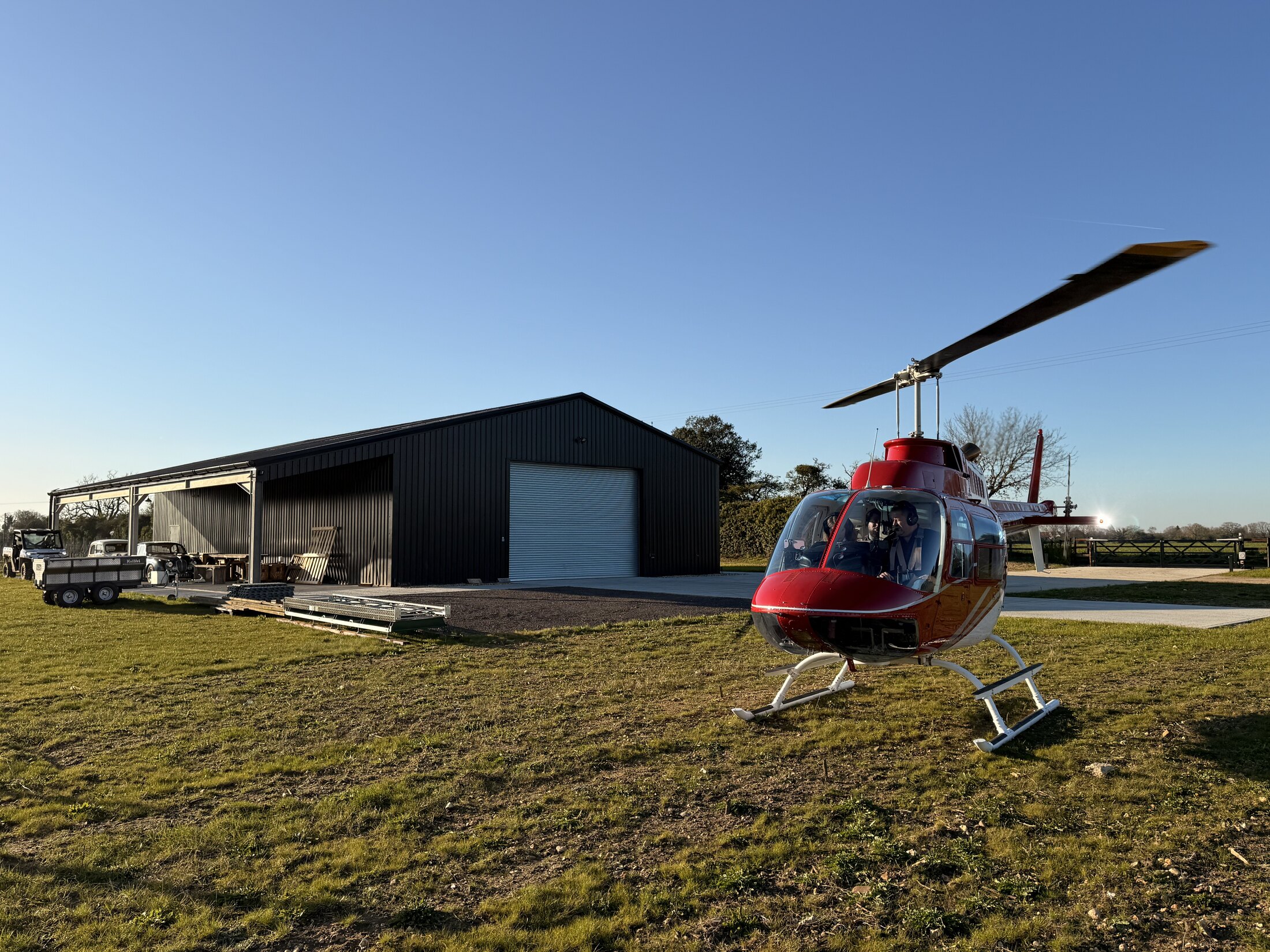
Andy Thompson from Cloud Manufacturing flew over in his own Bell to look at the installation properly. That is the red helicopter in the photos. He then reconfigured a new unit around the real aircraft rather than asking us to live with a compromise. That is excellent service, and it made the difference between a good idea and a usable tool.
There are several reasons a private owner or small operator starts thinking about a dedicated helimover:
Cloud Lift’s appeal for us was the combination of direct lift, remote control and slow, precise movement. Cloud Manufacturing describes the current machine as a wireless remote-controlled helimover, built to order, with configurable speed and acceleration, and compatibility for both low- and high-skid Bell 505s. In practice, the important bit for us was not the brochure language. It was whether the finished machine could be made to work around G-LILO.
Cloud Lift is not the only way to move a helicopter, and it will not be the right answer for every aircraft or site. Before buying anything, I would separate the options into four practical groups.
Ground wheels are simple, relatively inexpensive and perfectly adequate for some light helicopters on good surfaces. The drawbacks are also obvious: they can be physical, they usually need care and sometimes help, and they are not the nicest answer when the aircraft is heavy, the surface is uneven, or the hangar margins are tight.
A tug can be a strong solution where the geometry works. It may be familiar to clubs and commercial operators, and it can be very effective on flat, predictable ground. The key questions are how the tug attaches, whether it suits skids rather than wheels, how much turning control you really have near obstacles, and whether the aircraft’s low-skid geometry introduces awkward clearances.
Carrier-style systems, such as Helitowcart’s Heli-Carrier range, are designed to support skidded helicopters and can be very capable for heavier duty operations. They are worth considering, especially if you move several aircraft types or operate on more demanding surfaces. For us, the deciding issue was not whether a carrier-style mover is a serious product. It was whether a specific machine could solve our low-skid Bell 505 clearance problem at a sensible price.
This is where Cloud Lift landed for us. A built-to-order mover has to justify itself because it is a more involved purchase than a set of wheels. The advantage is that the details can be made aircraft-specific: lift cup position, control behaviour, tyre choice, lighting, charging options, colour and the way the unit is used day to day.
In our case, Cloud Lift came out cheaper than the other serious options we looked at and, more importantly, was the only option we found that properly dealt with the low-skid 505 variant rather than treating it as a footnote.
If you are comparing helicopter moving systems, I would not start with the headline lifting capacity. I would start with these questions:
That last point is not a throwaway line. Helicopter equipment is a small world. A supplier who will come and look at the real aircraft is worth a lot more than a supplier with a neat brochure and no appetite for the awkward details.
For G-LILO, the Cloud Lift now feels like the right answer. It moves the 505 with the precision we wanted, keeps the job manageable by one person, and has been reworked around the awkward low-skid clearance issue rather than ignoring it.
The main lesson is that “compatible with Bell 505” is not enough detail. Ask whether it is compatible with your Bell 505, with your skid height, your aerial fit and your hangar layout.
If you are planning longer trips, hangar changes or operating from unfamiliar sites, Helipaddy is still built around the same practical principle: know the real-world detail before you commit. You can browse more pilot notes on the Helipaddy blog, use site search to look up specific topics, or sign in via your Helipaddy account before planning the next route.


