Site Owners
Pilots
Download our app below to start discovering new landing sites




Updated 02/11/23 Link to EASA Night IMC video and Bruce Webb practical advice if you enter IIMC
“U.S. accident statistics reveal that a helicopter pilot who unintentionally continues VFR flight into IMC will very likely lose control of their aircraft and be dead within a median time of 56 seconds“
Nick Mayhew- US Helicopter Safety Team
See also CAA Safety Sense leaflet here.
Instrument meteorological conditions (IMC) exist during times of rain, low clouds, low levels of ambient light and or reduced visibility, and are often referred to as a ‘degraded visual environment’.
Different states have different legal definitions, e.g. UK VFR rules permit VFR flight as long as you ‘Remain clear of cloud with the surface in sight and in flight Vis >1500m below 3000ft (less than 140kts!) ‘
Inadvertently entering IMC remains one of the most dangerous and prolific cause of fatal helicopter accidents, which has claimed the lives countless of private and professional helicopter pilots alike. When a pilot loses visual reference to the ground, it can be difficult to maintain control of the helicopter, especially in a light, single engine helicopter without any form of stabilization system (e.g. stability augmentation system – SAS, or Autopilot). This can lead to a loss of control and an often fatal crash.
So, in this article we will explore why IIMC can be so deadly, how you can avoid entering it, and finally, when the chips are down, techniques you can use to safely deal with IIMC, if you unfortunately find yourself in this situation.
Firstly what is it and why is it an issue:
“IMC flight is one of the most demanding, disorienting, and dangerous conditions a pilot can experience. These encounters result in the highest percentage of fatal injuries from helicopter accidents”
Randy Mains – CRM Instructor / Author
Analysis by the Australian Transport Safety Bureau (ATSB) found that 23% of helicopter crashes (47 accidents) in Australia between 2003 and 2022 were caused by flight in inadvertent instrument meteorological conditions (IMC). Similar analysis by the US NTSB identified 129 fatal crashes in the same period with the same cause- data from 2011 showed that 86% of IIMC incidents resulted in fatalities
Why is the loss of visual references an issue – the helicopter doesn’t know its flying in cloud after all, so why is so dangerous?
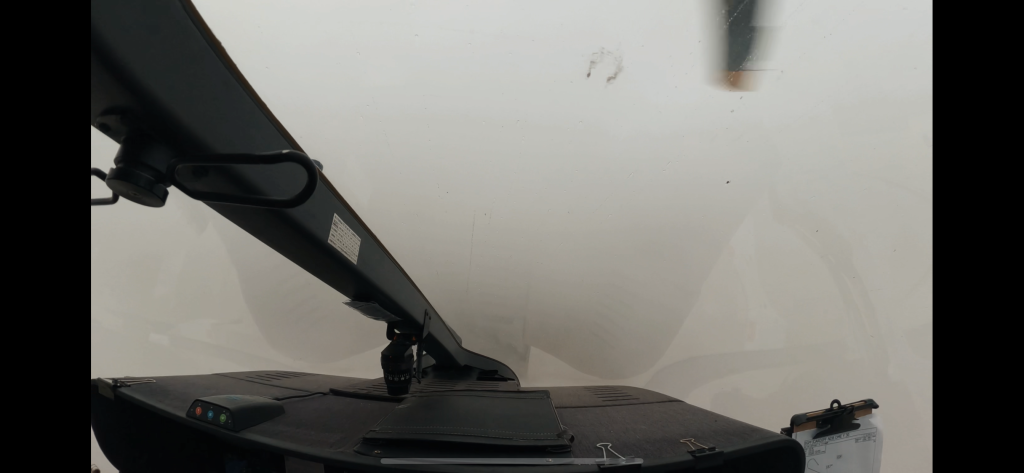
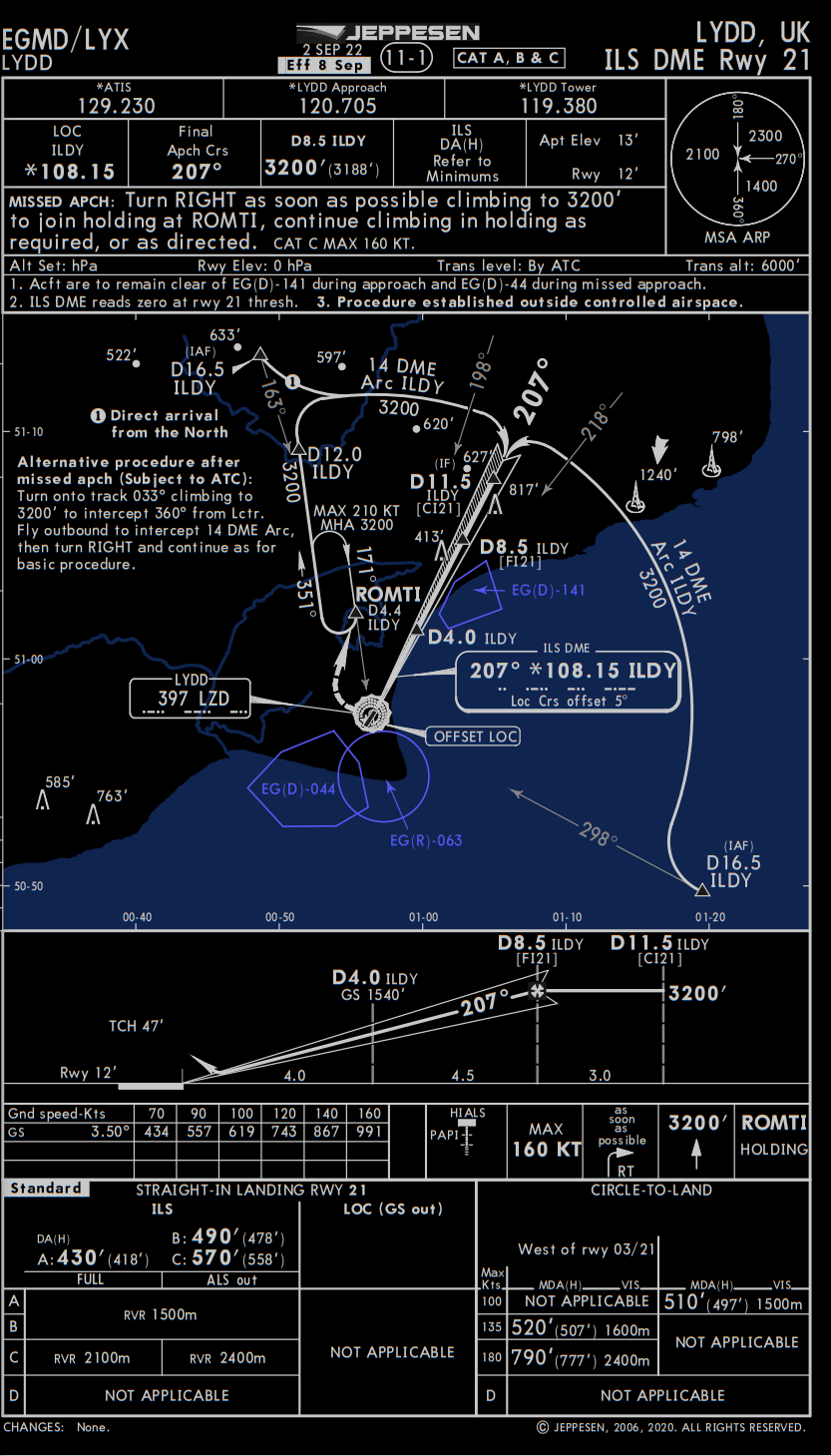
Routine, safe IMC flight occurs safely as a daily occurrence, in offshore helicopter operations, or daily scheduled airline flights, which are governed by instrument flight rules (IFR), and are usually provided under positive control of air traffic control (ATC). However, the nature of onshore helicopter flying is such that you are usually going to a landing site that doesn’t have the complex infrastructure to facilitate IFR flight.
Safe IFR flight requires specifically equipped aircraft, trained and current pilots, and appropriate route planning.
Currently in Europe, all IFR certified helicopters are twin engine, however, the Bell 407GXi (IFR certified in 2019) and Leonardo AW119 are leading the way in the USA with FAA certified IFR versions available – requiring the install of a second electrical generator system , second pitot static system and a 3 axis autopilot, plus additional standby instruments and radar altimeter install) ,
Additional pilot qualifications (an instrument rating), suitable flight and fuel planning (which may include a number of stated alternate airfields), and a destination airfield (that may require a published instrument approach) are all required for safe and legal operation.
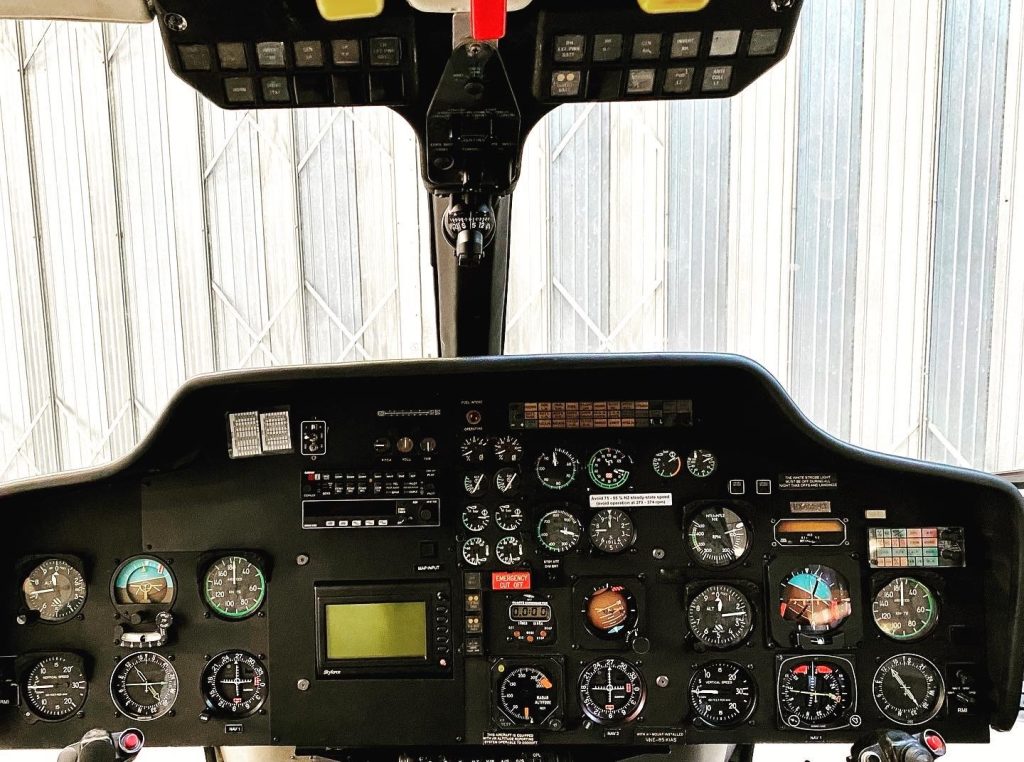
For these reasons, many private ‘onshore’ helicopter flights are conducted VFR, and are not IFR capable. In the UK, the AS355, EC135 and AW109 are commonly used for onshore IFR operation.
The risk of IIMC exists where deteriorating weather conditions prevent flying visually under visual meteorological conditions (VMC), but you are constrained to fly VFR. You lose the visual cues that your brain relies upon to keep the helicopter the right way up, and pointing the right direction. Because the helicopter is naturally dynamically unstable, without extreme care and attention to the flight instruments in front of you, loss of control can occur very quickly.
This is due to ‘spatial disorientation’, where what is visually seen (or not!), conflicts with the instruments and your vestibular senses (the sense of balance we obtain from our inner ear)-
Note– Even having the latest helicopter, 2 pilots and all the bells and whistles doesn’t guarantee that you will survive a IIMC encounter. Unfortunately 2 x AW139 accidents that occurred on takeoff into bad weather or lack of ambient lighting lead to the pilots becoming disorientated and crashing shortly after lifting (G-LBAL ,March 2014 and N32CC, July 2019)
Prevention is greater than the cure when dealing with the risk of IIMC.
The European Helicopter safety team (EHEST) team sets out the following recommended checks to be carried out before you take off- whilst many of these may appear common sense, they provided a structured review to highlight any risks of flight into poor weather, and a chance to prepare and plan contingency actions adequately.
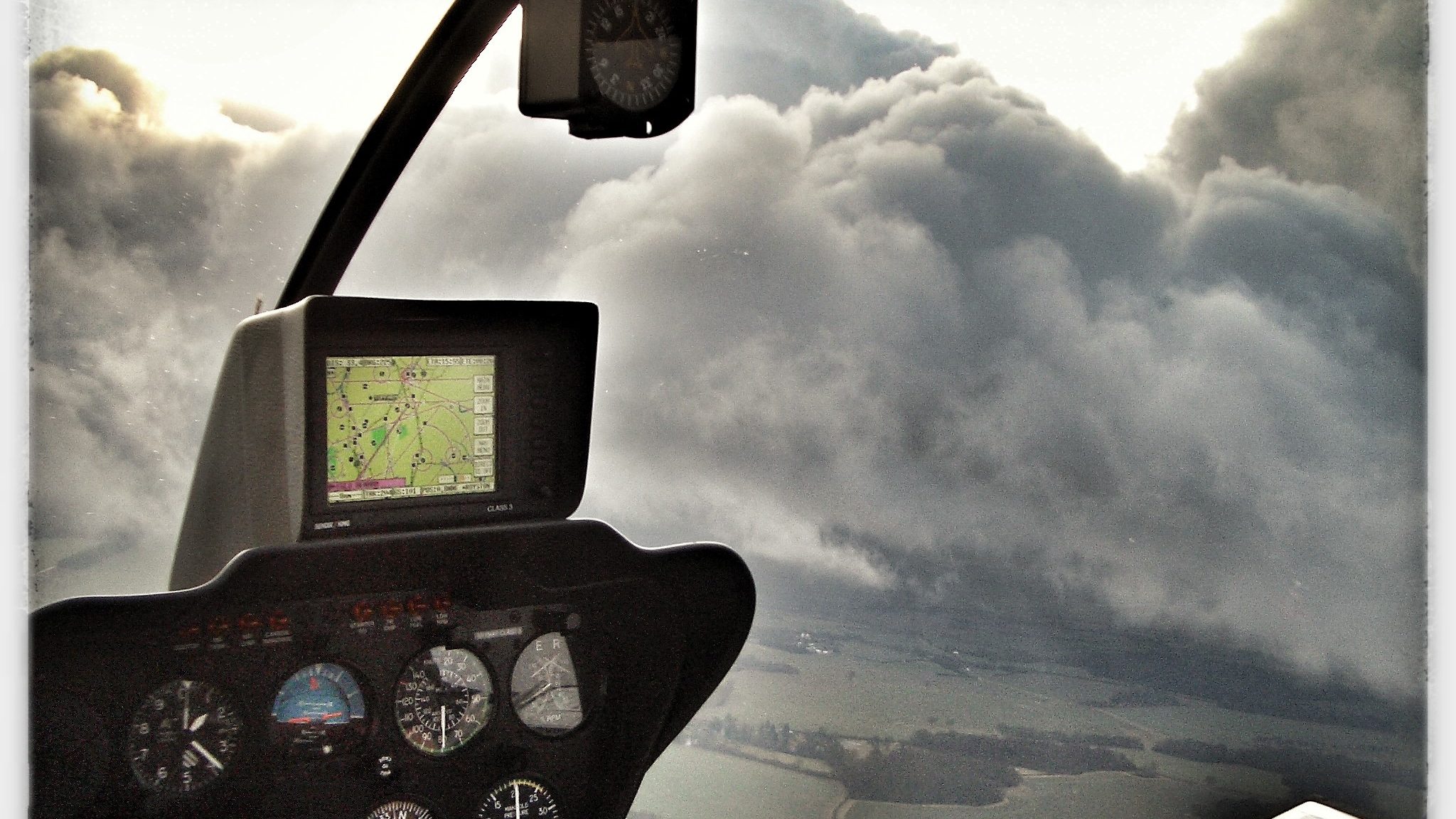
IIMC at night is especially dangerous due to the lack of light and inability to detect degrading conditions. The EASA safety team produced a 4 part series on the topic of IIMC, with the following video specifically regarding night operations
Rotorcraft Unintended IMC – Night Operations – YouTube
Pilots might find themselves in an IIMC situation as a result of taking a ‘VFR on Top’ route.
‘VFR on Top’ clearances and approval vary between nations, but allow a pilot to climb clear of cloud, then operate over the top of a lower cloud base, before descending back down, in VFR, for landing.
Operating VFR on top can be advantageous to avoid flying low level- attempting to ‘scud run’ on a long transit, potentially operating in calmer, less turbulent air, or to maximise aircraft performance or tailwind, however you must consider the following aspects, in addition to being extremely confident of the weather at your destination, to ensure that you can safely descend in visual meteorological conditions.

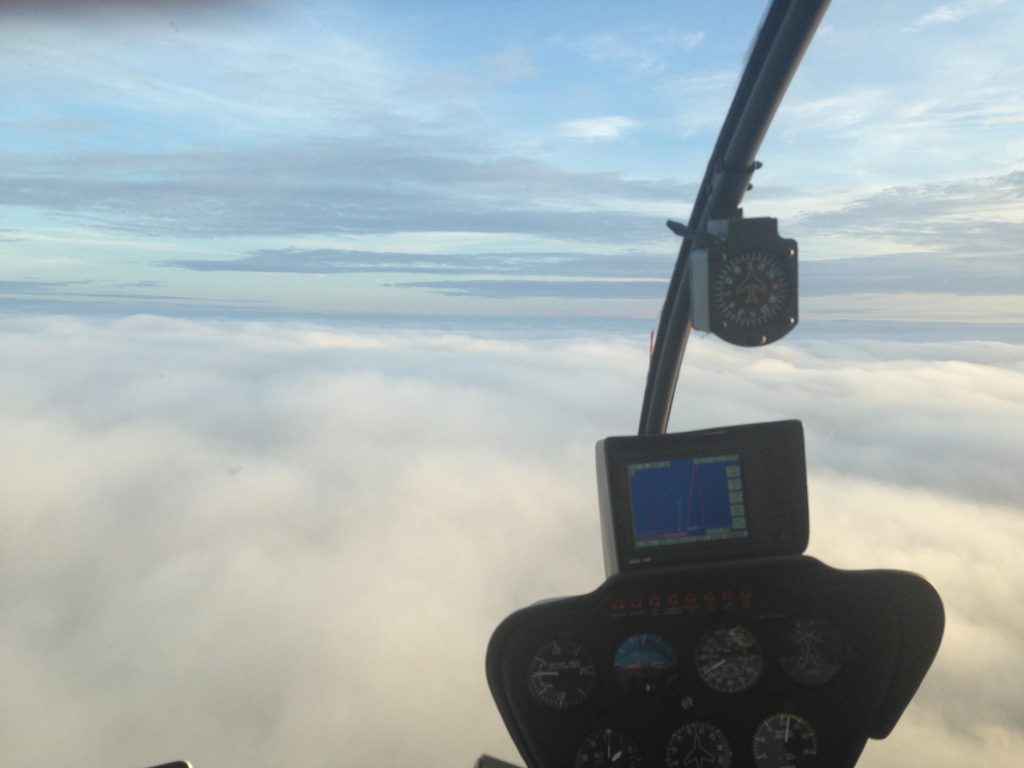
Usually only applicable this in airspace when you are >3000ft, (but below 10,000ft)
Requirement to maintain 1000ft above and below clouds, 5km forward visibility and 1500m horizontally away from clouds.
Owing the prevalence of controlled airspace, VFR on top is often only an option on longer transits over large bodies of water (e.g. English channel crossing pictures above ) or over some low level hilly/mountainous terrain where being above and well clear of any cloud is safer than attempting to navigate visually low level in undulating terrain.
VFR on top cannot be flown under commercial air transport rules.
In the USA, ‘VFR on Top’ clearance means something different- it is a form of IFR clearance that once you have climbed through a layer of bad weather, you can then request ‘VFR on top’, which gives you more flexibility. To fly VFR on top, you need to have an instrument rating, be on an IFR flight plan, and be in an IFR capable helicopter.
The FAA alternative to flying VFR over a layer of cloud is ‘VFR over the top’. Like the European rules, you have to comply with the minimum safe separation, 2000ft horizontally, 500 ft below vertically, and 1000ft above from cloud, plus 3 miles of visibility in most cases. This AOPA article provides some good points to consider before embarking on VFR over the top.
Recognize the initial stages of operating in a degraded visual environment – loss of forward visibility, high ground becoming obscured, increased precipitation and the need to continue descending below a the safety altitude to keep clear of cloud.
Avoidance is the best defense against deteriorating weather conditions. Asses the conditions so you always have enough time to divert or land, rather than continuing until it is too late!
Make sure you are flying at a speed proportional to the visibility – you want to keep at least full minutes worth of visual references in front of you- so, as the distance you can see drops, you need to slow down. This is so you have enough time to descend and land with adequate references if the visibility drops too low.
At 120kts, you are covering 2 miles a minute – that’s a visibility minimum of 3.7km, however, slowing to 80 kts, that means you are only covering 1.3 miles, or 2.5km. If you realize you can no longer see that far ahead, it’s time to slow down, turn around or, using the unique, and often life saving ability of the machine:
LAND THE HELICOPTER
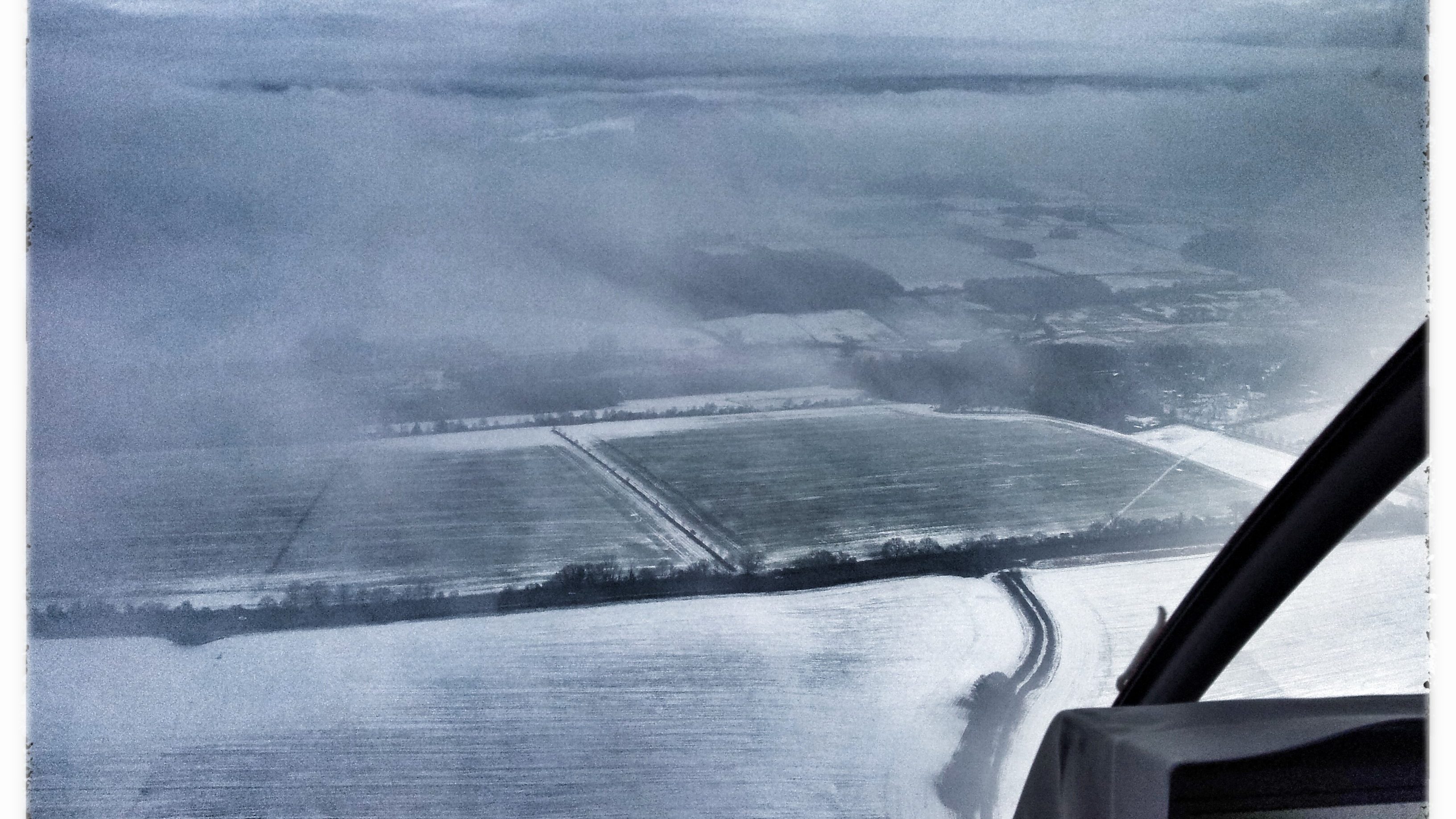
Unfortunately – ‘get home it itus’ often leads pilots to push a bad position, when all other logical solutions point to getting the aircraft on the ground.
The old adage “it’s better to be on the ground wishing you were in the air, than in the air, wishing you were on the ground” is especially true when flying in poor weather. Whilst personal pride, prior commitments , or even ‘commercial pressure’ suggest you push on in deteriorating conditions, whilst you convince yourself that you can fly through it , it’s better to land, whilst you still have enough references to do this, wait for the weather to improve, or get ground transport.
Yes, there will be an inconvenience, maybe some expenses cost, maybe even a small bit of extra paperwork, but back in 1997, the CAA performed a review of fatal GA accidents, and realised that the threat of extra landing fees forced may pilots to continue in bad weather, past a perfectly safe diversion airfield, through the fear of paying large costs. This lead to the Strasser scheme, where landing fees are waved in the event of a genuine divert.
Many pilots are often optimists, and suffer from believing that we are, perhaps, better pilots than in reality. Similarly, we optimistically hope that the forecast will be incorrect, and the conditions will be better than predicted. Previous experience might cloud our judgement- perhaps you ‘got away with it’ last time, and don’t want to let passengers down by aborting the flight.
Pilots often suffer from mis perception of the risk of continued flight in a DVE, and having invested in a flight, are unwilling to concede ‘defeat’, and aborting. Unfortunately, as humans, we are often very reluctant to give up on investments of time, cost and effort- the commitment in the flight, and, the reluctance to cancel only increases as you progress further into the flight preparation: you have taken the time to drive to the airfield, check the helicopter over, perhaps go for a quick weather check. This investment in the flight all works against the logical decision to cancel, divert or land, once you encounter impassable weather.
I know of pilots who carry a bottle of wine around in the helicopter – in the unlikely event they find themselves landing in a farmer’s field due to weather, this serves as a nice welcome gift to counter any ill feeling that may have been caused by the intrusion!
Fortunately the HeliPaddy landing site database comes in rather handy here, to help find a friendly and comfortable place to land!
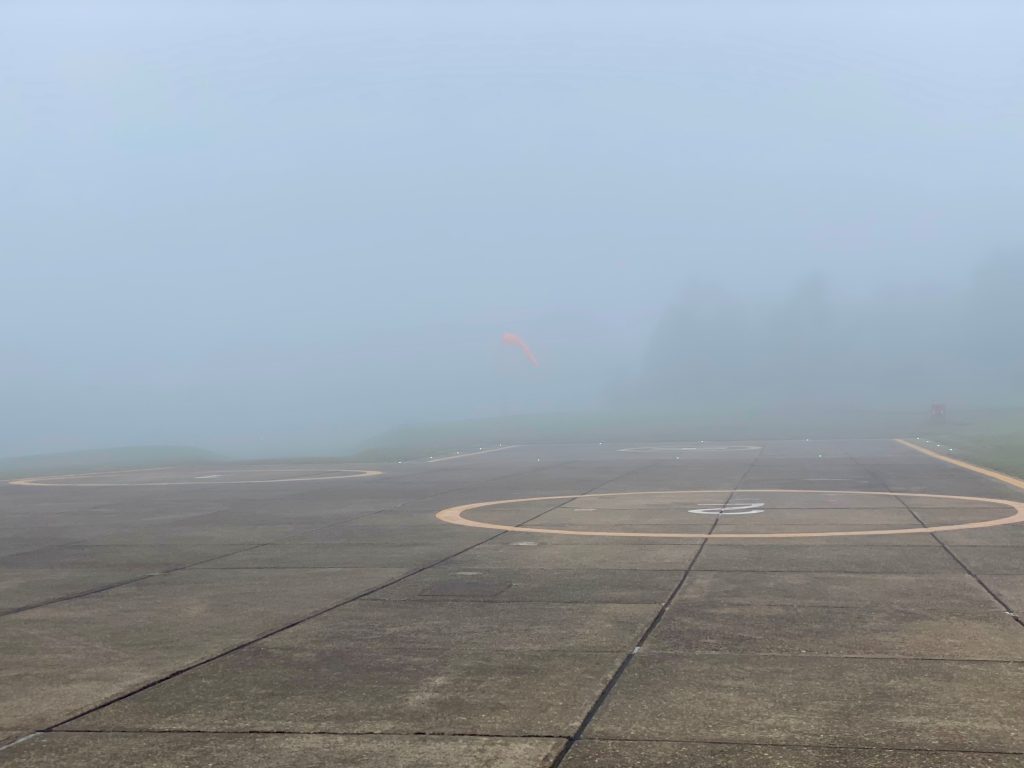
Continued flight in a degraded visual environment, in an inherently unstable helicopter, leads to an increase in your workload, increase stress, causing cognitive functions shutting down as the brain diverts resources to the vital organs- in turn, leading to a loss of peripheral vision (i.e. tunnel vision), often disorientation, and a regression of our flying abilities, resulting in over controlling, and inevitably an inability to maintain control. Make no mistake, an IIMC situation represents a serious risk to you and constitutes an emergency
Serious debates have continued since the inclusion instrument awareness training was included in the PPL syllabus – the proponents arguing that it gave pilots at least a fighting chance, if they enter bad weather – to be able to perform a 180° turn to get themselves back into clearer air, whilst the critics stating that actually it gave some pilots unfounded confidence to push their own weather limits, thinking they were trained and capable of dealing with flight without visual reference. Whichever side of the argument you side with- the first piece of advice in the event of IIMC- get yourself out of it – turn the helicopter around.
Some experts warn of the risk of suffering from disorientation ‘ the leans’ – if an turn is commenced immediately after loss of visual references. First, take a moment to get yourself established flying on instruments, start your scan- centered on the artificial horizon, glancing either side to the altimeter, back to the artificial horizon, then the airspeed, repeatedly, taking in the heading and vertical speed and power setting in turn. Once settled, the commence the turn to get away from the poor weather.
If you are fortunate enough to fly a helicopter with a stability augmentation system, such as the ‘heliSAS’ that can be fitted to the R44 and R66, or the GARMIN GFC 600 system on the AS350, make sure you understand the full functionality of it, and how you can use it to safely perform this 180° turn, maintaining the current altitude and speed. (There is also the benefit that these systems can recover the helicopter to a neutral attitude if you lose visual references during maneuvering).
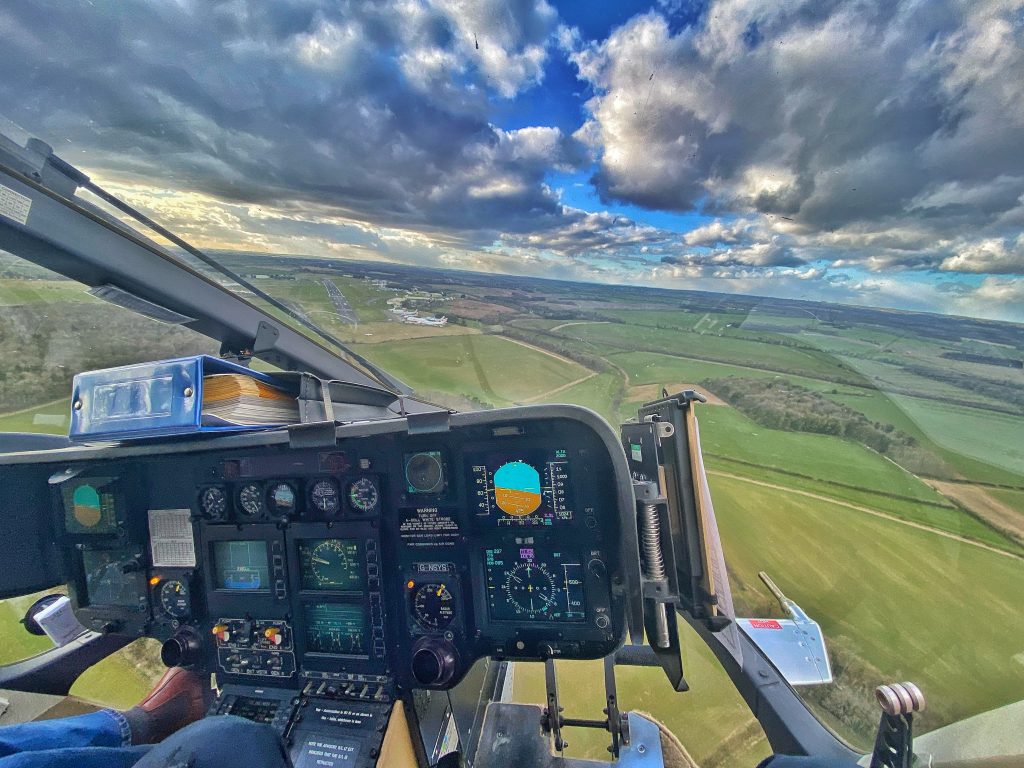
Maintaining a suitable speed, usually above Vy, is important to help maintain the aerodynamic stability that the flow over the horizontal and vertical stabilizers provide in the yaw and pitch axis. IFR certified helicopters usually have a minimum IFR speed for this purpose (e.g. 60kts in the EC135 and EC145).

Go up with an instructor, so you can see what the system can do, and also, importantly, what it can’t do- for example, what is the minimum speed to engage the system (most cannot be engaged from the hover to accelerate and hold a heading).
Unfortunately an accident occurred to a Scottish police helicopter in 2002, when, upon entering poor weather, the pilot engaged the autopilot, however, it didn’t respond as expected, leading to an incorrect diagnosis of autopilot failure. In turn, the pilot overrode all autopilot stabilising input, and the helicopter crashed, causing serious injury to some of the occupants
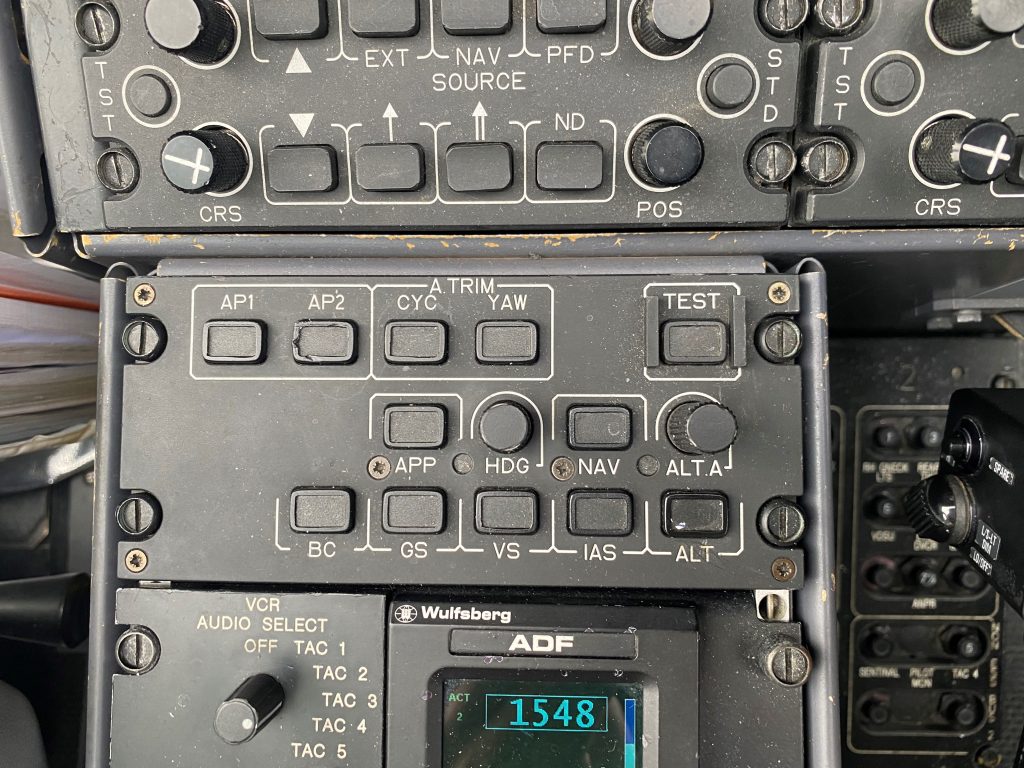
It’s easy to imagine a situation where you keep slowing down due to poor visibility, loose visual references, and upon trying to use the helicopter systems , it actually adds more stress and work load as you try and figure out what is actually engaged, and ultimately – who – if anyone is flying the helicopter- whilst in a high stress environment!
f you are an instrument rated pilot in an appropriately equipped, going into cloud when you are not expecting it is still considered an emergency –
4 “Cs” is a good aid memoir in the event of IIMC entry (as suggested by the International Helicopter Safety Team) :
The important first priority is to control the helicopter- make the transition from outside references to the internal scan- artificial horizon, airspeed, altimeter and heading, whilst checking the power setting and vertical speed indicator. (This is why ‘unusual attitudes’ are practiced at every proficiency check- to give you practice in quickly bringing a helicopter under control using instruments alone).
Once the helicopter is safely under control, the next step is to get climbing away from the ground, away from any unseen obstacles that might be lurking in the gloom. This relates to taking the time before flight to calculate the minimum safe en-route altitude.
Course- what’s your escape plan- where is the weather predicted to be better- or where is the nearest airfield with a suitable instrument approach that you can use to get down?
Finally, communicate. Get talking to a suitable air traffic unit, that can give you position information of any other IFR traffic in the area, weather updates, and ideally give you radar vectors through airspace to quickly get you back safely on the ground!
If all else fails- and this is not a recommended course of action- if you have the fuel reserve available, fly to the coast , descend down at the minimum control speed (using a radar altimeter) until you can see the water, then turn back to the beach and land on the first bit of suitable land. Unfortunately there is no guarantee this will work – it is an absolute last ditch method!
The following video from Bruce Webb, ex Airbus USA chief pilot, provides some further advice:
Below are some great sources for additional reading, including a hard hitting video showing how quickly things can go wrong?
US Helicopter Safety Team- 56 Seconds to live
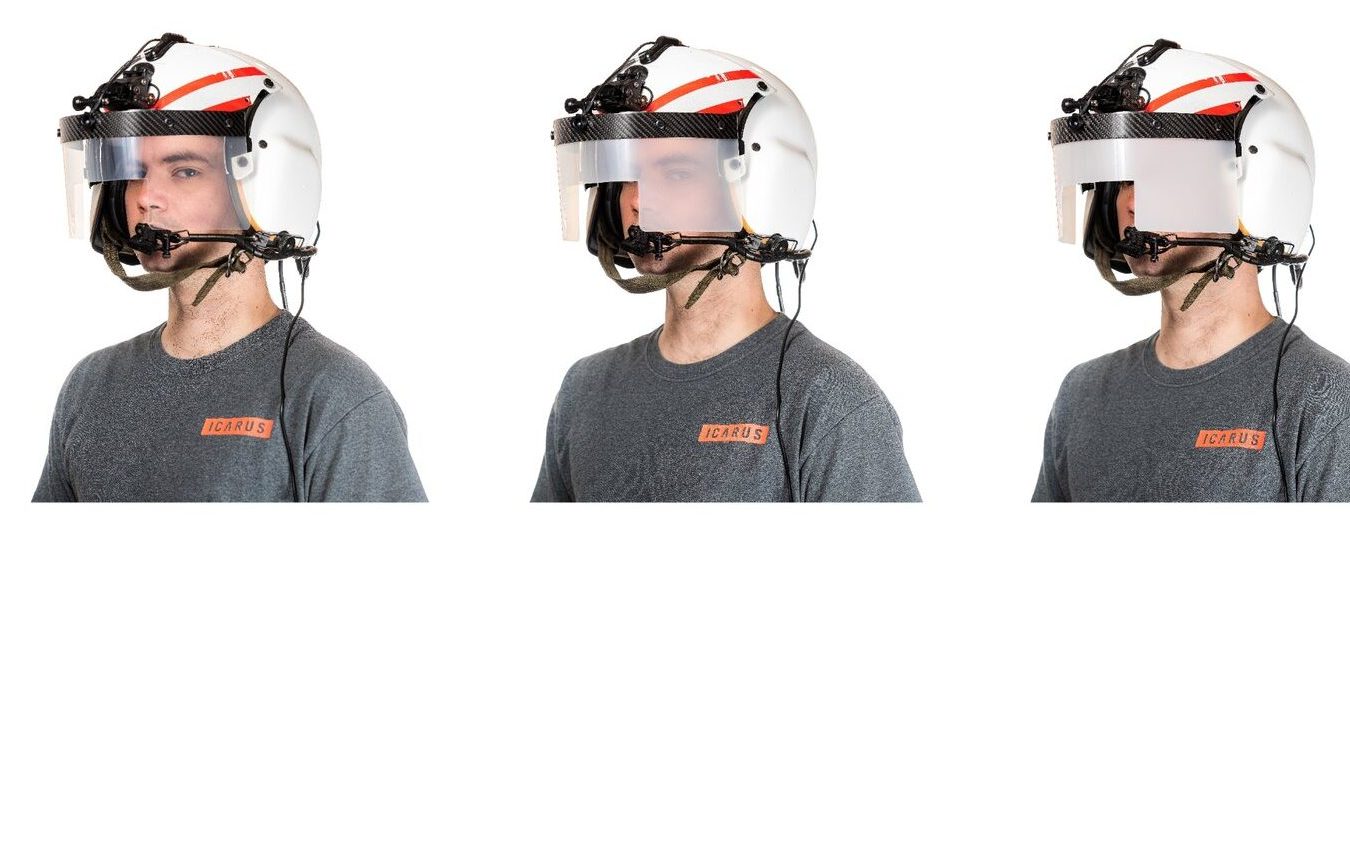
Take a look at a new training device that is being adopted by the US Military and various commercial operators- the ICARUS device. It resembles a conventional ‘foggle hood’ with a visor that uses a controllable transparent liquid crystal film that can be turned opaque used to simulate loss of visibility, whilst safety flying in VFR conditions
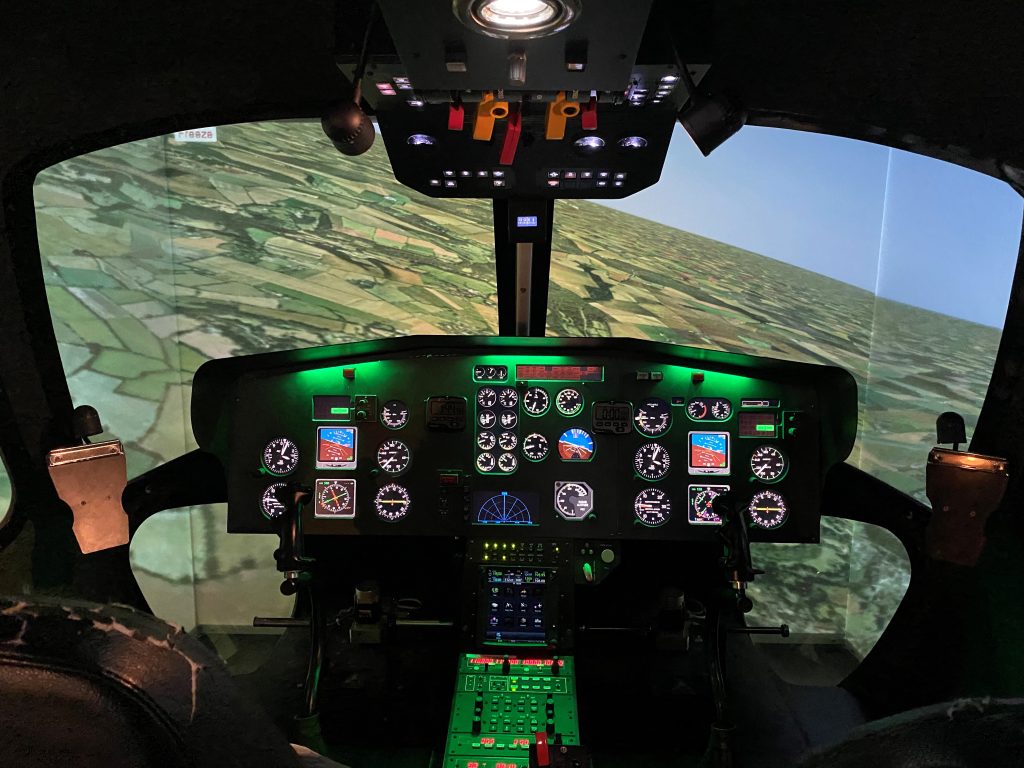
Jump into a helicopter simulator, have the weather conditions deteriorate, and give yourself a scare with understanding just how quickly a situation can deteriorate if you are not properly prepared for it!
Practice some unusual attitude recovery and 180 degree turns with an instructor – more than the minimum required for each annual proficiency check. Instrument flying, even for experienced professionals, is a perishable skill- some companies requires an instrument flight to be carried out every 90 days to maintain the currency!
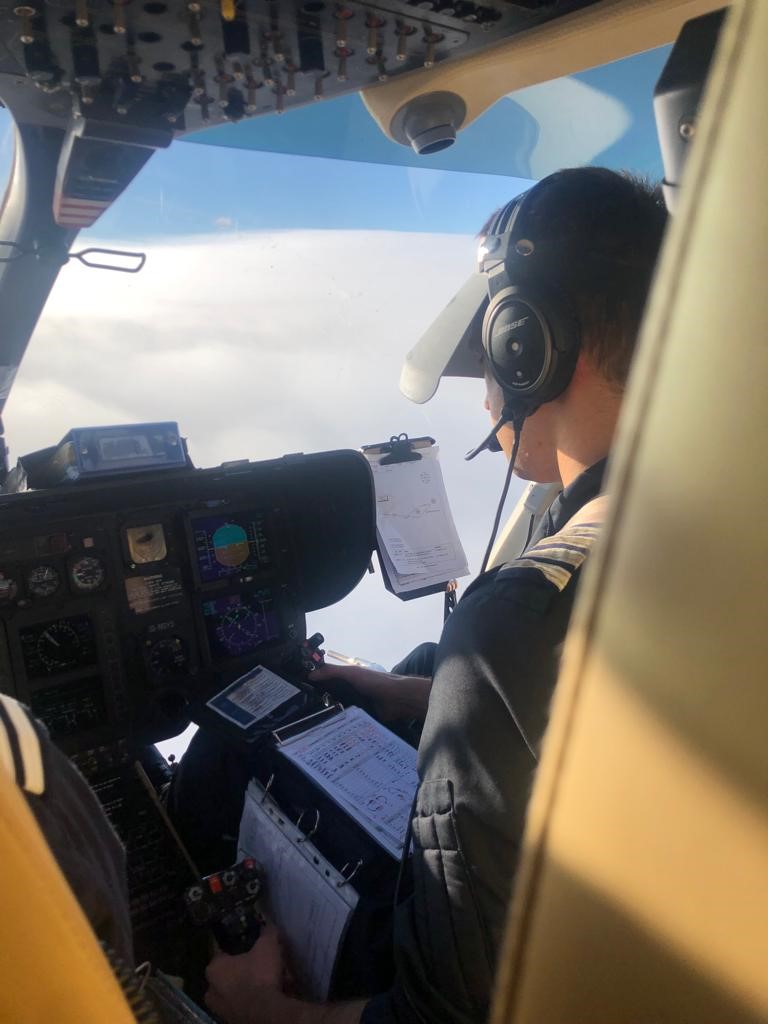
Read up on poor weather flying, understand the causes of a degraded visual environment, so you are more prepared to recognize the incipient conditions . The EHEST training leaflet is a good starting point
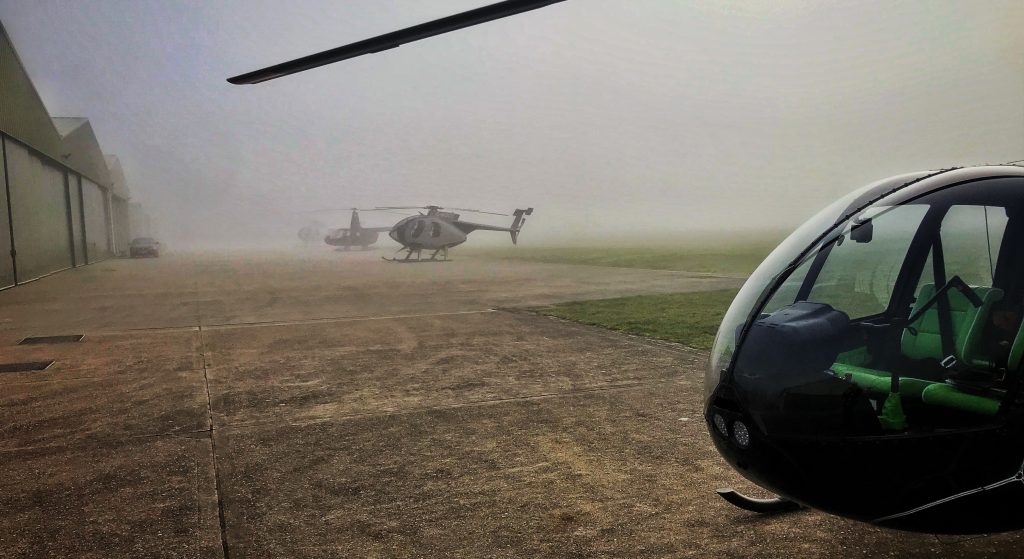
This ‘workshop’ from the EASA Rotorcraft 2022 Conference on IIMC makes for an interesting watch (if you have 49 minutes spare), as Tim Fauchon (CEO of BHA and former RAF SAR Pilot) provides an account of his experience going IIMC, and the rather unorthodox recovery that he and his co pilot undertook to get the Sea King helicopter safely on the ground. They did this by performing a full quick stop on instruments before conducting a 180 degree pedal turn in the hover and exiting the valley the way they had just come from, before landing the helicopter with visual references. He, and other panellists highlighted the risk of getting ‘the leans’ if a 180 turn is conducted immediately on entering cloud, without first taking a moment to become settled on reading the instruments.
Jonathan Greenall discusses the topic of how IIMC occurs, including an interesting perspective, if , in the event of an accident as a result of IIMC, does it come under pilot error or pilot negligence and the potential impact of insurance and liability after the crash.
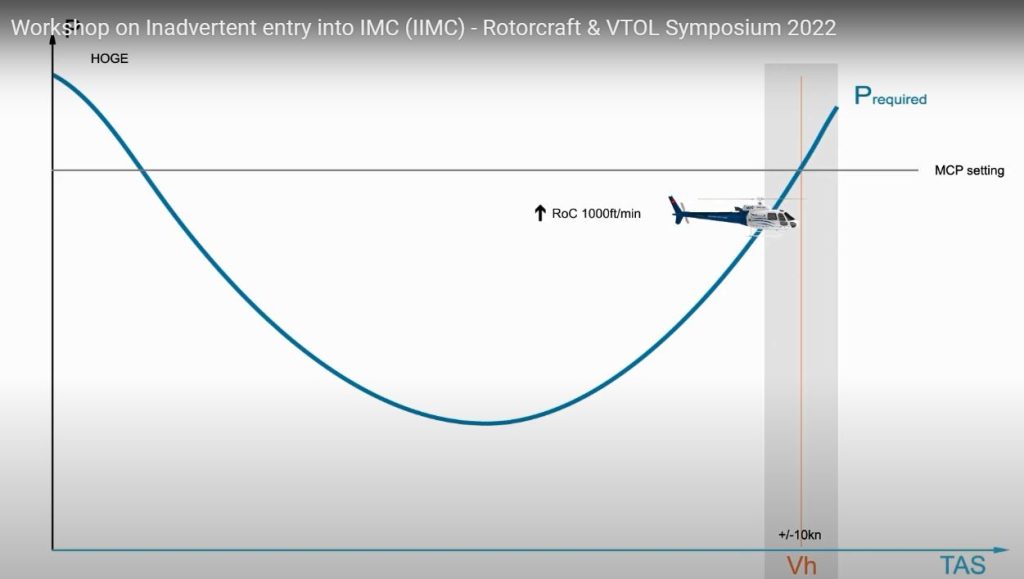
Claude Vuichard provides a compelling argument into reducing your airspeed when performing the 180 degree turn, not only to decrease the turn radius, but to use the relative speed stability at the bottom of the power curve to mitigate against large altitude changes during the turn (see screenshots below – copyright EASA ).
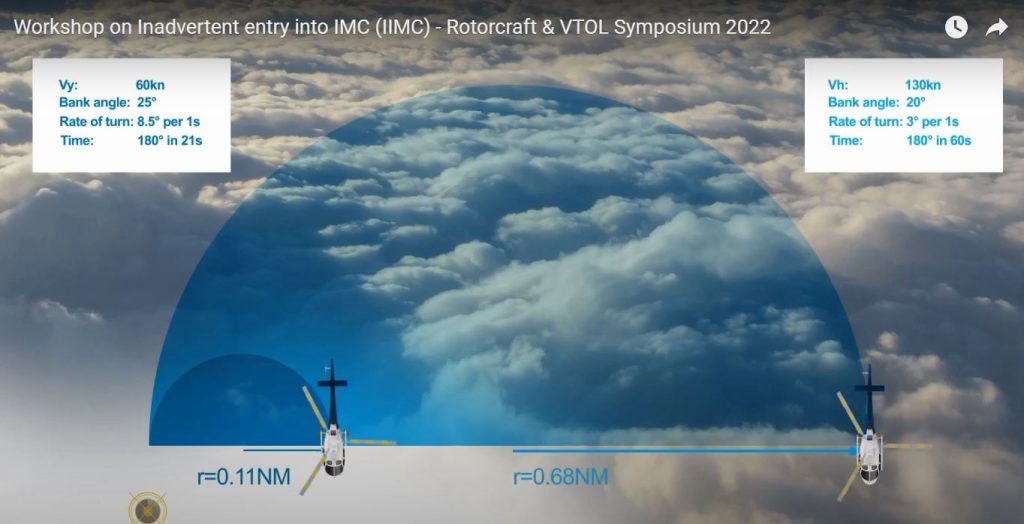
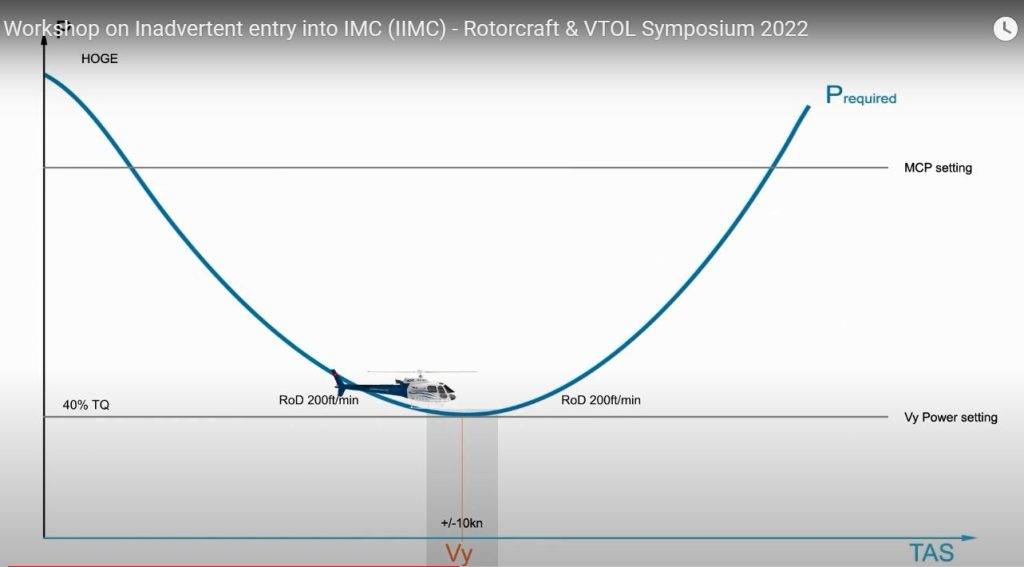
IIMC is a known fatal trap that unfortunately pilots continue to kill themselves. Continued flight in degraded visual conditions invariably leads to loss of control and an accident unless the pilot is suitably qualified and prepared and the helicopter is adequately equipped.
Accidents continue to occur due to IIMC, despite advances in weather forecasting technology, access to live weather updates, pilot training focused on IIMC recovery techniques, and the ability of the helicopter to land once it encounters bad weather. This article hopes to highlight to you as the pilot that there is substantial risk from continuing flight in marginal conditions that is unfortunately soften, misjudged.
To survive an IIMC event, consider setting personal minimums – above the legal requirement, that matches your experience and the environment you are flying in. If there is any doubt in if the flight can be conducted safely, then there is no doubt. It just isn’t worth taking the risk by taking off.
If in flight you do experience a DVE, make the conscious decision to divert early, rather than pushing on, dodging clouds and allowing yourself to descend to keep clear of cloud.
Whilst operating in a DVE or deteriorating weather conditions, slow the helicopter down, so that you give yourself more time to react to any obstacles in your path.
Land the helicopter, whilst you still have the chance to safely put it down, using the remaining visual references that you have


One thought on “Inadvertent IMC”