Site Owners
Pilots
Download our app below to start discovering new landing sites




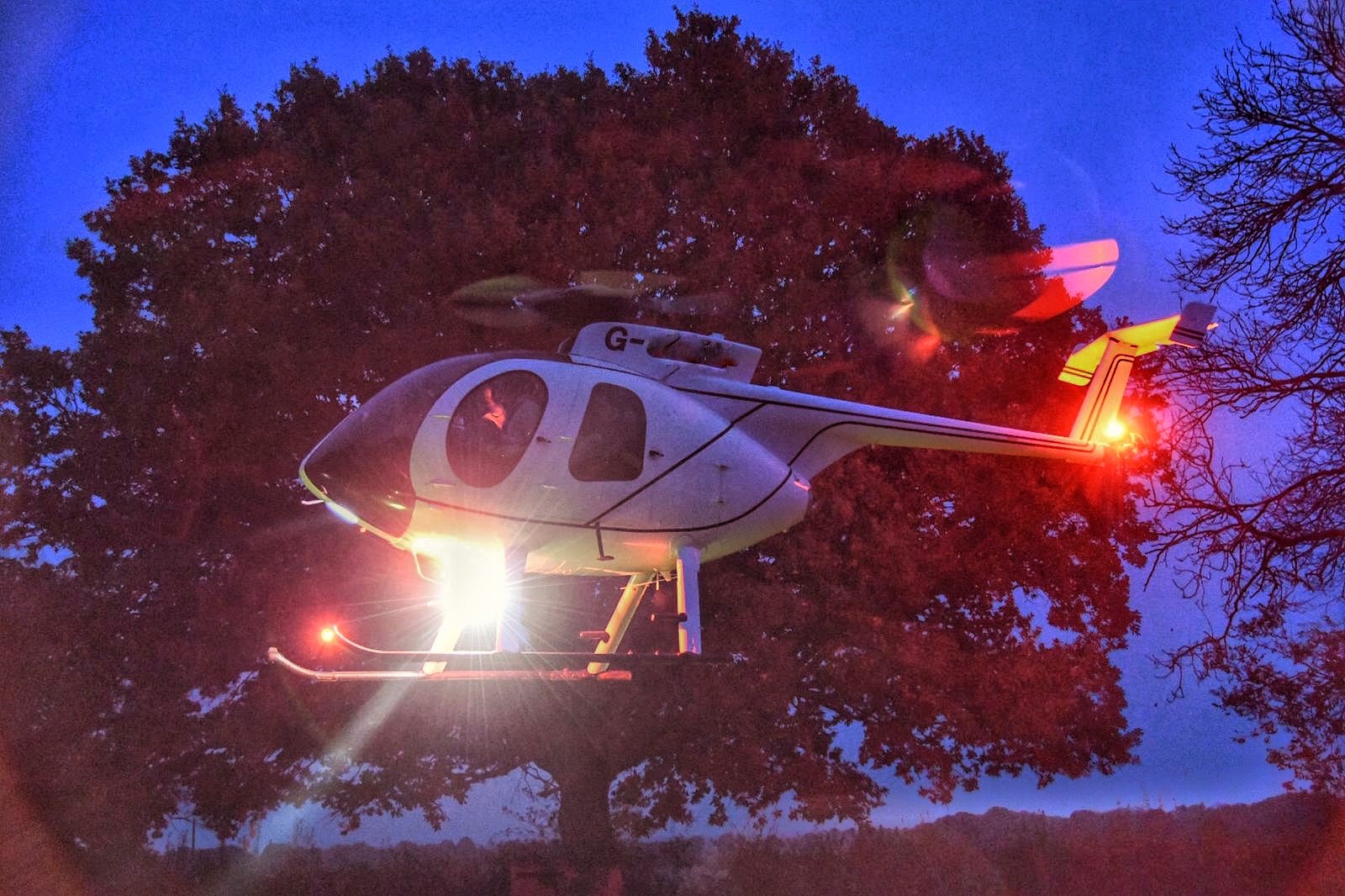
Once we approach the depths of the winter, many pilots find themselves having to curtail the amount of their flying activities due to the lack of daytime or daylight hours. The solution is to obtain a ‘night rating’, and fly after dark. It is a fantastic way to expand your horizons and provides a chance to improve your flying skills across the board with some new challenges.
To fly at night is a whole new experience, and to be able to see the local landscape and landmarks that you know so well look so different, often makes people fall in love with the allure of flying after the sun goes down.
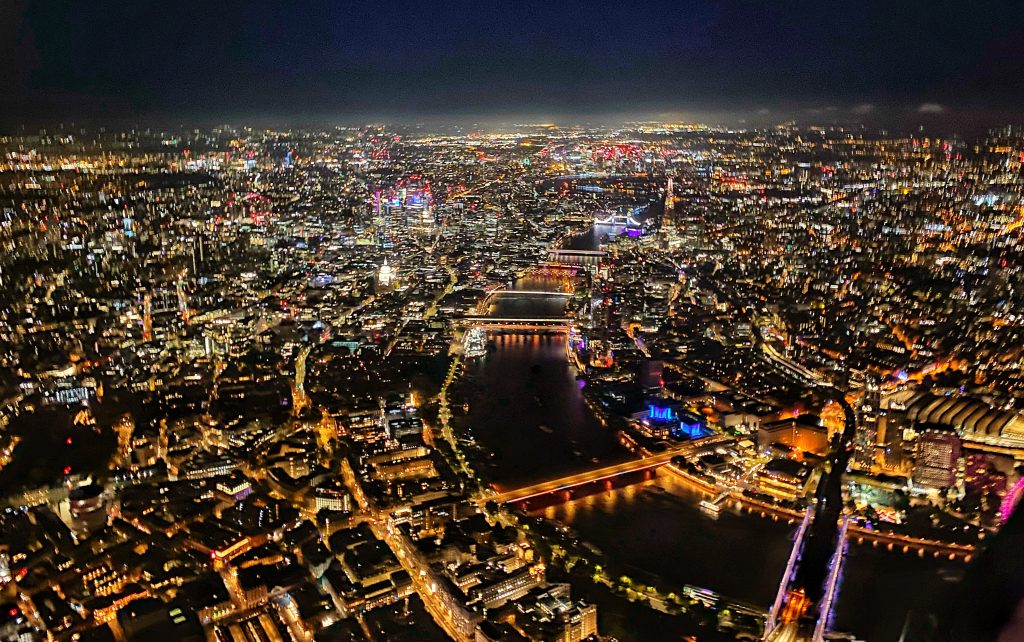
However, night flying is very different from that in daylight and demands more attention of the pilot, both in flight and prior to take off, primarily due to the limited availability of outside visual references and the scarcity of options in the event of a required divert or unscheduled landing.
In this article we’ll cover the following topics:
Each country has its own quirks and requirements when it comes to flying at night so make sure you check the rules to ensure that you and the aircraft are fit and legal to fly before you take off!
Unfortunately, whilst there is an official definition of night as defined by ICAO, it is also open to interpretation by each authority (nothing is ever entirely simple in aviation!):
The UK Civil Aviation Authority defined official night as the time ‘between 30 minutes after sunset and until 30 minutes before sunrise’ after
The US FAA has a few different interpretations of night
With regards to carrying passengers at night as the ‘period beginning 1 hour after sunset and ending 1 hour before sunrise’, and when it comes to logging night flying time it is
‘the time between the end of evening civil twilight and the beginning of morning civil twilight, as published in the American Air Almanac, converted to local time’.
Unfortunately, like the official definition of darkness, the rules for flying at night are not standardised, and in this article we will focus on the EASA, UK CAA and FAA requirements.
In Europe, night flying is not what automatically included in the basic private pilot license syllabus and thus an additional ‘night rating’ is required. However once this rating is obtained, it is valid across all the helicopter types you have a new license, so, for example if you have a current type rating on the Robinson R22, R44 and R66, you don’t need to go and do a additional night rating on each type.
The ability to fly VFR at night is included ‘standardised European rules of the air’ (SERA), however, each country has their own slightly different take on this. In France, for example, ‘night VFR’ flight can only be conducted to and from approved aerodromes (many are limited for daylight hours only) and in particular meteorological conditions. The French also have requirements for mandatory radio navigation instruments (VOR, DME or approved GPS) and a mode C transponder for flight at night. A flight plan for a VFR night flight must be submitted
Unless you have a night rating, you are not permitted to fly at night. Like the EASA system, a night rating is valid across all of your current helicopter types on the licence.
UK rules permit VFR and special VFR flight at night under the ‘standardised rules of the air ‘ – SERA and Official Record Series 4 / 1477 .
The section on VFR at night is covered by SERA.5005(c) and special VFR by SERA.5010.
Charter flights – operating under commercial air transport rules – Part CAT , cannot be flown at night with a single engine helicopter
With an FAA PPL, you can fly at night without undergoing a separate test. Night training is required to obtain an FAA PPL, irrespective of whether you plan to fly at night once you receive your PPL. As part of the 40 hour flight training for an FAA PPL, 3 hours of this must include night flight training. Aspects of the night ‘theoretical knowledge’ requirements are covered during the required 40 hours of PPL ground school.
There is an exception for Alaska, as areas of this region are so far north, they do not experience any ‘official night’ for periods up to two and a half months. A limitation exists that if you receive flight training and reside in the state of Alaska, you may be issued a pilot certificate with a limitation “Night flying prohibited.”
Before you can start the ‘night rating’ there are some preconditions that need to be met:
The course must be completed at an authorised training organisation within a period of 6 months and the course includes:
The night instruction is typically broken into the following exercises:
The ground theory covers the following topic (as listed in EASA document Part FCL 810.(b):
This is an example of how the night flying syllabus is divided into 6 exercises
Note : For helicopter instructors to be able to teach night ratings, they have to undergo an additional short standardisation flight after gaining some experience teaching. So, bear this in mind when selecting a school for your training, as it is not a privilege that is included automatically to a instructor’s license.
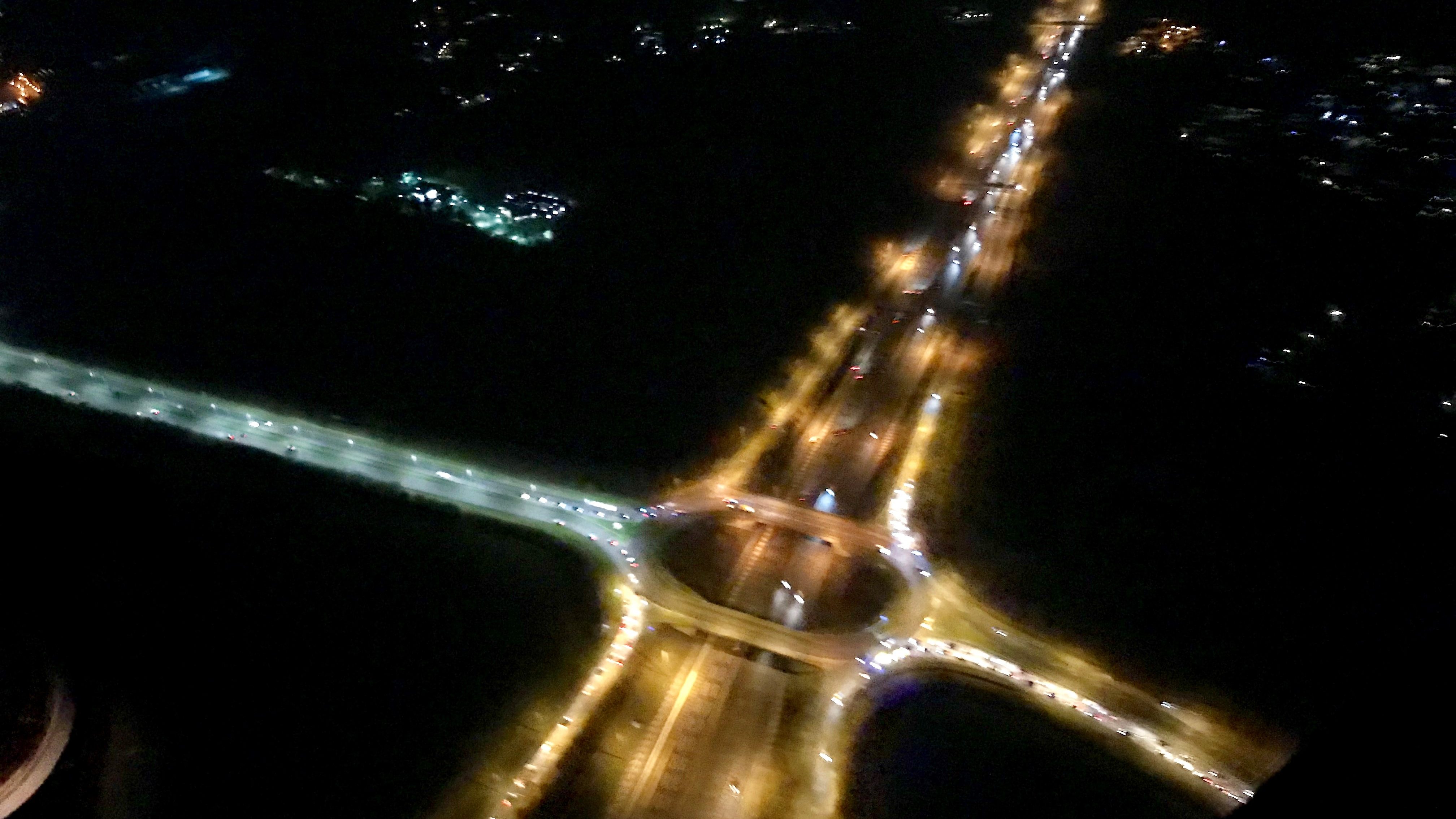
EASA and UK CAA pilots have to abide by ‘the 90 day rule’ in order to carry passengers, which requires you to complete three take-offs and landings as the ‘sole manipulator of the controls’ in the same type of helicopter in the preceding 90 days to carry passengers. An additional requirement occurs for night- If you want to take passengers at night, one of those takeoffs and landings must also have been at night (unless you hold an instrument rating).
To carry passengers, you need to complete 3 take off and landings in the preceding 90 days. If you are flying the Robinson R22 or R44, note that to comply with the SFAR 73 requirements, The pilot must have completed at least three take-offs and landings as PIC in the same model of helicopter within the preceding 90 days before carrying passengers, and this passenger carrying currency must be documented in the pilot’s logbook.
To account for the reduction in visual references, the weather requirements at night are more restrictive. Even with this mitigation, on a dark, moonless night, with little ambient lighting, it is near impossible to make out the horizon, or to see the weather conditions that you might be flying into (without the aid of night vision goggles, thermal imaging cameras or weather radar- none of which is likely to be fitted to a private helicopter!).
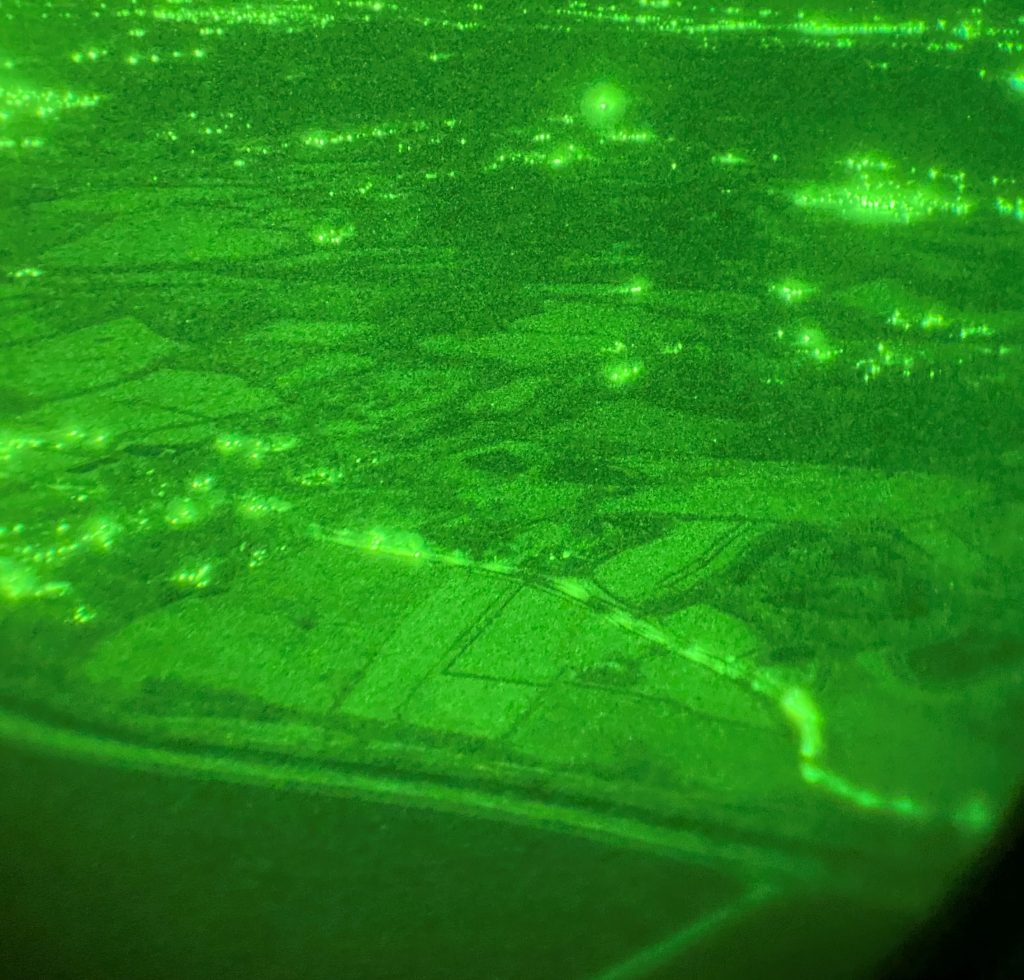
In the above circumstances, with unaided vision, only indication that you are about to fly into a cloud, or indeed now flying in a cloud, is when your landing light or navigation lights now cast a reflective glow around helicopter!
This is why the pre-flight planning and assessment of conditions is so important to prevent inadvertent instrument meteorological conditions – IIMC- – flying into cloud and severe weather such as snow storms, or cumulonimbus clouds with violent turbulence. The US Helicopter safety team assesses the time until loss of control once entering IIMC as 56 seconds (see this article for more information), so you need to be extremely confident that the weather conditions along your flight are suitable.
The EASA safety team have a video explaining the risks of ‘unintentional’ IMC, and how they are enhanced at night:
UIMC – Night Operations | EASA Community (europa.eu)
Night flight practically robs you of the one saving grace that helicopters usually have when encountering bad weather – being able to land almost anywhere. Making an unscheduled ‘ah hoc’ landing at night to an unlit site is an unenviable prospect – the surface is an impenetrable black – obscuring trees, wires, poles and other objects that will ruin your day, and only may only become visible after it is too late to react to them!
When flying at night, the performance of helicopter can often increase as the air temperature cools, the density increases, and therefore the hover ceiling, or available power margin increases.
The unwanted potential consequence of the air cooling at night is the formation of radiation fog. This fog forms once the air is cooled to its dew point by the surface of the earth, and requires a calm wind with clear skies for formation. The risk is that you depart on a lovely clear night, but whilst you are out flying, the temperature decreases to match the dew point, and the water inside the air condenses, increasing the relatively humidity and forming fog, which then obscures your landing site!
Watch up for the following symptoms as early warning of risk of radiation fog formation:
The advent of fog can insidious as developing fog fields can be hard to detect. When viewed directly downwards, especially against the backlight of a city, it is hard to see any deterioration of visibility, however, looking side on into fog, once you start to descend for landing, you realise that the visibility has dropped significantly preventing you from being able to continue safety.
Whilst none of weather minimums reference the phase of the moon, it can have a substantial impact on the environmental lighting. Similar to the effect of a new moon, if a thick layer of high level cloud exists, it can influence if you can determine ground features to only having a uniform swath of black below you. The time of the flight similarly has an impact, as in the early evening, increased road traffic, street lighting, and ambient light from inside housing aids navigation, but in the early hours, street lighting is often switched off for energy saving, and house lighting is off.
There are plenty of accident reports of pilots that have flown into poor weather at night, and unfortunately not survived. This article is not to spread doom and gloom about the prospect of night flying, but to highlight the inherent risks that it presents, and how to best prepare and mitigate them!
The UK rules are set out in OSR 4 -1477 and reference SERA 5005c 3 .
EASA Rules also reference SERA.5005C, though individual nations may set additional altitudes restrictions for night flights.
Night VFR on top is permitted when flying over 3000ft above MSL, or 1000ft above the terrain (whichever is higher), however, like all VFR on top flying, you need to be extremely confident of your ability to descend back down for landing in visual conditions, and the possibility of any cloud base above you converging with the layer below.
Over high terrain or mountainous areas, you must be able to fly at an altitude of at least 2000ft above the highest obstacle within 8km of the helicopter position.
The Civil Aviation Authority permits, under SERA.5010(b) (Special VFR in Control Zones), a special VFR flight within a control zone at night in the United Kingdom, in the case that the weather conditions do not permit the above, given the challenges of night flying discussed in this article, you should seriously be questioning the validity and safety of conducting such a flight!
FAA weather night minimums only change in uncontrolled class G airspace, where the night in flight visibility increases, depending if you are below 1200ft, to 1 statute mile, doubling from the day time limit. If you are above 1200ft (but below 10,000ft) this increases to 3 statute miles, up from 1 statute mile.
Helicopters are allowed to request special VFR clearances at night when the visibility is less that 1 statute mile- however, this is not recommended!
The limits stated above are the legal minimums, but consider setting your own personal limits, well above these conditions, to prevent you from flying into conditions where you can no longer safely continue. When flying at night, divert or turn around early if you encounter a deteriorating cloud base or visibility.
This is one of the key messages from the Robinson safety video related to safety notice SN26
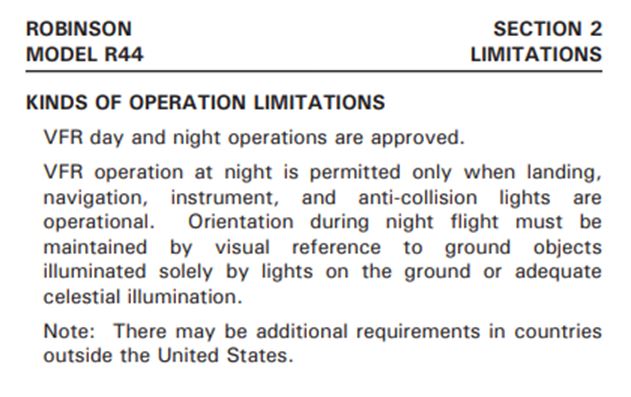
Firstly, you need to check that the helicopter is approved for flight at night, and what is the minimum serviceable equipment.
This can be found in the flight manual under ‘Section 2, operational limitations’:
The US FAA rules require the following to be serviceable and fitted for night flying:
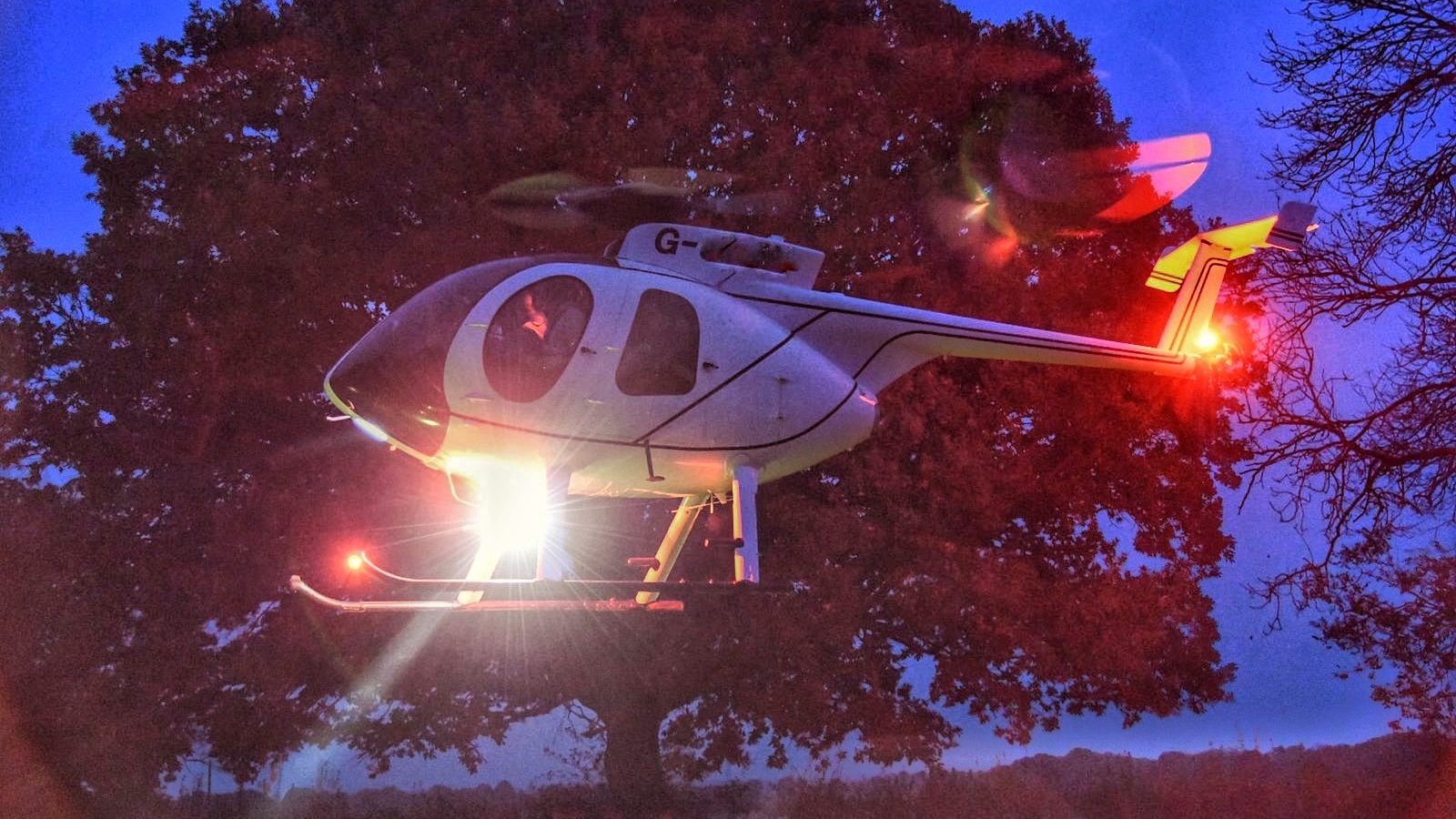
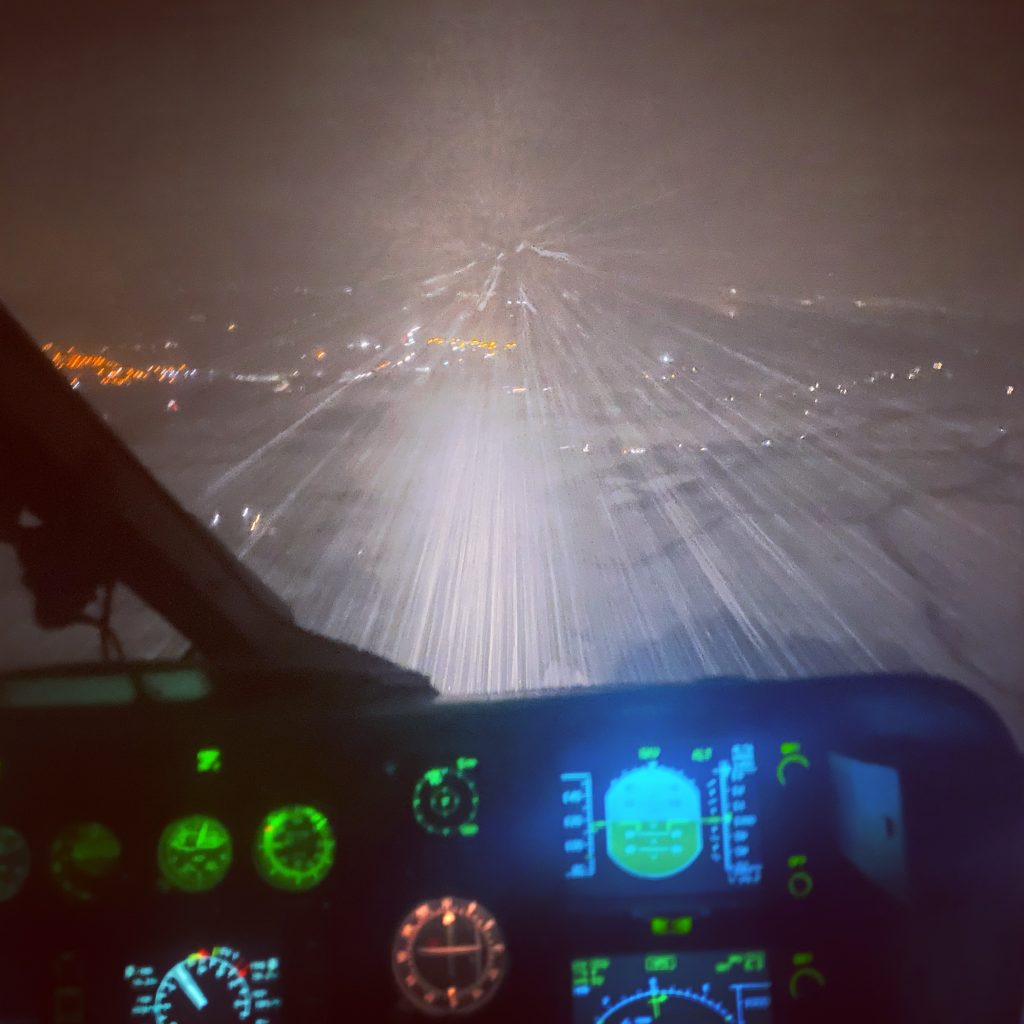
NOTE: The effectiveness of a standard landing light is limited in the event of precipitation which acts to diffuse the beam, limiting its effective range, and can have the risk of disorientating the pilot, as rain droplets immediately ahead of the helicopter illuminate, often described as if the helicopter has gone to ‘warp speed’!
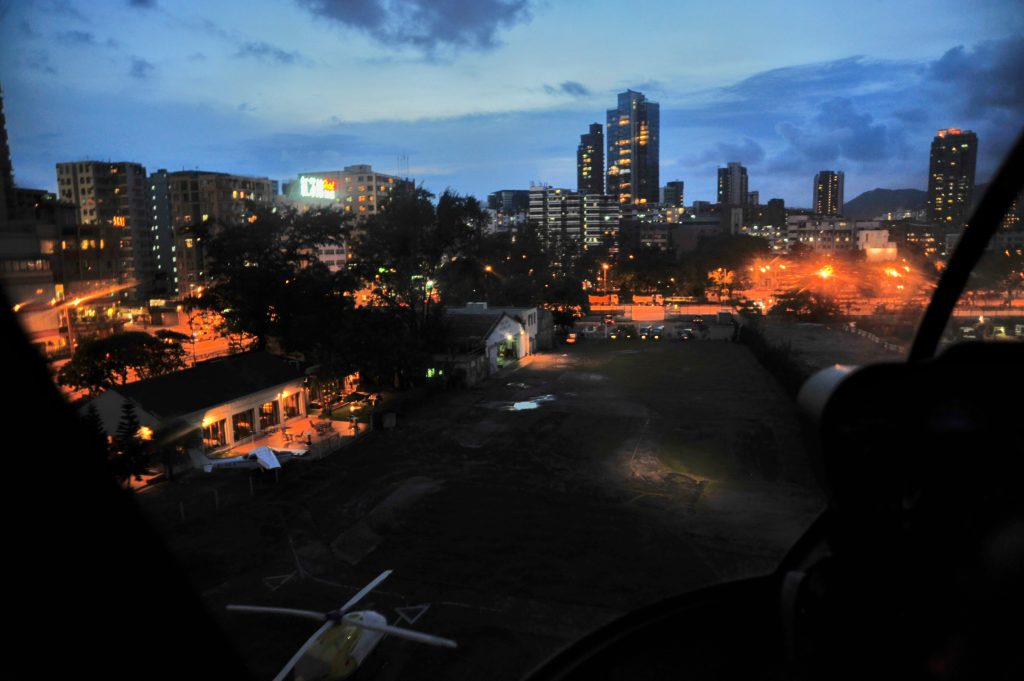
A standard landing light should be effective to around 300ft above the ground to identify ground features.
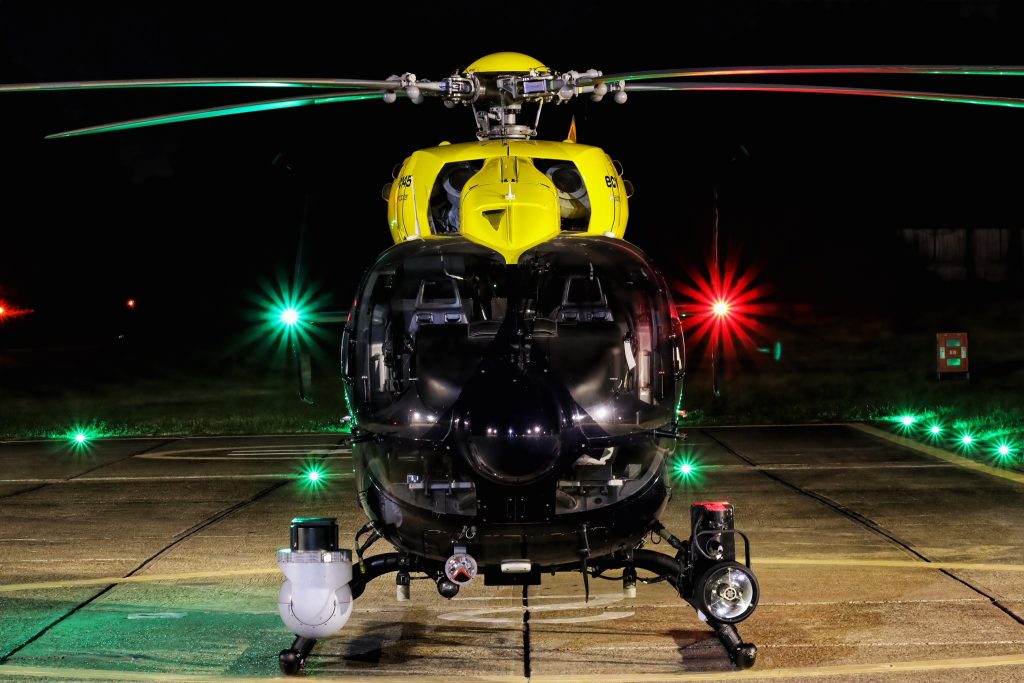
Before flight, remember the position of the navigation lights on the helicopter- the white light on the tail backlight it covers a 140 degrees, whilst the then the lights on either side of the helicopter illuminate an arc of a hundred and ten degrees. The right hand side is green, left hand side is red.
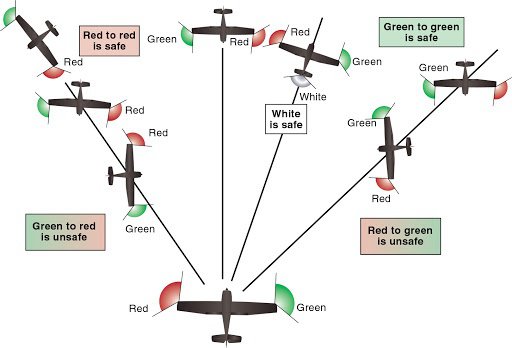
At night, you won’t be able to make out the shape, orientation and type of other airborne traffic by outline alone, so, quick determination of converging track (and therefore, indication of any collision risk) using the colours is key.
For example – If you see a green light and a red light together, a turn to the right should be made, as it means another aircraft is coming head on to you!
Charter flights at night for helicopters operating under the US ‘N-‘ register need to work to higher requirements, similar to European rules .
The helicopter must be fitted with a
Type certificate data sheet specifies if the helicopter can be flown at night, and the Master MEL (MMEL) list provides the mandatory equipment that must be serviceable.
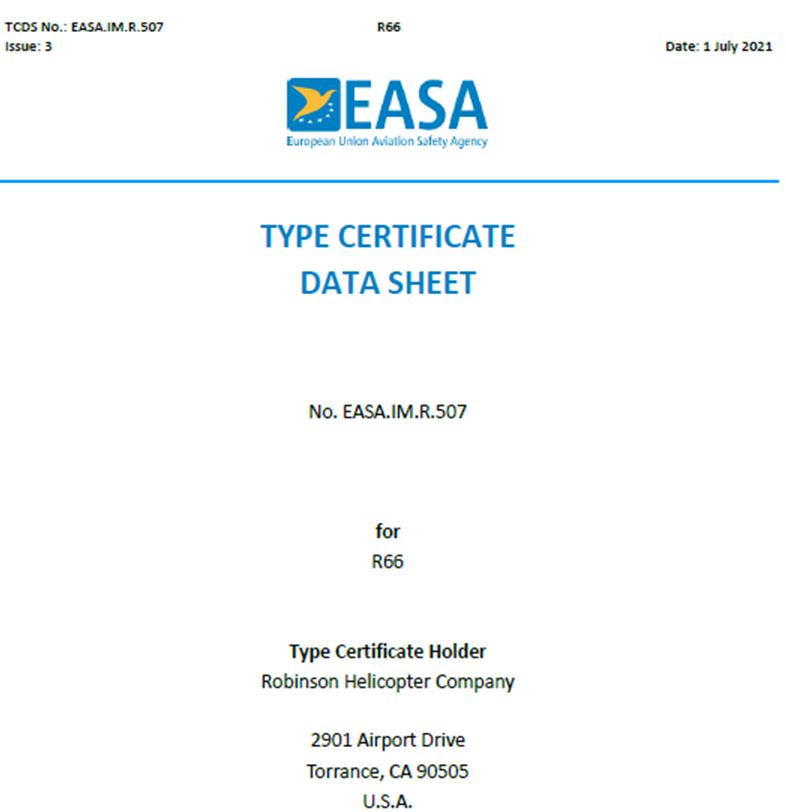
As an example, the Robinson R66 is approved by EASA to fly VFR at night, but must have a set of serviceable navigation, anti collision and landing lights
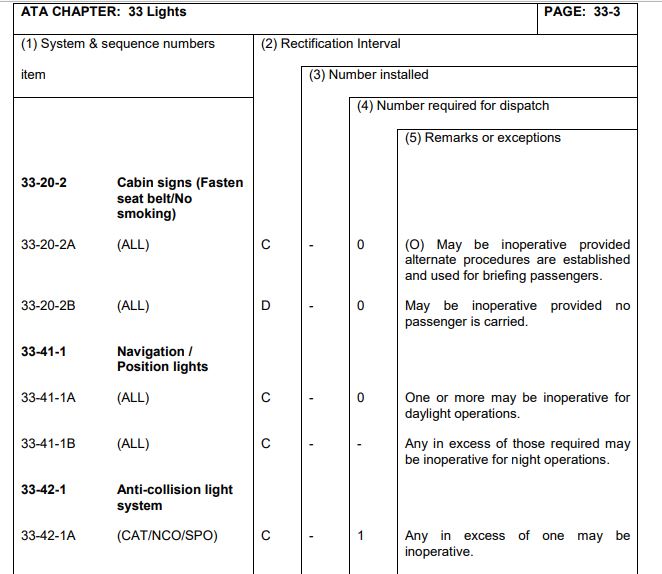
This then feeds into the rules for non complex operation (private flights)- Part NCO.
Subsection NCO.IDE.H.120, section a) and b) states the required instrumentation for night VFR to display at least:
Subsection NCO.IDE.H.115 refers to the required lights :
Helicopters operated at night shall be equipped with:
(a) an anti-collision light system;
(b) navigation/position lights;
(c) a landing light;
(d) lighting supplied from the helicopter’s electrical system to provide adequate
illumination for all instruments and equipment essential to the safe operation of the
helicopter;
(e) lighting supplied from the helicopter’s electrical system to provide illumination in all
passenger compartments;
(f) an independent portable light for each crew member station; and
(g) lights to conform with the International Regulations for Preventing Collisions at Sea if
the helicopter is amphibious.
You may see reference to Robinson R22 and R44 helicopters that are equipped with an ’emergency night light’ kit. Prior to regulation changes around 2015, to fly at night in the UK, the helicopter had to be equipped with a steerable landing light in addition to any fixed landing light, or required the installation of additional downward lights, and associated switches, to be used in the event of emergency landing, to illuminate the potential landing site.
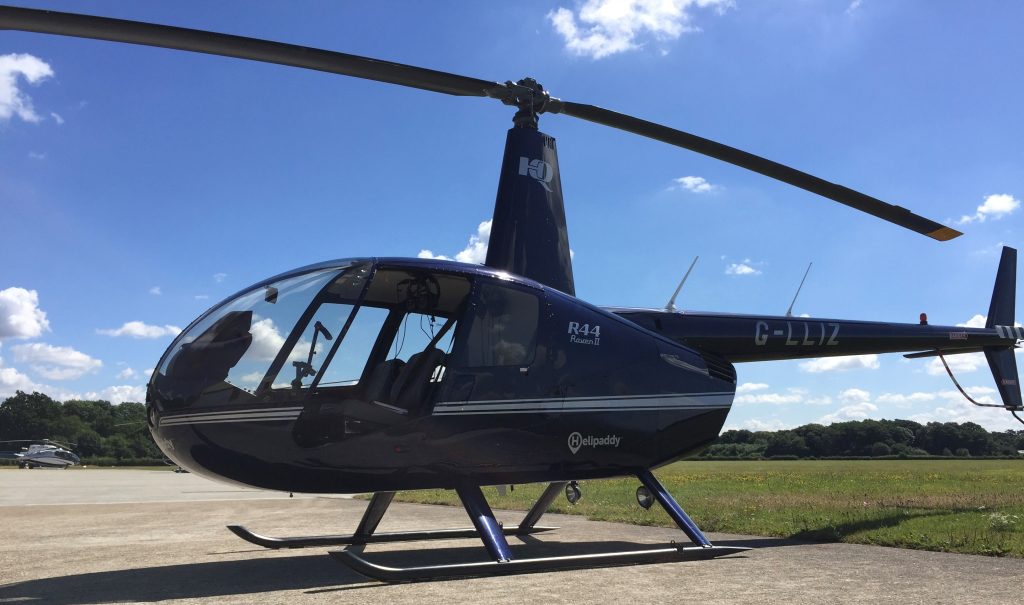
Whilst no longer mandatory, they are a good safety addition to have onboard, but come at a slight performance penalty due to the extra weight and a knot or so slower in cruise owing to the extra drag
EASA Part NCO requirements state you need to have ground lights to illuminate the runway / final approach and takeoff area and any obstacles (NCO.OP.110) as a minimum.
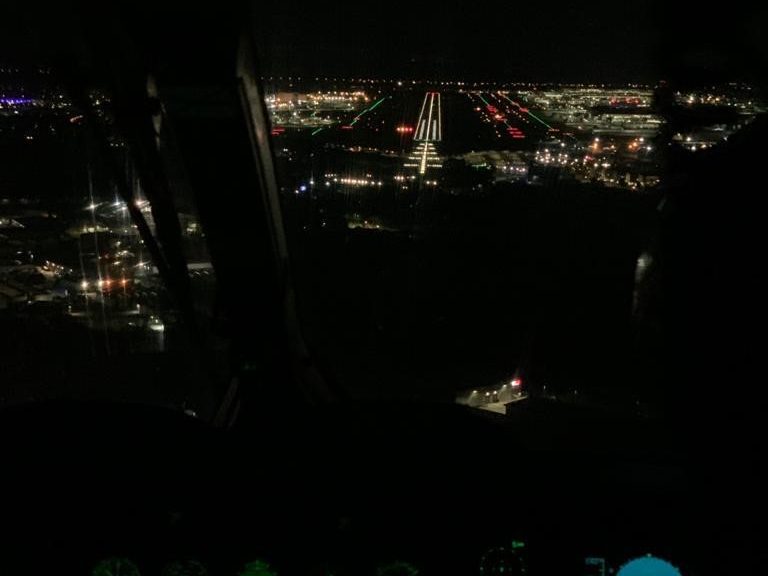
Airports equipped for night operation can have different types of approach and runway lighting to help you with your approach profile. The precision approach path indicator (PAPI) and visual approach slope indicator (VASI) are the most common. See the diagram below.
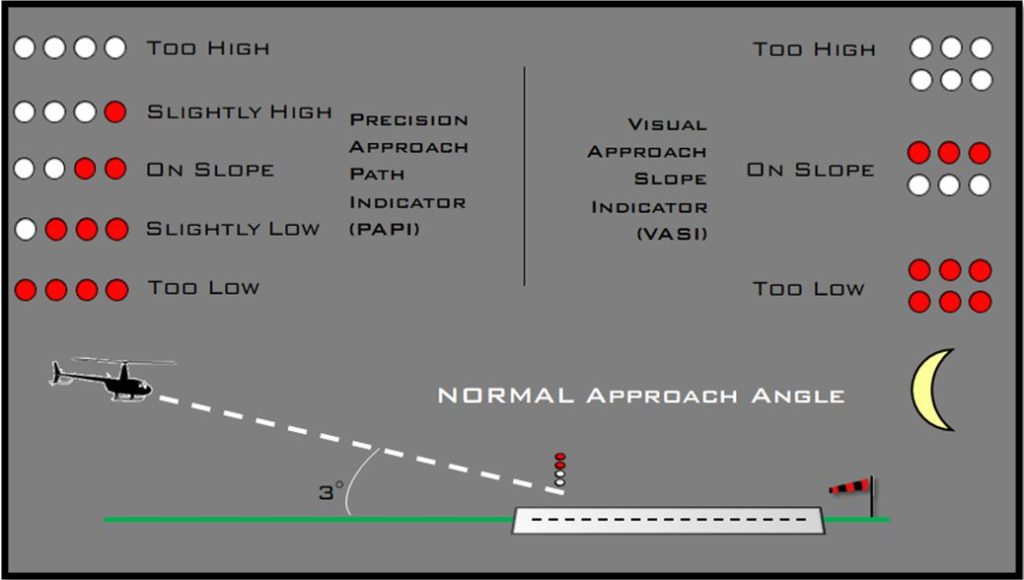
The PAPI is made up of a bar of 4 lights installed, usually on the left side of the runway. Using a series of lenses and a light source, as a pilot you see either red or white lights depending on your vertical position on the approach. A full set of white lights indicates you are too high, and full red being too low. 2 red, 2 white is just right, though be aware that they are usually calibrated to a 3degree glide path, the standard approach profile for fixed wing aircraft, which will feel very shallow for a helicopter pilot.
The VASI works in a similar manner, but it stacks 2 sets of lights above each other. You are again looking for 2 x Reds, and 2 x whites, to show that you are on the ‘correct’ angle.
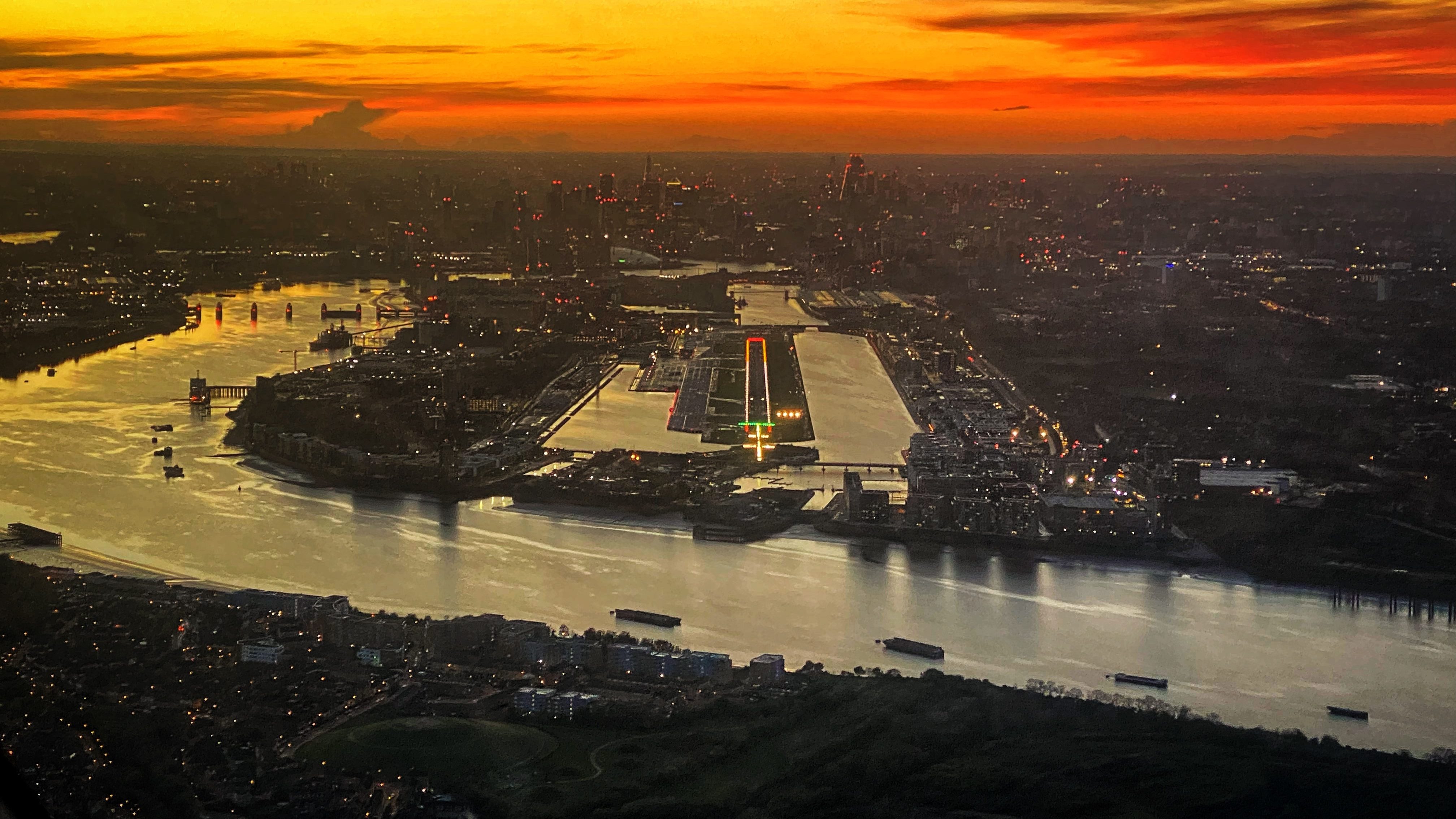
If you are landing ‘off airfield’, landing sites can commonly be marked with a set of lights known as the NATO ‘T’. These are a series of five lights that are spaced, usually ten metres apart and they allow the pilot to judge distance and the correct approach path. If the pilot descends too low on approach, the lights that make up the stem of the ‘T’ appear to become closer together, whilst if you are too high, the spacing increases.
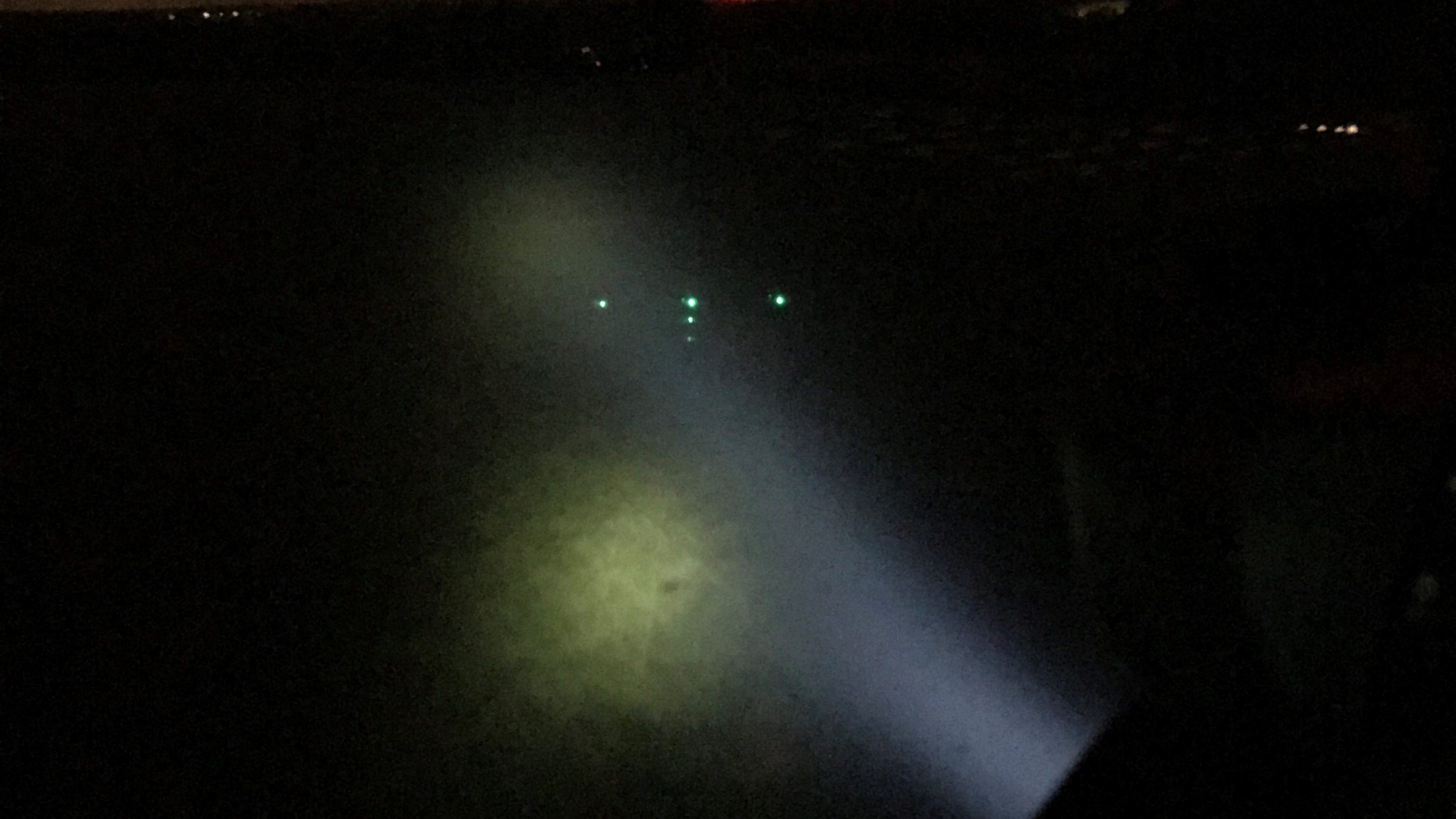
An aerodrome identification beacon is usually lit for any aerodromes that operate at night.
For civilian airfields they the beacons flash green with the two letter identification code.
For a government or military airfield, a red beacon is illuminated instead.
An airfield may also have a ‘location beacon’ to aid navigation. When the airfield is located well away from background lighting, a white flashing light is used instead, and if near a city, where a single white light might be hard to see, the location beacon will alternate green and white.
Don’t forget to read up on your night gun signals- if you were to lose a radio at night, hopefully your transponder is still working, so you can dial up ‘7600’ to give ATC warning that you have communication issues.
Once you approach an airport – look out for the following:
You can acknowledge these signals by flashing your landing lights or navigation lights in return.
Robinson SN26 from the 90’s summarises the unique threats of night flight
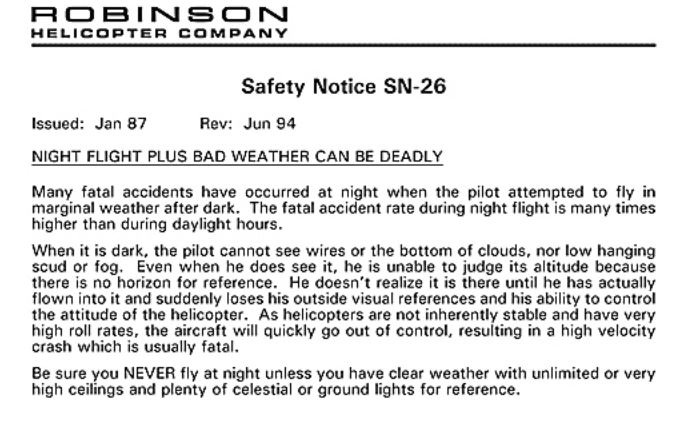
Physiological aspects of night vision, and our bodies sense of orientation can be easy fooled at night with limited visual references, leading a dangerous situation of disorientation. Below are a number of ‘common’ threats, how they occur, and what mechanisms you can use to counter them.
Disorientation can occur when your eyes and the sensory input from your ears disagree. The 3 canals in the inner ear contain fluid that helps determine your balance, and the movement of the fluid helps us determine movement.
The FAA summarises the special disorientation as follows:
Under normal [visual] flight conditions, there is a visual reference to the horizon and ground, the sensory system in the inner ear helps to identify the pitch, roll, and yaw movements of the airplane. When visual contact with the horizon is lost, the vestibular system becomes unreliable.
Without visual references outside the airplane, there are many situations where combinations of normal motions and forces can create convincing illusions that are difficult to overcome, [ ] unless a pilot has many hours of training in instrument flight, flight in reduced visibility or at night when the horizon is not visible should be avoided. …night flying is very different from day flying and demands more attention of the pilot. The most noticeable difference is the limited availability of outside visual references. Therefore, flight instruments should be used to a greater degree.
FAA Pilots Handbook FAA-H-8083-25B
Visually judged approaches pose an increased risk of ‘Controlled Flight Into Terrain’ (CFIT) due to visual illusions caused by limited visual cues that we use to judge distance, closure rate and apparent movement. This is why using appropriate lighting systems during landing at night, is important to mitigate these threats.
Two illusions that lead to spatial disorientation, false horizon and autokinesis, concern the visual system only.
Spatial disorientation is one of the specific threats that a pilot may suffer when flying at night, which can lead to loss of control and a crash.
Some of the following are potentially more dangerous to fixed-wing aircraft, due to the risk of stalling at low speeds, but can still lead to loss of control in a helicopter none the less.
This illusion is caused by the lack of visual references at night, which can lead the pilot to see a stationary light moving. This can be especially dangerous if the light is a star or planet, as the pilot may mistake it for another aircraft and make incorrect manoeuvring decisions.
The black hole effect is an illusion that can happen when flying over water or when over featureless barren land when there are no ground lights between the aircraft and the runway threshold or helipad.
The lack of visual references can make the pilot feel like they are flying higher than they actually are, which can lead to an overcorrection, and then flying too low and crashing into terrain on approach.
The black hole effect is caused by a combination of factors, including:
A particular hazard exists if there is a lack of ambient lighting ahead of the runway, but behind is lit with city lights or rising terrain. This exacerbates the illusion of being high on the approach, causing a further over correction of flying a shallower approach, and therefore closer to the surface.
Similar to the black hole approach, if a runway is unusually narrow, or up sloping, this can provide the illusion of the helicopter being too high on the approach, leading to you to reducing the glide slope, decreasing separation with the ground.
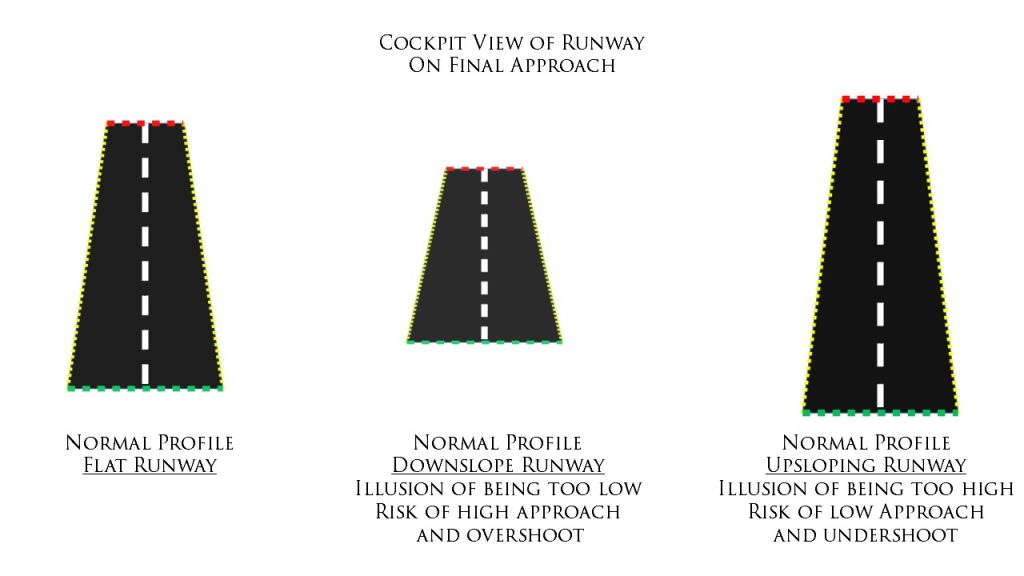
The mitigation to this is to make use of any approach lighting system which will accurately show the correct approach angle, or to identify the length or slope of the runway of your intended destination.
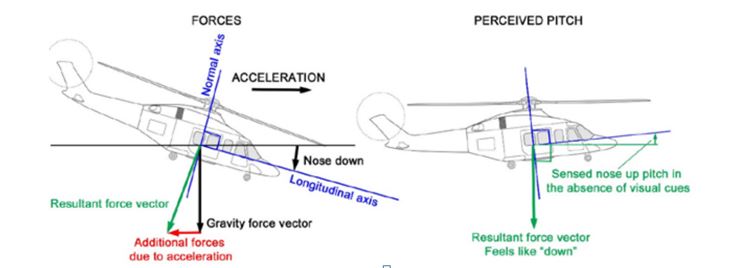
This is an illusion caused by the moment of the head. It occurs where when your body is subjected to an acceleration which your brain processes as a ‘nose up attitude’, as if you are climbing. It is the same feeling that you when you accelerate quickly in a car, with you head thrown back.
The risk is that when pilots when they apply power or they start to accelerate, they actually think that they’re starting to climb unintentionally, and there reaction is to put the cyclic stick forward and actually cause the aircraft to crash into the ground.
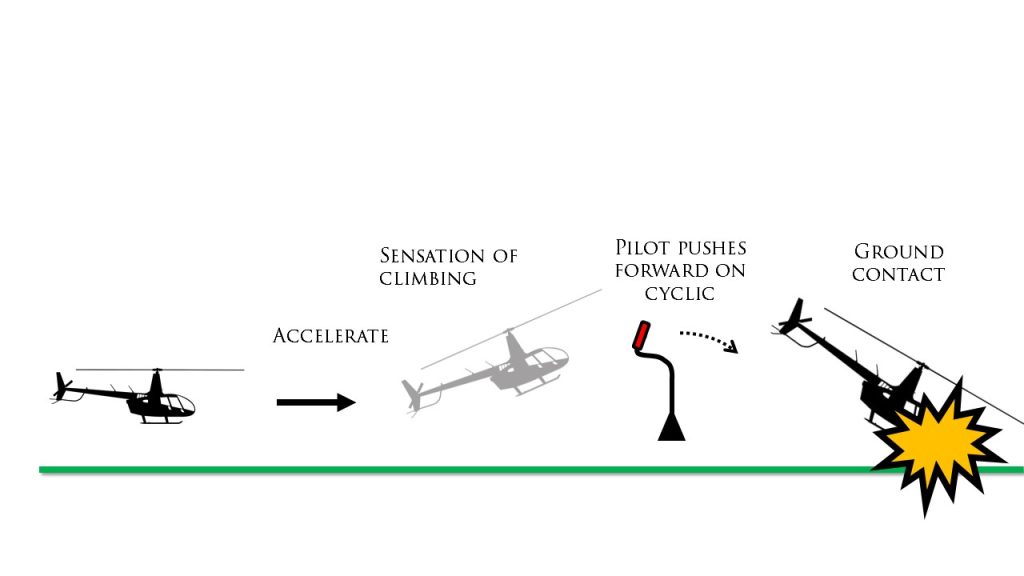
The US NTSB found the probably cause of the July 2019 crash of an AW139 off Big Grand Key, Bahamas, to be ‘the pilots’ decision to takeoff over water in dark night conditions with no external visual reference, which resulted in spatial disorientation and subsequent collision with the water’.
Tragically, during on review of the cockpit voice recorder of the helicopter, the crew referenced an similar crash on the same aircraft type which occurred in 2014, in Norfolk, UK. This accident also occurred during takeoff at night, with lack of visual references.
The UK AAIB determined that a ‘somatogravic illusion could have led to the progressively abnormal attitude of the helicopter ‘feeling’ normal to the occupants’, explaining the incorrect control inputs leading to the crash.
This is the sensation of feeling that you are upright, whilst you are turning.
If it is uncorrected, the risk comes from this developing into a graveyard dive or spiral.
It is an illusion that occurs if you enter a sustained gentle banked turn, which after a period, resets your feeling of what is level. The issue comes when trying to then correct back to straight and level flight, where there is disagreement between what you can see visually on the instruments, and what your vestibular system believes in happening. You can end up over-correcting and performing a spiral dive in the direction you were initially turning.
Take an example of a gentle turn to left, with a low angle of bank. As you start the turn, your vestibular system detects this roll to the left. However, if you fly a nice steady angle of banked turn after about 30-60 seconds , the build inside the inner ears stops moving as it catches up with the new helicopter attitude, and your body ‘re datums’ to the this left banked turn as ‘level’.
Once you roll out from the turn, if you were to do a more positive right turn back to level flight, your body now feels that you are actually turning right. This causes a disagreement between what your eyes are seeing with the instruments which show straight and level. If you erroneously, but all to commonly, trust your vestibular system, you correct this apparent right turn, you ‘over correct’ back into to a left turn.
If you don’t detect this turn, the nose drops and the helicopter continues to spiral, with the airspeed increasing as you descent.
If you were to pull back on the cyclic in order to try and maintain your airspeed, unfortunately this acts to tighten up the turn radius, and eventually, as the rate increases the nose drops further, causing you to further lose altitude. This can lead to an uncontrolled spiral dive (graveyard spin), especially if you are flying in an area of low ambient light or with an overcast cloud layer, adding to the disorientation, and leading to a fatal decent to the ground.
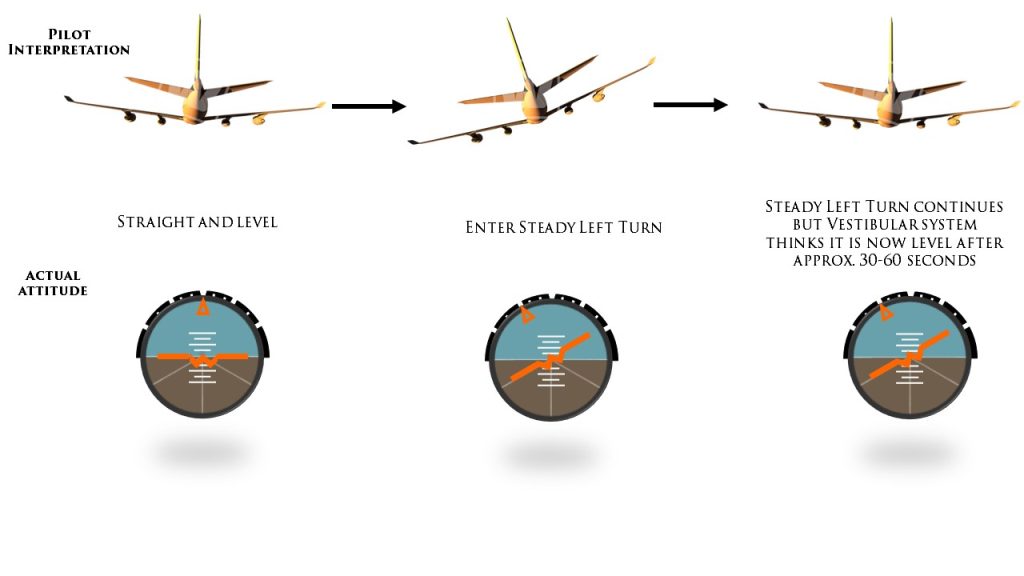
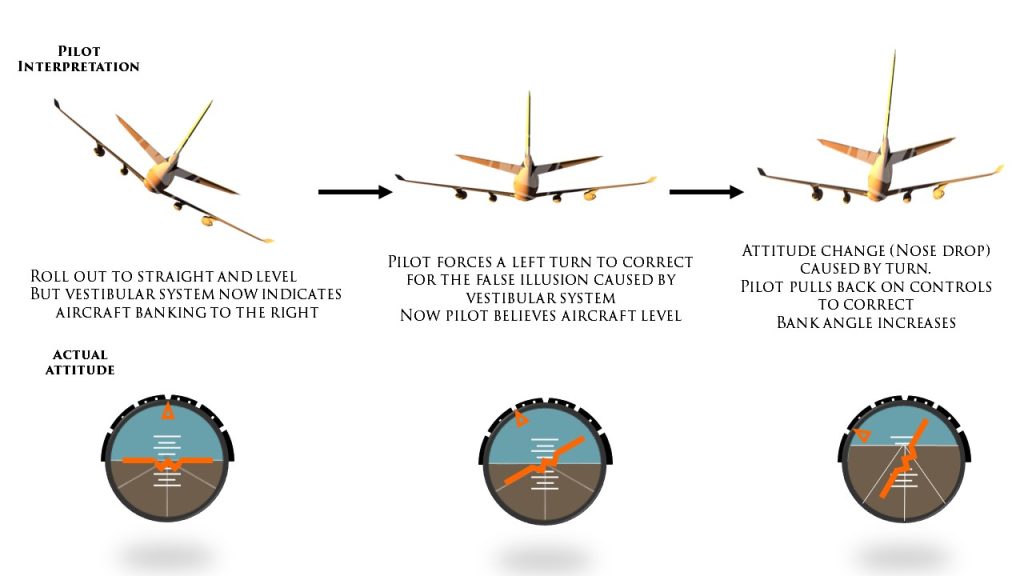
In addition to cross referencing the helicopters’ artificial horizon, one way to combat this sensation is to briefly, vigorously shake your head from side to side with your eyes shut to ‘reset’ the fluid in the semi-circular canals.
This is this vestibular illusion caused by the semicircular canals in your inner ear that detect angular acceleration. It is an illusion that makes you feel that you are tumbling in space, and is caused one multiple semicircular canals are stimulated at the same time.
Imagine a scenario when you’re flying along and you make an abrupt head movement, such as needing to pick up a map that has been dropped on the cabin floor.
To pick it up, you look down and then back up, out at the horizon again. The fluid inside your semicircular canals will suddenly be stimulated to sense that you are turning, whilst the aircraft attitude hasn’t changed. It then can lead to disorientation, and sickness from the sensation of tumbling and your instinctive reaction may be to correct any perceived motion or of the aircraft even though the aircraft itself has not done anything.
This sensation can actually be replicated on the ground by sitting in an office revolving chair. Have someone spin the chair whilst you put your head down, chin on chest. Raising your head quickly stimulates this same sensation, most often leading to you quickly falling off the chair.
To stop this from occurring in flight, make your head movements around the cockpit as slow as possible, especially if leaning forward to change a radio frequency or adjust a setting on the central pedestal console.
The following extract is from an accident report in 1998, regarding a Eurcopter AS355 ‘Twin Squirrel’ that crashing following a short flight between a private pad and Oxford Kidlington Airport, just after a night training flight with an instructor. The report infers that spatial disorientation was partially responsible for the accident.
the pilot may possibly have been repositioning the landing light beam downwards for the forthcoming approach. The beam from the landing light, not normally visible in clear air, would have been very apparent as it shone forward through the mist.
[The steerable landing light] downward movement, although initiated by the pilot, may have given him the visual illusion that the helicopter was pitching up requiring forward movement of the cyclic control for correction.
Also the transition from climbing to level flight may have caused excessive stimulation of the sensory organs for gravity and linear acceleration, thereby creating the illusion of tumbling backwards. To correct this the pilot would have moved the cyclic pitch control forward to lower the helicopter’s nose, thus intensifying the original false impression.
All this, combined with a degree of spatial disorientation brought about by inadvertently flying into mist, and losing sight of the ground, could have confused the pilot’s senses.
By the time he had realised the pitch attitude of the helicopter and its high rate of descent, corrective action was not adequate in averting a collision with the ground.
Furthermore, the moving ribbon of light formed by car headlamps on the motorway and the lack of ground lights to the west beyond the motorway could have created a compelling false horizon further adding the pilot’s spatial disorientation.
Muller-Lyer illusion/ False horizon:
This illusion is caused by the way the human brain interprets lines and angles. It can make the pilot perceive the helicopter to be tilted or moving in a certain direction, even when it is not.
This can commonly be caused by a bank of clouds or sloping ground in mountainous areas that looks like the horizon, causing you to enter a bank to match what you think is level.
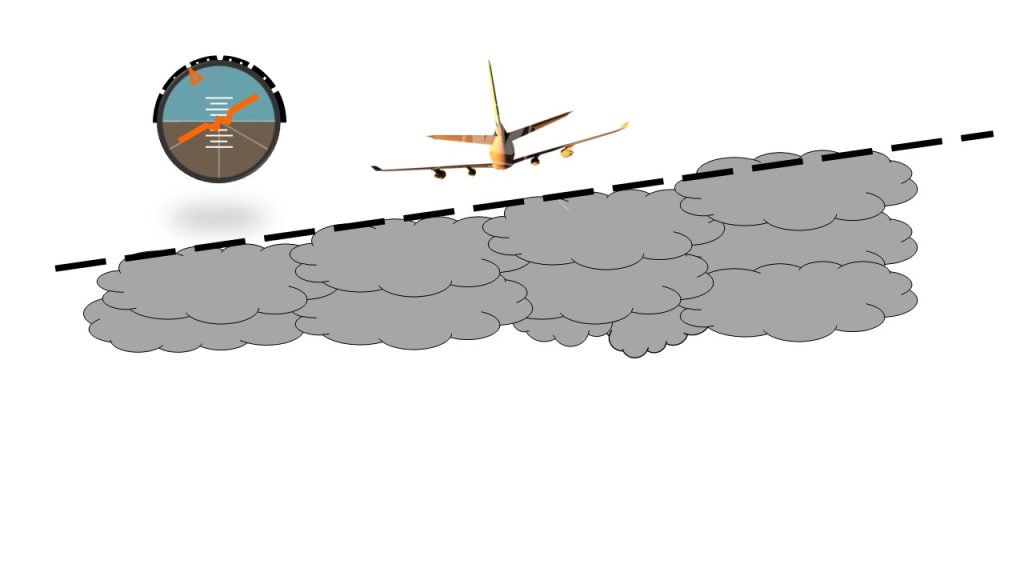
If you encounter any of the above, the best advice to mitigate the impact is to trust you instruments, even if they don’t feel right, and you have conflicting senses, go with the information provided within the cockpit.
Be aware of the common visual illusions relating to lighting, and plan your route to provide plenty of well lit references, and check the destination airfield for details of approach lighting and runway specifications.
Get regular refresher training in night and instrument flying techniques so you are more comfortable with your cockpit scan.
The obvious lack of ambient lighting makes relatively routine tasks become more challenging, such as ground handling a helicopter, pre-flight checks and refuelling.
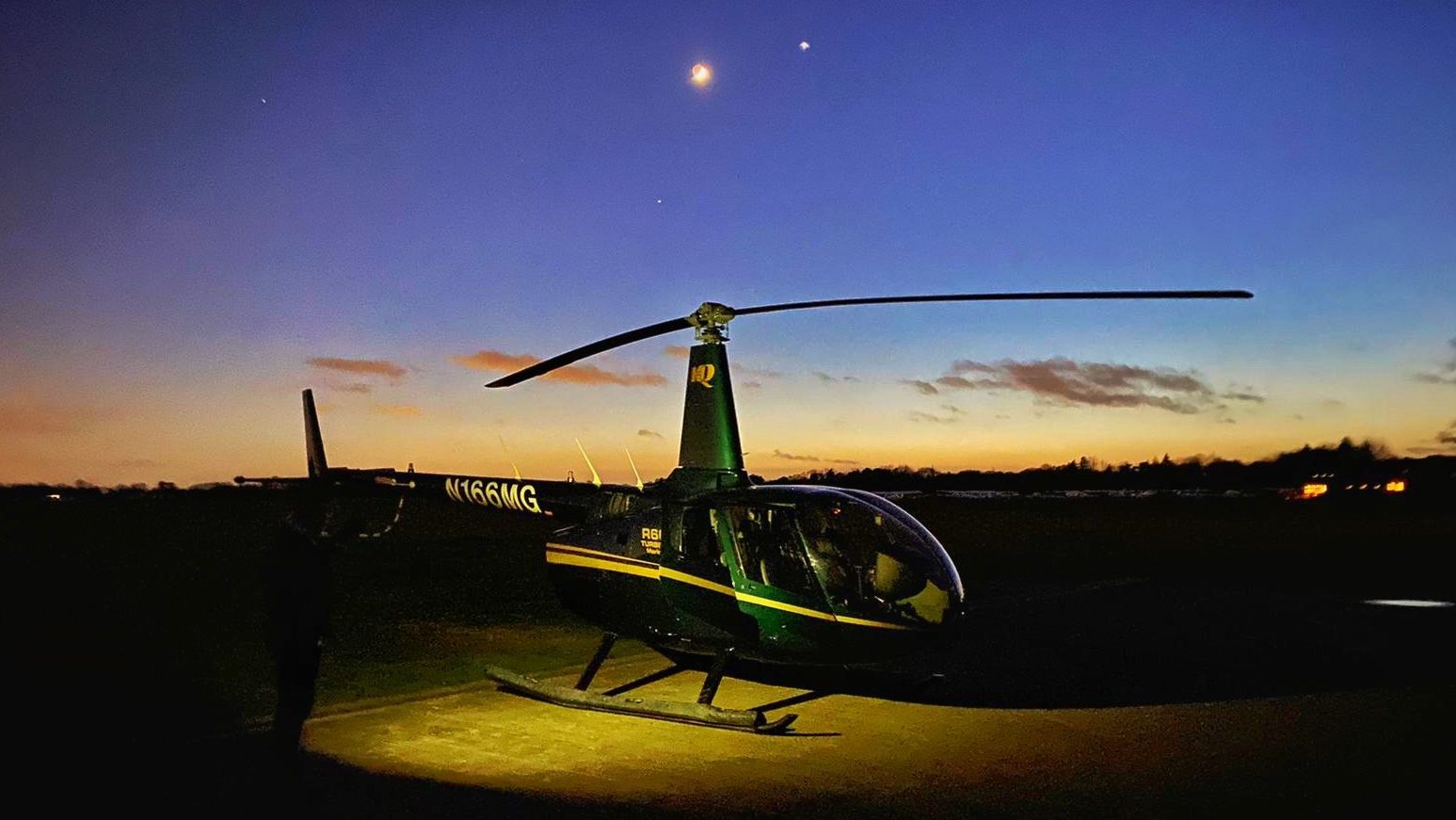
Try and do a pre-flight walk around inside a well lit hangar, and it is easy to miss a fluid leak, loose cable or unsecure fuel cap lying on the ground when it is dark, especially when you are holding a torch in one hand and perhaps a set of ladders in another! In some climates, standing out after dark with a flashlight is a sure way to get a whole host of insect bites!
The EASA safety team have the following video episode providing further guidance on pre flighting before night flights
Night Pre-Flight | EASA Community (europa.eu)
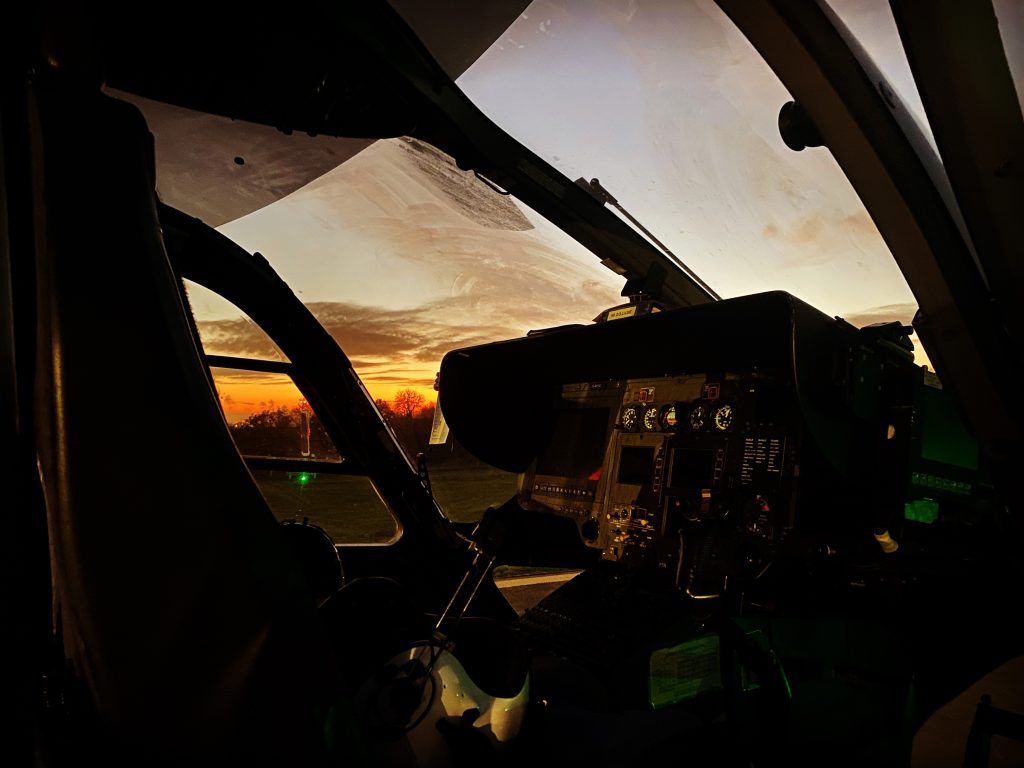
During the pre-flight walk around, make sure you check the functionality of all the helicopter lights, internally and externally. If you have a steerable landing light, check it reacts to the pilot input and the bulb hasn’t blown, and if the cockpit or overhead utility lights can be dimmed, check you know how to use this functionality and pre set the light levels. In flight, as your eyes become accustom to the dark, usually you will find yourself turning the brightness level of the cockpit instrumentation down to preserve your ‘night vision’.
Here is a handy trick if flying with an Apple iPad at night. You might find that the minimum brightness level is still excessive for night flying. If so, go to ‘Settings’, ‘Accessibility’, ‘Display & Text Size’ and then scroll to the bottom to the setting ‘Reduce White Point;’, which can then be used to further reduce the brightness to an acceptable level. On an older model device, you can link the double tap of the central home button to toggle this brightness setting on and off.
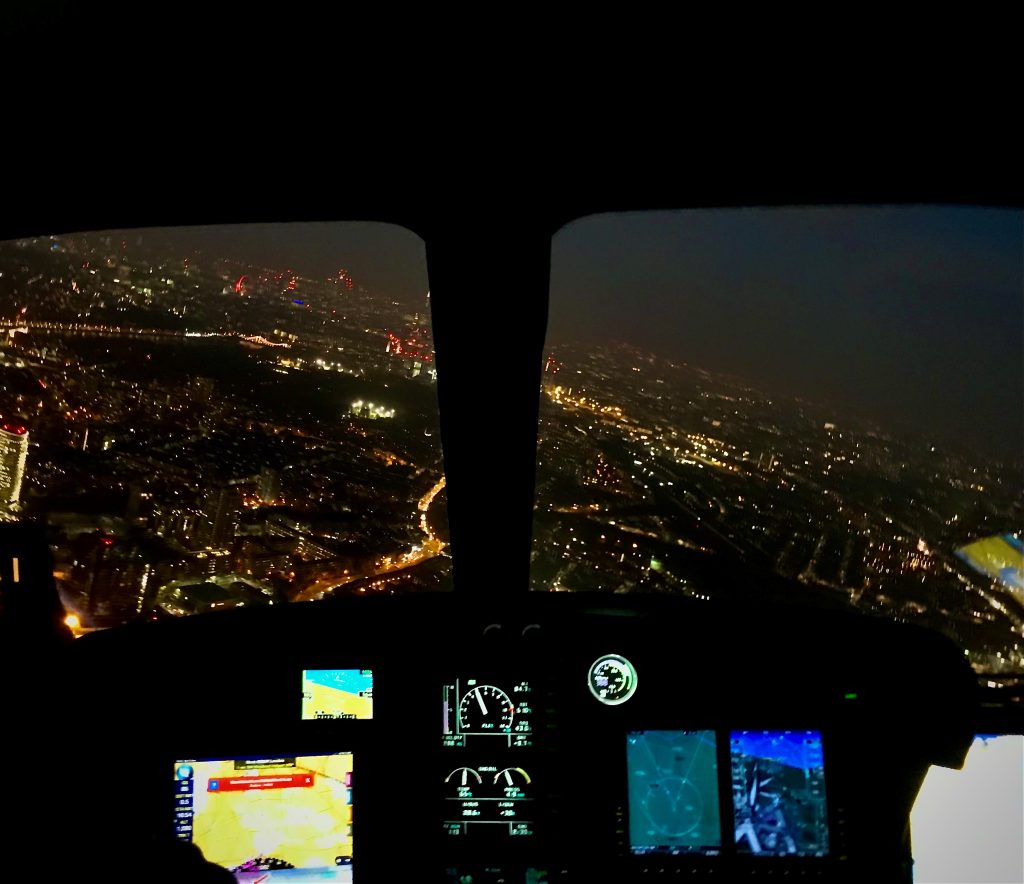
It is worth packing a number of easily accessible ‘flash lights’ that you can access in the event of an electrical malfunction, loss of power or in-flight emergency. Check the batteries are charged, and pack a spare set in case. It is also worth fitting a green or red filter to the flashlight so that you don’t blind yourself and lose your precious night vision- (though make sure any markings you put on your chart in a contrasting colour- using a red pen to mark your route, then flying using a torch with a red lens is hard work!).
The retina at the back of the eye uses rods and cones to detect vision. The ‘cones’, which detect colour, and are concentrated in the centre of the retina, don’t work at night. This leads to a night blind spot, when you look straight ahead at an object, so try to keep an object of interest slightly off centre from your vision, so the image lands on the ‘rods’.
It takes about 30 minutes for your eyes to fully adapt to darkness- this is due to the eye needing to produce rhodopsin (visual purple), which is a protein that triggers ‘photo-transduction’ –electrical ‘visual detection’ in the rods of your eyes.
The issues occurs when you have just been in a brightly lit crew room, planning your flight and getting the latest weather, and then stepping outside to the inky blackness and expecting to get going immediately. The solution- walk out to the helicopter in plenty of time, perform the walk around and pre take off checks in ‘slow time’ to give you eyes time to adjust before you take off.
The following accident provides a sobering reminder of how failing to allow your eyes to adjust to the dark can have fatal results, when the pilot of a JetRanger flew into a hill side shortly after a departure from a spotlit pad.
Tragic Texan B206B3 CFIT in Dark Night VMC – Aerossurance
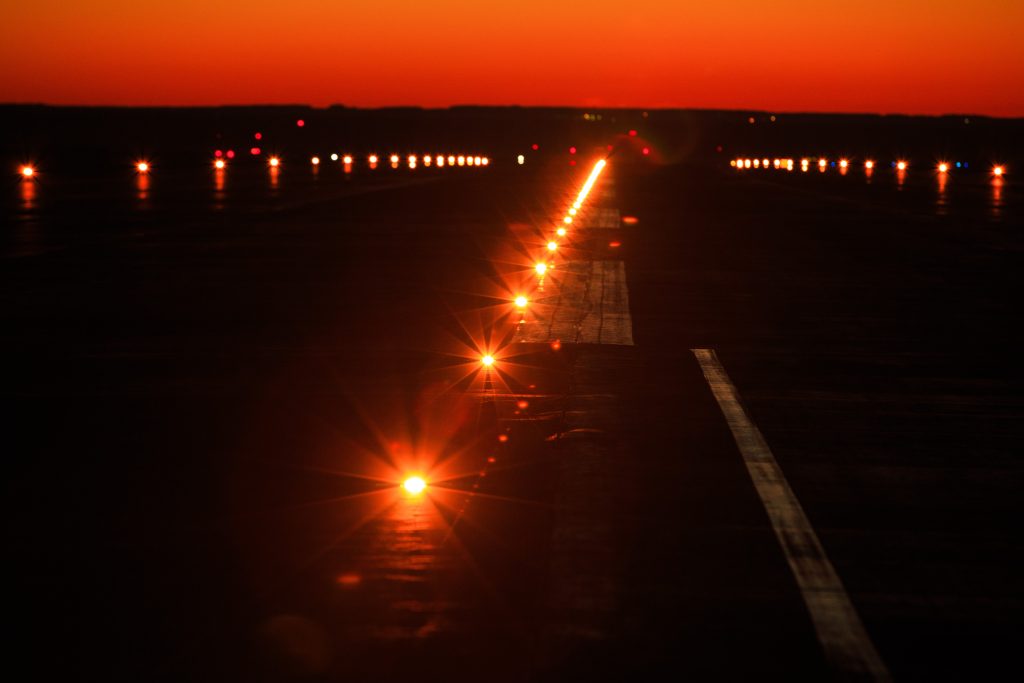
Another instance where loss of night vision can occur is during approach to an excessively well lit airport, in the case that the approach lighting is so bright; your eyes cannot adjust to the dark surrounds and the brightly lit runway lights.
The eyes’ demand for oxygen increases as ambient light dims, so you might you’re a smoker or if you have inhaled some sort of carbon monoxide – perhaps from a crack in the exhaust on a piston powered helicopter , unfortunately your night vision will deteriorate, to the point that you should restrict flight to below 5000ft (or obtain supplementary oxygen!)
Red light is usually used for interior cockpit lighting, as it best at preserving your night vision. This is because red is the light with the longest wavelength. This means it is not detected by the ‘rods’ in the eye retina – which are primarily used for night vision, but can still be detected by the ‘cones’- used for detecting colour.
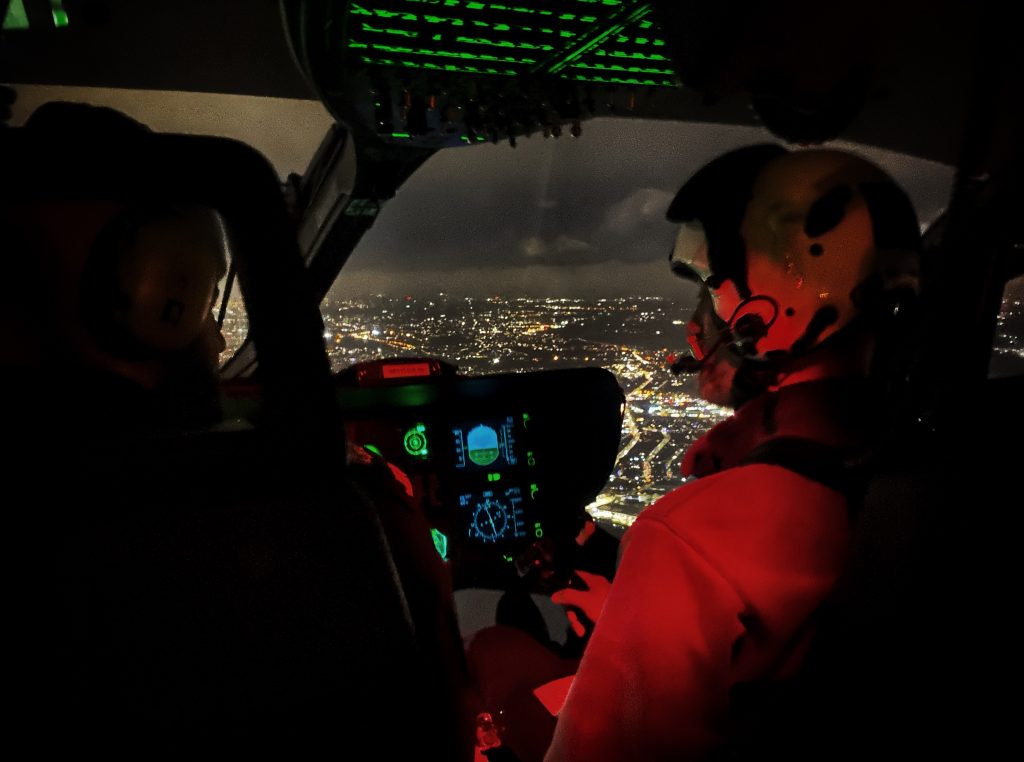
Green light; whilst not quite as effective as red light with regards to preserving night vision, it has the advantage of providing you with more visual acuity, with the eye able to detect more clarity and contrast than red light.
Finger and head torches can also be invaluable additions to your pilot personal equipment, not only to help identify switches or circuit breakers, but in the event of an electrical power, they can illuminate back up instruments, but again, purchase one with a green or red light filter.
The effects of fatigue and alertness are well understood in the commercial aviation world, where strict flight time limitations mitigate some of the risks; however, these do not apply to private flying. However, most pilots will have experienced the effect of driving late at night, and the potential loss of concentration this has!
Whilst it may appear that the effect of fatigue relates more to a long flight, perhaps late at night, surprising, it can become monotonous. If you feel tired, divert to return back ASAP!
When flying at night, additional care needs to be taken during pre flight planning, considering fuel reserves, route planning, minimum safe altitudes, and suitability of appropriate diversion airfields.
At night, you need to ensure you have a fuel reserve of at least 20 minutes flight time (UK,EASA and FAA rules) , though organisation requirements may raise this to 30 minutes or more to increase the factor of safety ! (reference EASA Part NCO.OP.125(b))
Under EASA and UK rules, you are required to have a flight plan filed for any flight that is away from the airfield vicinity (i.e. other than night circuit/ traffic pattern training). Rather than a full flight plan you might file on AFPEX or Skydemon for an international flight, it can be an abbreviated plan that is done ‘over the radio’ to an air traffic control unit. In the UK, this is commonly achieved via the booking out process – passing the following vital information- aircraft reg and type, number of persons onboard, destination or flight routing and estimated flight time or fuel endurance, before flight or during the pre takeoff checks. If you are departing from a private site, or arriving at a location where no ATC unit is available, then you need to file a full flight plan.
This is a precaution, that, in the event of an emergency, where you fail to arrive as expected, the search and rescue teams know where to start looking for you!
Due to the lack of visual references when flying at night, the risk of controlled flight into terrain – CFIT , increases, and so does the importance of you first figuring out the minimum safe altitude for your route.
In the UK , obstacles that are above 150 m (490 ft) from the ground must be lit at night, usually with a solid red light on the highest point. Bear in mind many cranes are above this height, which is why checking NOTAMS prior to departure is important. That said, I have often seen cranes in London, that, for whatever reason, have been taller than the above, and are unlit- which it is why it is important to give ample vertical separation at night!
To determine the minimum safe altitude using the CAA 1:500,000 aeronautical chart, take the maximum elevation figure (MEF), as highlighted below.
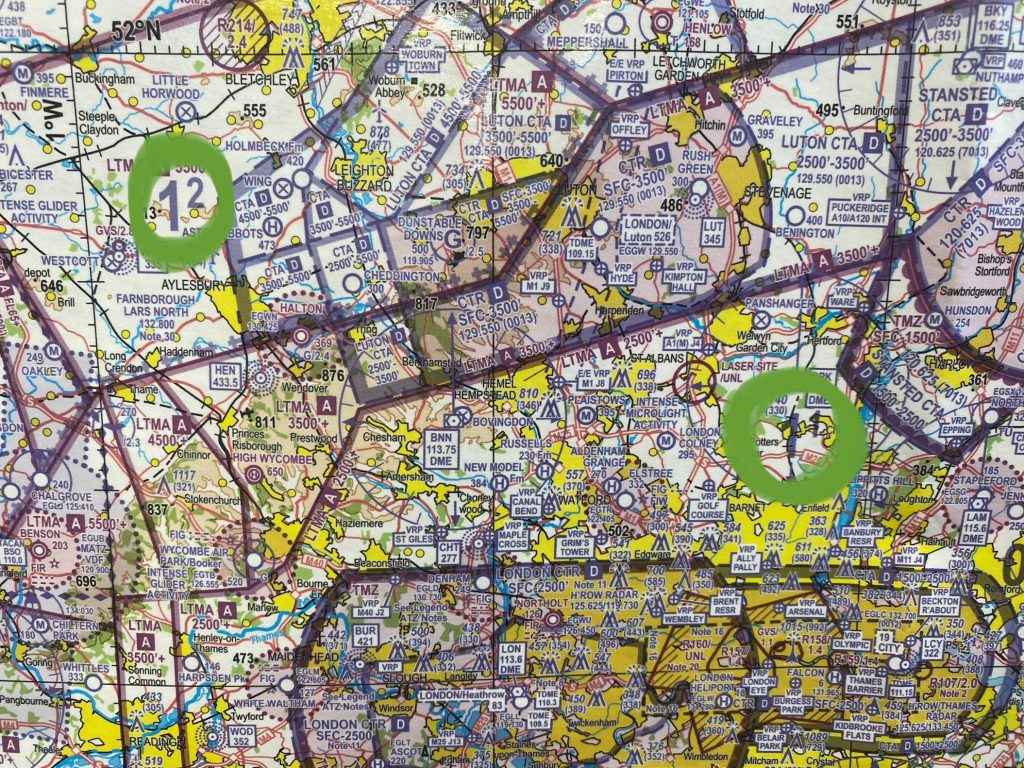
The MEF is show in each quadrangle of the chart, bounded by every half degree of latitude and longitude. It shows, in thousands of feet, the highest feature in the corresponding area, including obstacles and terrain. Add a thousand feet to this number, or two thousand in mountainous areas, to obtain the minimum en-route altitude.
For each leg of your route, look for the highest MEF to plot your safe cruise altitude. Match this against the forecast weather- is the cloud base set to be below the safe altitude for flight, and at what altitude do you hit the freezing level. Being caught in cloud, at night, with ice accumulating on the helicopter makes for a dire emergency situation.
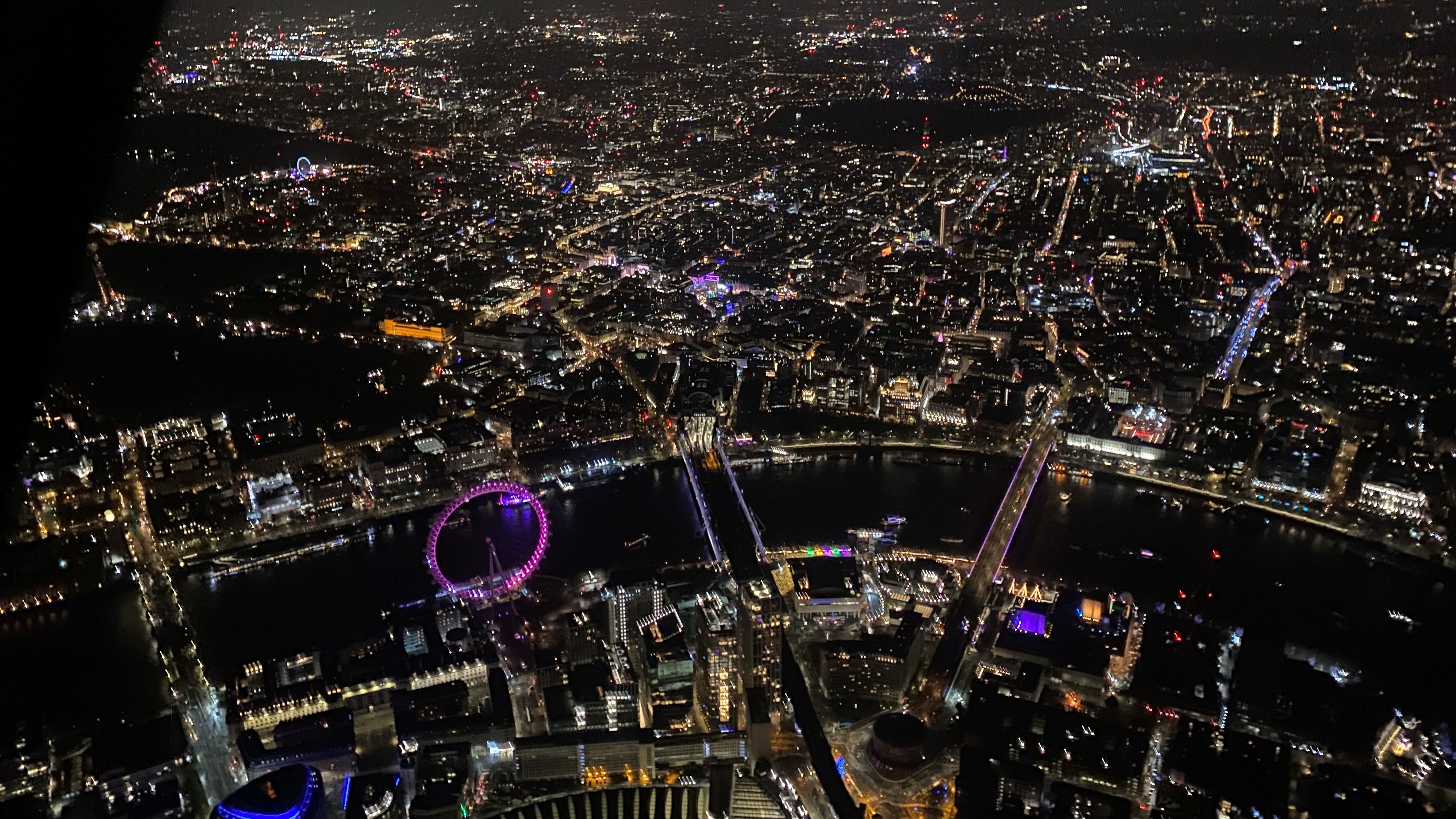
Day time conventional navigation aids, such as large lakes, rivers, railroads or smaller grass airfields all fade into blackness come night-time. Instead, the shape of cities and major roads appear as a fantastic maze of lights, with the outline shape becoming a clearly defined feature, and therefore, it can be can be great navigational aid. Lit stadiums and football l fields stand out very clearly!
It is worth planning a route using these large landmarks as key features. This not only provides some contingency for navigating in the event that the GPS fails in flight, but the lighting conditions help to mitigate some of the visual illusions discussed earlier, increasing the amount of ambient light.
Radio towers or masts, which, by day, can be a high risk obstacle, hard to detect against the background surface clutter, instead, stand out clearly due to the high intensity red lighting installed on them.
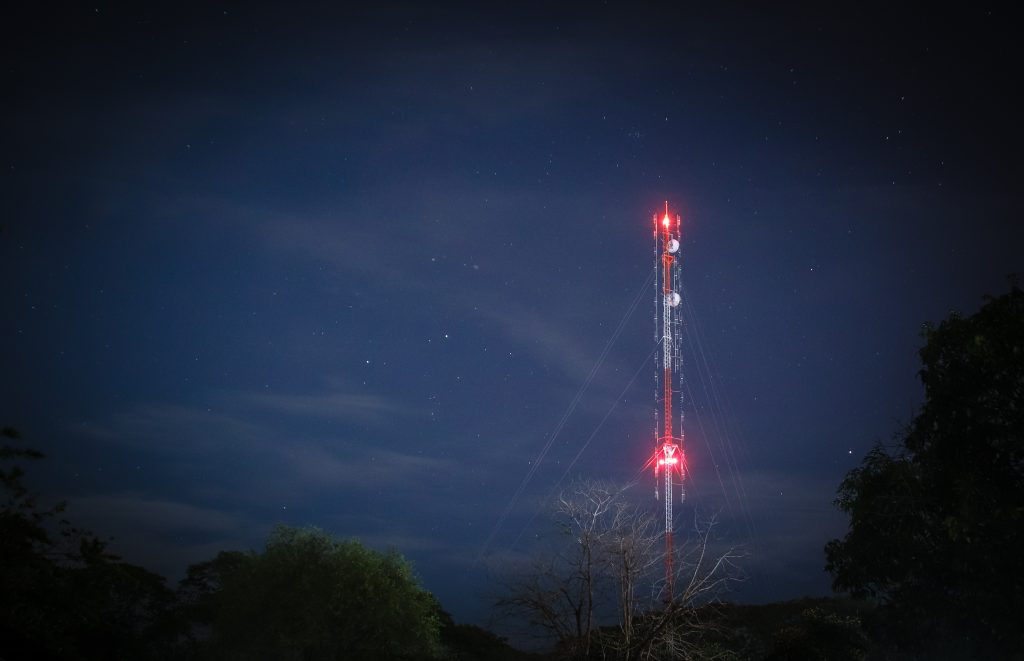
When planning your flight, check the chart either side of the intended route for any other high, lit, objects, and highlight them. In addition to making for fantastic landmarks, even if you are not planning to fly over them, they can be used as a good gauge to asses en route weather, both for cloud base (can you see the top of the mast!), and in flight visibility (can you see the mast at all at this distance!).
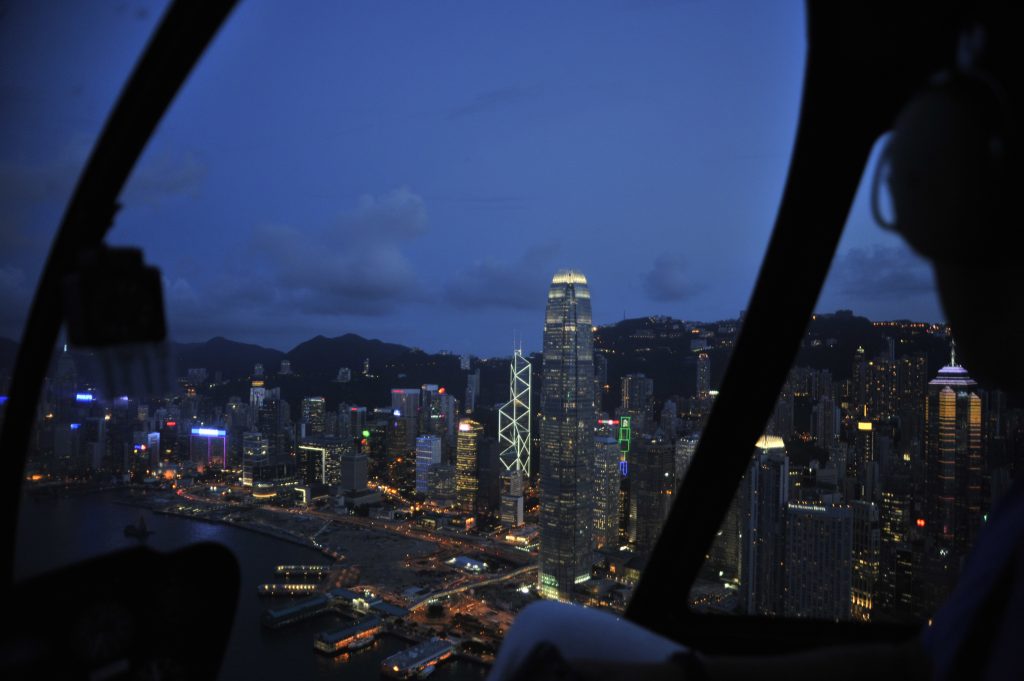
Flying at night is the closest many pilots will come to flying with sole reference to instruments, which is why during the ‘night rating ’ training course, so much time is dedicated to refreshing this skill, both with regards to general handling and also how to use ground based aids for navigation.
It is crucial that pilots don’t fall foul of the various visual illusions and have the trust in the artificial horizon, and other instruments to maintain level flight, and the training develops the internal cockpit scan of the key gauges and displays that are required.
The instrument refresher section also provides a pilot with the lifeline to be able to conduct a 180 degree turn, if they find themselves flying into undetected cloud.
The radio navigation section of the instrument flying covers the use of ‘ground based aids’, such as VHF omni-directional beacons (VOR’s), non directional beacons (NDB’s), the associated equipment in the cockpit, and, perhaps more usefully, to ensure you know how to utilise the full functionality of whatever GPS system you might have onboard. The Garmin 500H and Aspen EHD1000H glass cockpit options available for the Robinson R44 and R66, especially when coupled with the Genesys HeliSAS autopilot, can a provide a huge amount of assistance, but only if you know how to use the system. If you end up selecting a mode that you don’t fully understand, it can make the situation worse, as you wonder who is flying the helicopter, and potentially fighting against the system for control!
In the winter, owing to the shorter days, often smaller, general aviation airfields reduce their operating hours to reflect the daytime only operation of the majority of their traffic.
This reduced service may cause issues when you are looking for refuelling options after 5pm in the afternoon – when many smaller airfields close, or even the need to get some sort of ‘out of hours’ exemption or permission from the airfield, to allow you to depart before the airfield is officially open.
In commercial operations, this may pose a challenge if there is inadequate airfield lighting or fire service availability outside of the operating hours. Most airfields offer out of hour services, but they come at a hefty price tag, usually charged per 30 minutes after the official closing of the airfield! As an example, at Denham airfield, home based aircraft can request an extension on the airfield opening times, keeping the tower manned, at a cost of £24 per half hour. Non Denham based helicopters are charged twice that rate however, so costs can rack up quickly! This can end up being an issue when trying to conduct night rating training in the early winter, when you are paying not only for the flight time, but also the airfield to remain manned with suitable fire cover.
Some countries may have specific airspace restrictions or designations for night flying activity.
As an example, the London Helicopter routes in the UK have restrictions along the main east/ west route, H10, after dark, limiting the use to multi engine helicopters between the reporting point of ‘Gutteridge’ and Kew Bridge’. There are similar limitations north of Heathrow airport on the route H9. This is due to the limited availability of safe landing sites in the event that an unscheduled forced landing is required. During the day, the pilot can be expected to manoeuvre the helicopter to a suitable clearing, but at night, due to the limited visual references, this is not possible.
If you do want to fly down the river Thames at night, an alternate route is to join to the east, via the Olympic Park, transit west along H4, then join H3 to leave the zone via the south east of the controlled airspace, or to transit via Heathrow, and clear to the west of the field on H2, H10 and H5.
In Germany, a network of night low flying systems (NLFS) for military purposes is published on the national AIP, starting at 500ft above the ground, and are designated on the 1:500,000 chart. You must fly over the top of the route by at least 500ft if it is active, so check for any activity via NOTAM, or speak to the relevant flight advisory service via radio, to see if it affects your route.
Flight at night offers up a chance to expand your flying skills and provide further opportunities to get airborne once the winter sets in, however, it presents a number of risks that need to be considered. You need to be confident of the weather conditions during your flight, plan your route so that you make the most of all available visual references and are aware of high ground or any obstacles, and that you have sufficient fuel reserves to give you options in the event that your primary destination become unsuitable to land at. Be wary of the potential pitfalls from illusions and ensure you are well prepared and rested for flight.